Some have complained that the poster of the picture of a happy Jesus welcoming girls from Camp Mystic is AI generated "exploiting the death of children using ai to gain internet clout by the original poster who is scamming the public!" I'm keeping it up on my Facebook page because, whatever its origins, it certainly fits the other side of this tragic flooding in Texas.
I certainly recommend comparing today's story from the Anishinaabe tradition (gathered from the Minnesota area around the end of the 19th century) with the Bible's (Genesis chapters 6-9). It is said all the world's earliest traditions tell of a Great Flood. Mary Catherine Judd in Wigwam Stories not only tells "The Story of the Deluge", but includes photos from the era including a traditional wigwam used to travel to hunting grounds. Whether in such a temporary home or winter wigwam lodges, the people of the Great Lakes region did not live in tipis. It's easy to think of this story being told around a campfire.
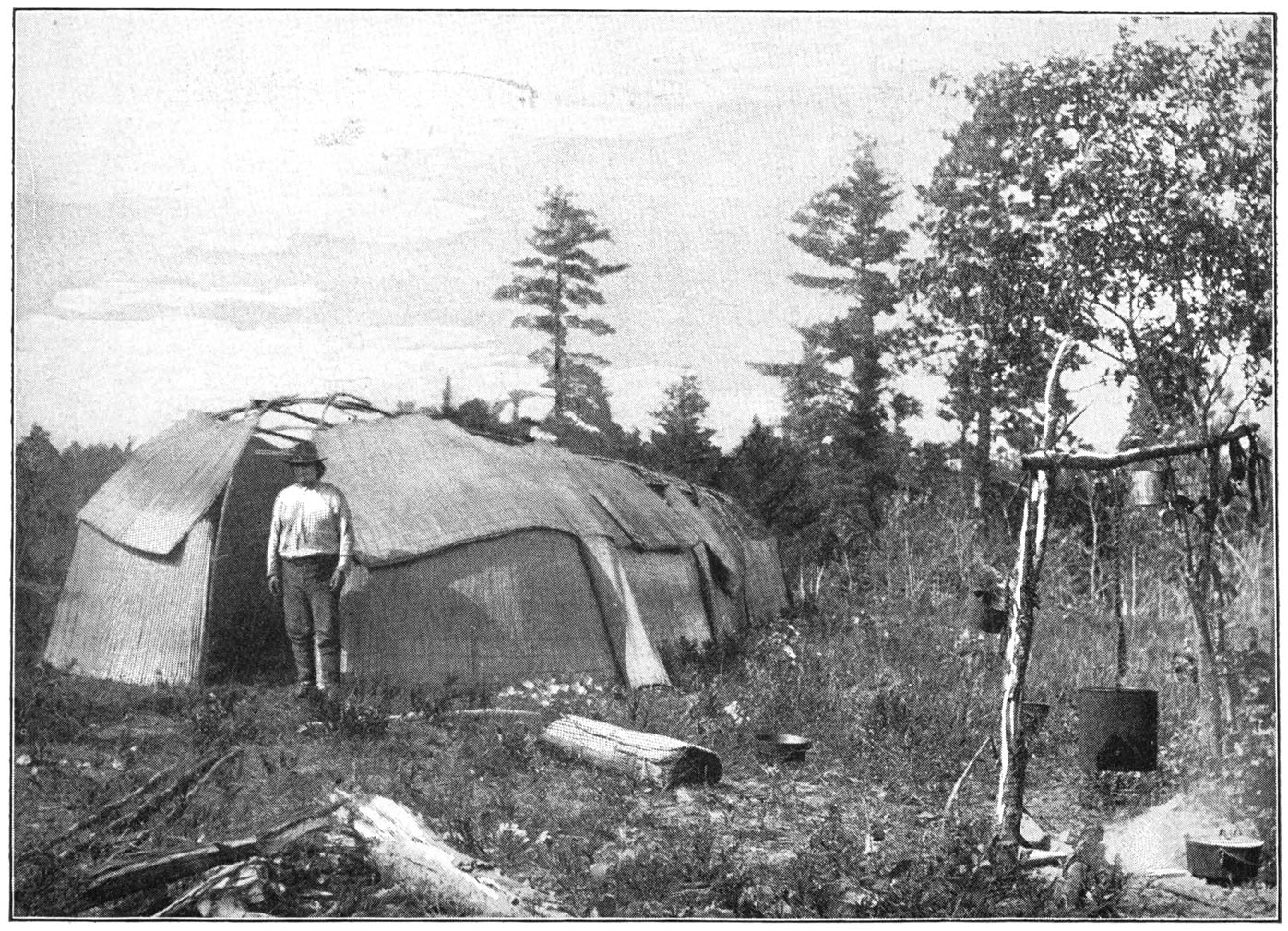
Chippewa Indian’s Summer Wigwam
Before beginning "The Story of the Deluge", the "hero" of this story has a name that changes slightly depending on local dialect. I know him as Nanabazhoo. Judd explains a bit about him when she says:
The old myths of years ago are repeated in Indian homes, and many of the stories, like those told in the poem of Hiawatha, are familiar tales to little children in western teepees. Hiawatha the Wise we now know is an Iroquois hero; Menabozho, who is called the Foolish or Sly One, is an Algonquin hero, and they are two very different characters in the lore of two different Indian nations. Hiawatha the Iroquois is always dignified; Menabozho the Algonquin is very powerful but full of boyish tricks.
STORY OF THE DELUGE
(Chippewa, 1900)
 enabozho, the great land manitou, did not like the water manitous or spirits. One
day he saw the chief of the water manitous asleep on a rock, and he shot and killed
him with a magic arrow; then the little water manitous called the big rivers to help
them and chased Menabozho up a high hill.
enabozho, the great land manitou, did not like the water manitous or spirits. One
day he saw the chief of the water manitous asleep on a rock, and he shot and killed
him with a magic arrow; then the little water manitous called the big rivers to help
them and chased Menabozho up a high hill.
The water reached halfway up the hill; the water manitous called all the little rivers then to help them. The water chased Menabozho to the top of the high hill. He climbed up a tall pine tree, but the water came up to his chin; it could not go over his head, for there is not water enough in the whole world to drown the great Menabozho.
He waited a long time while he stood on the top of the pine tree. The rivers would not go back, and he could not see any land.
A loon flew over his head and then dived into the great water. Menabozho said: “Brother Loon, come to me. I must make land for us to stand on. Will you dive down and bring me a little sand?”
The loon put down his head and went through the deep water, but it was too deep even for the great loon-bird. He came up again, but he had left his breath in the deep water. Menabozho caught him as he floated by the pine tree, but he found no sand in his bill nor on his feet.
An otter put his head out of the water close by Menabozho.
“Brother Otter, dive down and bring me up a few grains of sand. We must have land to put our feet upon.”
The otter knew he must do as Menabozho told him, so he put his head down into the deep water. He came up, but he had no life any more, and Menabozho could not find any sand in his paws.
A muskrat came swimming by just then. “Brother Muskrat, you are very brave. Will you dive down to the sand under this deep water and bring me a few grains? I must make land for my brothers,” said Menabozho.
The muskrat was brave, for he dived down, but he came up just like the otter. He had no more life, but he had a little sand in one front paw.
Menabozho held the sand in his own hand and dried it in the sunshine. He blew it with his breath far out on the water, and it made a little island. Menabozho called the sand back to him. He dried it in his hand again and then blew it to its place on the deep water. He did this for two days, and the island grew larger every time it was sent back. Menabozho left the tree and walked on the land.
He called to his brothers, who are the trees, animals, and everything on the land, to come and live on this land. The water had to go back to its place.
*******
While it is worthwhile to look at the Biblical and traditional roots of the Deluge story, I agree completely with Gary Struth about the recent devastating floods when he posted:
Mental health professionals have told us that the absolute worst way to lose a child is when the cause of death is sudden and violent. This horrific tragedy was BOTH.Texans, Americans, and people around the world ... I encourage you to NOT FORGET the grieving families of Kerr County. Their pain and anguish will be long lasting. Please, pray for them. If you are able to give to their physical needs, I hope you'll do that. In this sad season, when they are weak, let us be strong, for them.
*****************************
This is part of a series of postings of stories under the category, “Keeping the Public in Public Domain.” The idea behind Public Domain was to preserve our cultural heritage after the authors and their immediate heirs were compensated. I feel strongly current copyright law delays this intent on works of the 20th century. My own library of folklore includes so many books within the Public Domain I decided to share stories from them. I hope you enjoy discovering them.
At the same time, my own involvement in storytelling regularly creates projects requiring research as part of my sharing stories with an audience. Whenever that research needs to be shown here, the publishing of Public Domain stories will not occur that week. This is a return to my regular posting of a research project here. (Don't worry, this isn't dry research, my research is always geared towards future storytelling to an audience.) Response has convinced me that "Keeping the Public in Public Domain" should continue along with my other postings as often as I can manage it.
See the sidebar for other Public Domain story resources I recommend on the page “Public Domain Story Resources."


No comments:
Post a Comment