Tell me if you have a topic you'd like to see. (Contact: LoiS-sez@LoiS-sez.com .)
Please also let others know about this site.
Showing posts with label Abolition. Show all posts

Saturday, February 3, 2018

Blaisdell - The Clothes-Line Telegraph

Black History month tends to bring my programs about the local Lerich family to audiences.  Liberetta Lerich Green and her family were abolitionists and had an Underground Railroad Station in Utica.  Here's the event presented by the  Novi Historical Commission at the Novi Public Library on February 8.  Learn about Michigan's role in abolition, the Underground Railroad, and the Civil War as told by a woman who grew up with it.

There are so many stories, including claims some historians doubt about the use of the laundry line for signals to the Underground Railroad.  This story from Albert F. Blaisdell's Stories of the Civil War takes a different view showing the clothes line's value for military intelligence.

The story follows a picture of a simple craft I made several years ago at Greenfield Village's Civil War Days.  It's the rosette or cockade worn by a Union sympathizer, which the Lerichs certainly were.  I let the safety pin show as it's simply red, white, and blue ribbon pulled into a circle and stitched onto a pin.  Yes, that Wikipedia link says safety pins were patented in 1849.  Campaign buttons are a form of communication, as is storytelling.  If you go to Creative Cockades you will find they are a centuries old way of showing support for a cause, the political lapel pins of yesteryear.  There are pages about cockades for the Union, Confederate, Mourning, Revolutionary War, Suffragette, and Copperhead (opponents of the Civil War and the Union) opinions.  Today's story shows Dabney figured out yet another useful form of communication easily overlooked.
As Albert Blaisdell explained in putting his book together, "These stories are designed to interest as well as to instruct young people, and to excite in their minds a keen desire to know more of the noble deeds of their fathers and grandfathers, who sacrificed so much during this momentous period of our country's history."  Even now that desire and knowledge is needed.
*******************
This is part of a series of postings of stories under the category, "Keeping the Public in Public Domain."  The idea behind Public Domain was to preserve our cultural heritage after the authors and their immediate heirs were compensated.  I feel strongly current copyright law delays this intent on works of the 20th century.  My own library of folklore includes so many books within the Public Domain I decided to share stories from them.  I hope you enjoy discovering new stories.  


At the same time, my own involvement in storytelling regularly creates projects requiring research as part of my sharing stories with an audience.  Whenever that research needs to be shown here, the publishing of Public Domain stories will not occur that week.  This is a return to my regular posting of a research project here.  (Don't worry, this isn't dry research, my research is always geared towards future storytelling to an audience.)  Response has convinced me that "Keeping the Public in Public Domain" should continue along with my other postings as often as I can manage it.
Other Public Domain story resources I recommend-
  • There are many online resources for Public Domain stories, maybe none for folklore is as ambitious as fellow storyteller, Yoel Perez's database, Yashpeh, the International Folktales Collection.  I have long recommended it and continue to do so.  He has loaded Stith Thompson's Motif Index into his server as a database so you can search the whole 6 volumes for whatever word or expression you like by pressing one key. http://folkmasa.org/motiv/motif.htm
  • You may have noticed I'm no longer certain Dr. Perez has the largest database, although his offering the Motif Index certainly qualifies for those of us seeking specific types of stories.  There's another site, FairyTalez claiming to be the largest, with "over 2000 fairy tales, folktales, and fables" and they are "fully optimized for phones, tablets, and PCs", free and presented without ads.

    Between those two sites, there is much for story-lovers, but as they say in infomercials, "Wait, there's more!"
The email list for storytellers, Storytell, discussed Online Story Sources and came up with these additional suggestions:            
         - David K. Brown - http://people.ucalgary.ca/~dkbrown/stories.html
         - Richard Martin - http://www.tellatale.eu/tales_page.html
         - Spirit of Trees - http://spiritoftrees.org/featured-folktales
         - Story-Lovers - http://www.story-lovers.com/ is now only accessible through the Wayback Machine, described below, but Jackie Baldwin's wonderful site lives on there, fully searchable manually (the Google search doesn't work), at https://archive.org/ .  It's not easy, but go to Story-lovers.com snapshot for October 22 2016  and you can click on SOS: Searching Out Stories to scroll down through the many story topics and click on the story topic that interests you.
       - World of Tales - http://www.worldoftales.com/ 
     
You're going to find many of the links on these sites have gone down, BUT go to the Internet Archive Wayback Machine to find some of these old links.  Tim's site, for example, is so huge probably updating it would be a full-time job.  In the case of Story-Lovers, it's great that Jackie Baldwin set it up to stay online as long as it did after she could no longer maintain it.  Possibly searches maintained it.  Unfortunately Storytell list member, Papa Joe is on both Tim Sheppard's site and Story-Lovers, but he no longer maintains his old Papa Joe's Traveling Storytelling Show website and his Library (something you want to see!) is now only on the Wayback Machine.  It took some patience working back through claims of snapshots but finally in December of 2006 it appears!
    Somebody as of this writing whose stories can still be found by his website is the late Chuck Larkin - http://chucklarkin.com/stories.html.  I prefer to list these sites by their complete address so they can be found by the Wayback Machine, a.k.a. Archive.org, when that becomes the only way to find them.
You can see why I recommend these to you. Have fun discovering even more stories!


Friday, September 11, 2015

Civil War Days + Browne - Union War Songs and Confederate Officers - Keeping the Public in Public Domain

The Bicentennial of the United States Civil War is still being celebrated in many places including the annual celebration of the Historic Fort Wayne Coalition.
http://www.historicfortwaynecoalition.com/cwdays.html
Please notice Historic Fort Wayne is in Detroit.  From 1701 through World War II the location was an active military location.  Today the Historic Fort Wayne Coalition is working to preserve as much of the fort's heritage as possible.  Toward that, I'm proud to continue being part of the annual celebration.  While portraying Liberetta Lerich Green I will talk, among other things, about how her brothers, Will and Isaac, mustered in and out of the fort for the Michigan Fifth Infantry and later Isaac returned when the Third Infantry was reconstituted.  I will also tell of her family's abolition and Underground Railroad work and life on the homefront.  In addition, Liberetta joins General Grant's widow, Governor Blair's wife, and Sarah Edmonds in the Commanding Officer's house.  All of these women have fascinating stories worth hearing.

Music is a great way to recall these events.  In telling Liberetta's story I use the abolition song, "Roll on the Liberty Ball", which was written by the Hutchinson Family Singers to the tune of "Old Rosin the Beau", then used again as the election song, "Lincoln and Liberty, Too" .  The YouTube video above merges the two songs.  It comes from ex-Weaver, Ronnie Gilbert, and gives a lively amalgamation of both while incorporating pictures from the era.

Today's story is a remembrance by Richard Wentworth Browne in The Century Magazine, from January 1888.  The Online Books Page has an archive of the magazine from its origins in 1881 up through Volume 97 on April 1919, although the magazine didn't cease operation until 1930.  It's always worth checking periodicals of a period for a time travel experience.  The story was part of a larger article, "Memoranda on the Civil War."  Browne also explains he was inspired to write after reading Brander Matthews in The Century Magazine, August 1887, article "The Songs of the Civil War."  That article isn't a story, but may interest lovers of Civil War music, a topic occasionally discussed here.  After the story I'll give links to the songs mentioned by Browne.


The many treasuries by Benjamin A.Botkin overflow with such interesting bits.  My copy was in his A Civil War Treasury of Tales, Legends and Folklore.  It only omitted Browne's introductory paragraph about the earlier article by Brander Matthews influencing him.  I strongly recommend at least reading the Wikipedia article on this "Father of Public Folklore" I hotlinked at the start of this paragraph to show his philosophy on folklore and his work at the Library of Congress in the Archive of American Folk Song.  You might even want to read the book, America's Folklorist: B.A.Botkin and American Culture, edited by Lawrence Rodgers and Jerrold Hirsch.


Songs mentioned in the story

Each of these songs has background information, so the titles are hotlinked to Wikipedia.  Space and time limitations meant it's the only source given here for quick background information.  I encourage checking even further because more exists for each song.   I try to give at least the melody line and, when available, the chords.  I leave it up to you to see if a midi file or video of the song exists to help you learn the songs.

Along the way I discovered the wonderful Civil War Song Book pdf from the Kit Carson's 1st New Mexico Volunteer Infantry String Band, a reenactment group.  They have a good list of sources in their introduction to this 82 page book by Joe Dietrich and David Poulin.  Their book is specifically chords + lyrics, so I rarely had to worry about chords, just being sure to locate the melody lines on songs. 8 Notes.com was another good resource, but since these are all Public Domain, I made sure the links skipped paid sheet music.  For other chords beyond the Civil War Song Book, another resource is Ultimate-Guitar.com.


Battle Hymn of theRepublic the melody is given in Wikipedia and see the Civil War Song Book about chords
John Brown’s Body (same melody as above was eventually used, but read the article on it)
We’re Coming, Father Abraham (Lyrics used by 8 different composers, including Stephen Foster and the Hutchinson Family Singers!  Darned if I know what version to use.  Check the article by Irwin Silber in Songs of the Civil War.)
Tramp, Tramp, Tramp the Boys Are Marching find chords in the Civil War Song Book and the melody at 8 Notes.com/scores/6670.asp
Rally ‘Round the Flag,Boys (or Battle Cry of Freedom -- the title used in Civil War Song Book for chords) either melody alone or guitar tab at 8 Notes.com
Dixie for the melody choose Dixie's Land and Dixie for guitar tab at 8 Notes; in Civil War Song Book chords use Dixie's Land as the title
Maryland, My Maryland (set to the tune of Lauriger Horatius as Browne mentions, but best known as O Tannenbaum or Oh Christmas Tree) with melody at 8 Notes.com
Dead March in Saul this was only mentioned as it is often played at state funerals, including during the trip by Lincoln's body back to Springfield.

Serendipity often helped in finding resources. Research tends to go that way, with serendipity ruling!  In the meantime may this bit of time traveling through history encourage your own research.

Saturday, July 25, 2015

End of Sesquicentennial + Alexander - Double Jeopardy of Wilmer McLean - Keeping the Public in Public Domain


As the Civil War sesquicentennial ends, local events remember it including at the Oakland County Pioneer and Historical Society's
Annual Summer Ice Cream Social ~ Sat, July 25, 2015 on the grounds of the Moses Wisner house.

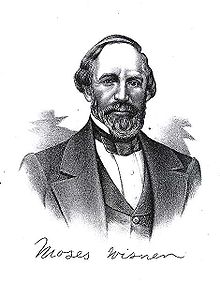
Michigan's 12th Governor, Moses Wisner, like the Lerich family, was an abolitionist.  His barn was burned to protest his activity in the anti-slavery movement even though he was elected by a large majority.  Rather than seek a second term, he turned his attention to organizing the 22nd Michigan Infantry, which trained at the Pontiac Fairgrounds. On August 25, 1862, the 22nd Michigan Infantry left Pontiac for Kentucky with Colonel Moses Wisner in command. Before leaving, Wisner conveyed the property on which Pine Grove is located to his wife, Angeolina. Colonel Wisner died of typhoid fever, January 5, 1863, in Kentucky while en route to the regiment's deployment.


Why not plan on attending the event?:SummerSocialFlyer.jpg
Yes, there will be much more than their card shows: Also included are Opening Ceremonies, local dignitaries, free Cake and Ice Cream, Veterans Mobile Service Center, Junior ROTC, a Curiosity Sale, Kid's crafts, Storytellers, and many other attractions.
Free secure parking on site at 405 Cesar Chavez Ave., Pontiac, MI 48342
For more details, please contact OCPHS: office@ocphs.org Phone: 248-338-6732 (office is normally open Tues/Wed/Thurs from 11:00 AM to 4:00 PM).

Of course the end of the sesquicentennial remembrance deserves at least a brief Public Domain story showing a more personal side of the war.

That was part of an article in The Century Magazine, volume LXIII (April 1902) p. 931, by Brigadier General E.P.Alexander, C.S.A. entitled "Lee at Appomattox: Personal Recollection of the Break-up of the Confederacy."  It was included in A Civil War Treasury of Tales, Legends and Folklore edited and introduced by the folklorist B.A. Botkin.  That book isn't Public Domain, but Botkin used Public Domain sources in his many thick volumes of folklore and in his work for the Federal Writers' Project, the Joint Committee on Folk Arts of the Works Progress Administration, and the Writers' Unit of the Library of Congress Project. That first link was Wikipedia, but another view of him is at New York Folklore Society's Journal, Voices.  His work was analyzed in America's Folklorist: B.A. Botkin and American Culture edited by Lawrence Rodgers and Jerrold Hirsch.  (That last link just gives you the book's Table of Contents in case you wish to read even more.)  Benjamin Albert Botkin's anthologies are a great resource of Public Domain material even if their published format is under copyright for the total book.  I was going to include his portrait photo and "About the Author" for his own view of himself, but instead recommend obtaining as many of his books as you can manage.  There are PLENTY!
**********
This is part of a series of postings of stories under the category, "Keeping the Public in Public Domain."  The idea behind Public Domain was to preserve our cultural heritage after the authors and their immediate heirs were compensated.  I feel strongly current copyright law delays this intent on works of the 20th century.  My own library of folklore includes so many books within the Public Domain I decided to share stories from them.  I hope you enjoy discovering new stories.  


At the same time, my own involvement in storytelling regularly creates projects requiring research as part of my sharing stories with an audience.  Whenever that research needs to be shown here, the publishing of Public Domain stories will not occur that week.  This is a return to my regular posting of a research project here.  (Don't worry, this isn't dry research, my research is always geared towards future storytelling to an audience.)  Response has convinced me that "Keeping the Public in Public Domain" should continue along with my other postings as often as I can manage it.  


There are many online resources for Public Domain stories, none for folklore is as ambitious as fellow storyteller, Yoel Perez's database, Yashpeh, the International Folktales Collection.  I recommended it earlier and want to continue to do so.  Have fun discovering even more stories!


Saturday, September 20, 2014

Slave Cotton

Trish and Carl Moss as Sarah and Governor Austin Blair
When doing Civil War reenactments as Liberetta Lerich Green, who grew up on a Utica, Michigan Underground Railroad Station and whose brothers were in the "Fighting Fifth" Infantry, I'd been wearing my Victorian mourning outfit, in honor of her late husband, Addison Green.  Now I will also offer Civil War period clothing thanks to Trish Moss who portrays Sarah Blair, the wife of Michigan's wartime governor.  (Her husband, Carl, portrays Governor Austin Blair.)  They're not officially online, but here's a video and article from The Voice of Carl dedicating the time capsule for Marine City's Heritage Days.  Trish is far more lively than shows in the video, but as often happens with "First Ladies", was merely there in support of her husband.  Here is at least a photo of them both.

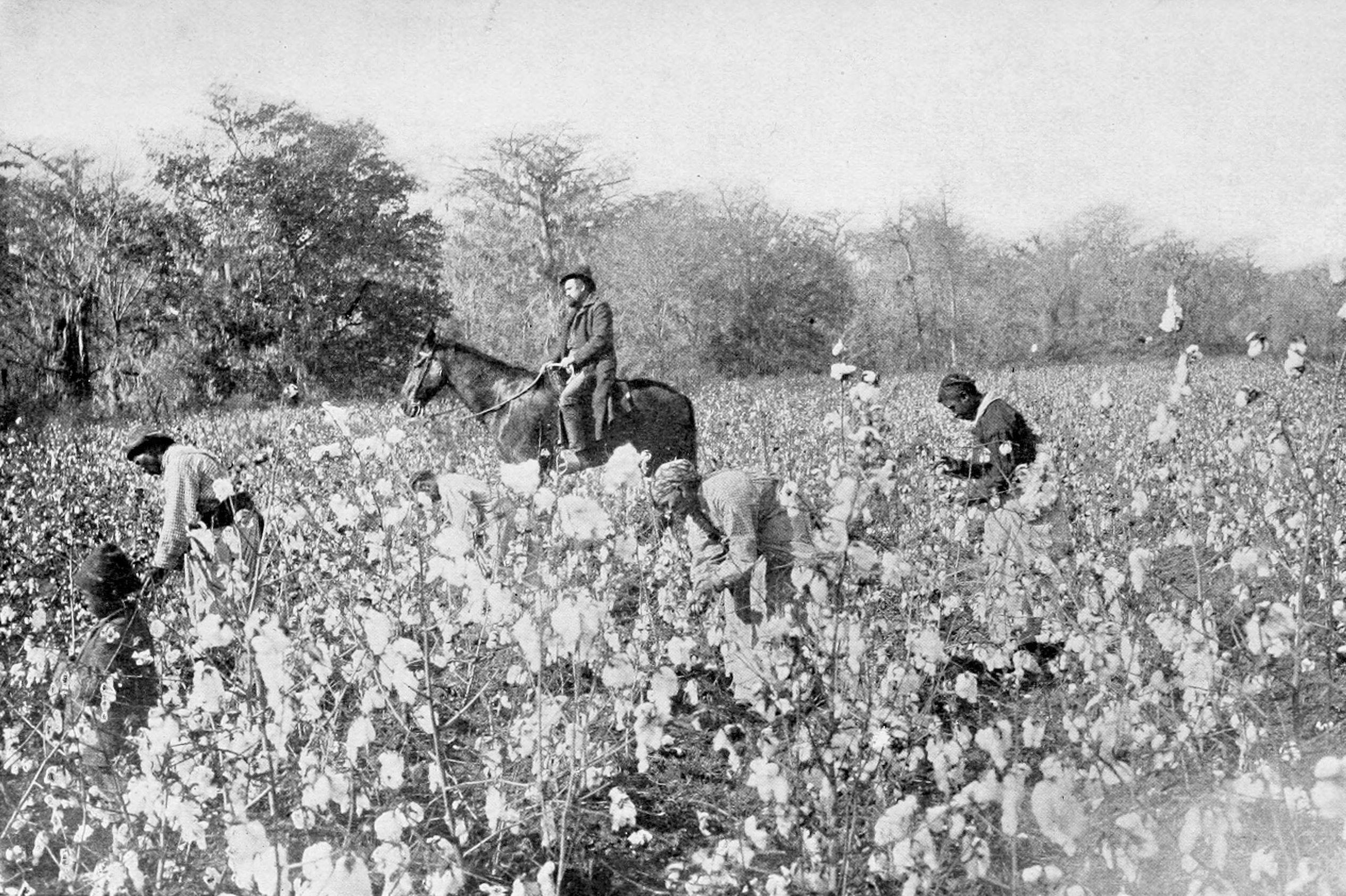
Like any reenactor I needed a story.  Liberetta's oral history and other research I have done over the years didn't quite explain something I know would have concerned her abolitionist family . . . slave cotton.  What's that? 

To understand the role of "King Cotton" in the Confederate States economy, this Wikipedia article summarizes how they hoped to use Lincoln's blockade to bring in European allies to their cause.  The blockade was effective, while the attempt at "cotton diplomacy" by the south was not.  Europe was determined to remain neutral and the Cotton Famine led them to switch to other sources.

At the same time a boycott of slave-produced goods was controversial.  No less a major abolitionist than William Lloyd Garrison switched from supporting the boycott to deciding it was unenforceable and a distraction.  Many women, Quakers and African-American abolitionists disagreed.  Professor Julie Holcomb's article, "Blood-Stained Goods" offers a good summary of "The Transatlantic Boycott of Slave Labor" and has contracted for a book-length explanation of Moral Commerce: The Transatlantic Boycott of Slave Labor.

Did that mean northerners stopped wearing cotton?  Dunberidiculous!


As this paragraph from "They Wore Cotton" shows:
So where did Northerners get their cotton from during the Civil War? The South, of course.
It seems that during the Civil War Lincoln promoted trade with the south, especially in raw cotton. He did so for several reasons. One was to keep northern weaving mills in operation. Second, Lincoln believed that many in the south sympathized with the Union and he wanted to ensure their loyalty. Third, he didn’t want the south trading the cotton that had supplied the north to England in exchange for guns and supplies.
So a brisk trade in southern cotton carried on even though the South tried to stop it by burning much of the cotton crop of 1862. Unfortunately, other than allowing northerners to continue to wear cotton, it did not have all the results Lincoln hoped for. The traders, mostly Copperheads, were soon making magnificent profits trading guns and supplies for raw cotton, despite several efforts by the government to control the trade. To learn more of the ins and outs of this trade read David Surdam’s paper Traders or Traitors: Northern Cotton Trading during the Civil War and also Civil War Cotton Conspiracy. 

It's interesting that even Lincoln had second thoughts about the boycott of Slave Cotton.

So here I am aware the Lerichs were fiercely inclined to follow their principles.  Two examples Liberetta mentioned were salting a corn crop they sold, thus preventing its distillation into alcohol, and refusing to keep dogs because they were against hunting.  Surely Slave Cotton would have been something they didn't purchase during the war and yet they, too, needed "Sunday-go-to-meeting" clothes.  Fortunately during the war Liberetta was a young teenager, so it's understandable she probably wore hand-me-down dresses from her older sister, Cleantha, nearly 8 years her senior.   

Here are the wonderful outfits Trish Moss made. 
Ladies sometimes wore their skirts without hoops, especially around fires.(A hoop also fits this.)


Simple muslin with a china figurine inspiring the trim


Classic (with curtain ties trim on the sleeves)


If you are interested in seeing what fabrics looked like during the Civil War, Reproduction Fabrics offers a page of swatches along with a link to a history of civil war fabrics.

The look is certainly lovely, but it could also be said to be "striking" as a few women in an ordinary modern-sized room fill it when all wear hoops.

While my ladies of long ago may tease today's women and girls by acting shocked that they wear "Trousers!", isn't it great that we can?  Mid-19th century women would have been fined for dressing like a man.  Amelia Bloomer was both a fashion revolutionary and crusaded for women's rights and temperance.  Since Liberetta's mother also crusaded for the W.C.T.U. as well as being an abolitionist, surely she would have seen her family didn't wear Slave Cotton.


Thursday, January 17, 2013

History as seen by the "average" person

Storytelling is both my passion and my profession, but there are subgroups within storytelling.  Sean Buvala, acting as my coach, asked me, "If money was no problem, what type of storytelling would you most like to do?"  HISTORY! I said, but not history as viewed by somebody famous...history as seen by the "average" person.

Books, television, and often movies, when looking at history focus on either someone famous or on many people without seeing life as it appeared to the "average" person.  This type of program takes similar research, so it doesn't come quickly.  That makes it hard for historical societies and museums, schools, and libraries to produce their own programs.  Added to that, coming in the persona of an individual from back in time does something movies, television, books, and even the authors of those books can't do, present a living, talking person who can react to the audience and its interests.

Liberetta Lerich Green was a very real woman who grew up here in Michigan on an Underground Railroad Station and later helped her parents in their abolition efforts.  She was here on the homefront when her brothers fought with the "Fighting Fifth" Infantry.  (I must mention here my separate blog, Michigan's "Fighting Fifth" Civil War Infantry.  Local newspaper articles on that regiment appear at the pace they appeared 150 years ago, just as the families and friends of that regiment tried to follow what was happening to the boys they loved.)  I also have copies of letters her brothers sent home and a few by her parents trying to see if their sons and others they knew might be in a military hospital needing help. Liberetta's parents, Sarah and Peter Lerich, came here as pioneers before statehood.  Teachers and elders taught Liberetta about pioneer life and even the War of 1812.  Additionally Liberetta was a Macomb County farmer's wife and later widow, and she raised three boys and three girls, including one, Loa, who was a pioneering educator. As Liberetta I've had the joy of telling about her family's contributions and what life was like for them and what she learned from others.

Beyond Liberetta there have been what I call "generic" characters.  The Michigan Arts and Humanities Touring Program posted a video of my One-Room Schoolteacher.  I also have a character I call The Hired Girl, a position common to many women of all ages.  ("Girl" is how she might be called back then.)  It was a way for women to work beyond their own homes.  The Hired Girl can let me also include folktales she might have heard in addition to talking about her work.  The Hired Girl is able to explain how a Victorian Christmas was celebrated, too.  My researching One-Room Schools and their Teachers as well as Victorian Christmas led to posts here.  (Check the sidebar to find the many posts here that have come from Liberetta and these various historical programs.) While still working as a librarian in Mount Clemens, which has a history going back to the Bath House Era, I even took the Hired Girl and worked as a "Rubber", a person involved in the baths and massages of these long ago spas.

Just for fun, I also have a program that, like Liberetta telling about the War of 1812, was developed for the Lorenzo Cultural Center's series of historical programs.  Why do I say "just for fun"?  It looks at my own childhood growing up and "Skipping Through the Halls of Fifties Memories", both the things I noticed and things going on all around me that I was too young to notice until grown-ups told me about them later.  It's a great way to get an audience recalling their own childhoods for oral history programs.

Where in time will I go next?  I don't know.  Right now I'm beginning work on the story of a Polish woman's emigration to the U.S. 

I'm in the state's Touring Directory, so my programs qualify for state grants.  It's hard to guess what might be requested next, but it will be fun using my Storytelling + Research skills to bring to new audiences "History as seen by the 'average' person."