Tell me if you have a topic you'd like to see. (Contact: LoiS-sez@LoiS-sez.com .)
Please also let others know about this site.
Showing posts with label nature. Show all posts

Friday, May 17, 2024

Farmer - Dandelion Stars - Keeping the Public in Public Domain

Hot on the heels of last weekend's Mother's Day I found myself once again wondering about something my mother used to say whenever she saw a lawn with dandelions.  "Oh the old man spilled his bag of gold!" she would shout with great delight.  I have searched and searched to find out what was behind that exclamation.  

If you know please tell me.  I suspect it was something going back to her childhood.

Aside from having dandelions on my own lawn, over on X, look at https://twitter.com/VenetiaJane.  

That inspired me to hunt once again hoping to learn more about Public Domain stories of Dandelions.  I found this in Florence Virginia Farmer's book, Nature Myths of Many Lands.  I recommend it as a very useful book for storytellers and naturalists.

I told VenetiaJane about Farmer's version.  She did a bit of prowling her own files as she remembered the story a bit differently and found this from the Journal of Education 

October 17, 1912 JOURNAL OF EDUCATION page 409

NEWTON SPELLING

[Continued from page 405.]

Here are some sentences used for spelling

orally and in writing: -


Did you see the sky last night?

The moon was shining.

The stars were bright.

The moon is the mother.

The stars are her children.

Can you tell who is the father?

One night some stars were cross.

They would not shine.

They hid behind à cloud.

Mother moon felt very sad.

Where are my baby stars?

Why are they not shining?

We do not want to work.

Let the other stars shine.

We are too sleepy to-night.

You were born to shine.

I will have no lazy stars in my home.

You must go to the earth below.

The lazy stars shook with fear.

They lost their hold.

Down, down they fell to the earth.

The little stars fell on the grass.

All night they lay there.

They wished they had been good.

In the morning father sun looked down.

He saw the little stars.

He was sorry for them.

How cold they look!

Come, clouds, send down some snow.

Cover the baby stars with a soft blanket.

All winter the stars slept in their warm bed.

The stars above shone down on them,

But they never woke.

At last the spring came,

Father sun sent his warm beams to the earth

It is time to wake, little stars.

The stars opened their sleepy eyes.

They looked up into their father's kind facc.

He smiled at them.

These stars now live on the earth.

They shine all day long.

Children call them dandelions.

*****

I edited out parts of that page unrelated to the Dandelion story.  <sigh!>  That was from an idea for teachers shortly before my own mother was born.  I intend to keep looking for what inspired mom's cries of "The old man spilled his bag of gold!"  Perhaps it was something created by a teacher she had. I can certainly tell you her lawn never tried to eliminate dandelions.  

Whether you want dandelions or not, if you love nature, especially plants, I want to give a shout out to https://www.venetiajane.co.uk/ as well as her work on X (Twitter), Instagram, Pinterest, and YouTube.  Her photography is both lovely and lovingly done with cards, calendars, and photos.  She mixes those images with folklore, literature, and history.  Here in the mitten-shaped state of Michigan I sometimes see her part of the United Kingdom warming up before us.  As winter tends to drag on too long, it's wonderful to see what she sees.

You may see dandelions as a weed taking over your lawn, but my mom, VenetiaJane, and I see so much more.  Blow on those dandelion stars to spread them and, while you're at it, spread a story about them.

Friday, October 21, 2022

Danielson - A Legend of the Golden-Rod - Keeping the Public in Public Domain

The work of Ada and Eleanor Skinner have been represented here before.  Sometimes it has been their original work or stories they adapted.  This is especially true because of their anthologies for each of the seasons.  Autumn stories and poems are gathered in The Topaz Story Book.  The subtitle says why now it is worth returning to and prowling for "Stories and Legends of Autumn, Halloween, and Thanksgiving."  I'm not always certain how authentic the "legends" may be, but they do give us a chance to think about how something came to be.  Such stories are called "Pourquis" tales, from the French word for "Why."  As frost starts to kill off flowers it's no wonder the few remaining catch our attention.  So it is with the Goldenrod.  Fields with asters and goldenrod take our eyes off the changing leaves both in the trees and on the ground.  Topaz has two short poems and two stories about this plant.  Like the plants, let us enjoy it while it lasts.


Photo by Isabella and Zsa Fischer on Unsplash.com


BY THE WAYSIDE

On the hill the golden-rod,  

And the aster in the wood,  

And the yellow sunflower by the brook, 

In autumn beauty stood.  

                 William Cullen Bryant.


Just as that poem mentions both goldenrod and aster, one of the two stories is about both.  This story is about the goldenrod alone. 

A LEGEND OF THE GOLDEN-ROD

Frances Weld Danielson

(From “Story-Telling Time.” Used by permission of Pilgrims Press.)

Once there were a great many weeds in a field. They were very ugly-looking weeds, and they didn’t seem to be the least bit of use in the world. The cows would not eat them, the children would not pick them, and even the bugs did not seem to like them very well.

“I don’t see what we’re here for,” said one of the weeds. “We are not any good.”

“No good at all,” growled a dozen little weeds, “only to catch dust.”

“Well, if that’s what we’re here for,” cried a very tall weed, “then I say let’s catch dust! I suppose somebody’s got to do it. We can’t all bear blueberries or blossom into hollyhocks.”

“But it isn’t pleasant work at all,” whined a tiny bit of a weed.

“No whining allowed in this field,” laughed a funny little fat weed, with a hump in his stalk. “We’re all going to catch dust, so let’s see which one can catch the most. What do you say to a race?”

The little fat weed spoke in such a jolly voice that the weeds all cheered up at once, and before long they were as busy as bees, and as happy as Johnnie-jump-ups. They worked so well stretching their stalks and spreading out their fingers that before the summer was half over they were able to take every bit of dust that flew up from the road. In the field beyond, where the clover grew and the cows fed, there was not any to be seen.

One morning, toward the end of summer, the weeds were surprised to see a number of people standing by the fence looking at them. Pretty soon some children came and gazed at them. Then the weeds noticed that people driving by called each other’s attention to them. They were much surprised at this, but they were still more surprised when one day some children climbed the fence and commenced to pick them.

“See,” cried a little girl, “how all the dust has been changed to gold!”

The weeds looked at each other, and, sure enough, they were all covered with gold-dust.

“A fairy has done it,” they whispered one to the other.

But the fairies were there on the spot, and declared they had had nothing to do with it.

“You did it yourselves,” cried the queen of the fairies. “You were happy in your work, and a cheerful spirit always changes dust into gold. Didn’t you know it?”

“You’re not weeds any more, you’re flowers,” sang the fairies.

“Golden-rod, golden-rod!” shouted the children.

***

According to Find-A-Grave.com Frances Weld Danielson was "an acclaimed writer of children's books" and it lists some of her early 20th century work.  Her publisher, The Pilgrim Press, is "North America's oldest English language publishing tradition" going back to "the Bay Psalm Book produced in 1640 by the Puritans of Massachusetts Bay Colony."  Certainly Danielson's story and its publisher deserve their place in the Public Domain.

The following Goldenrod poem is attributed to Anna E. Skinner.  At first I thought it might be a typo, but the name looks like it might honor Eleanor in its middle initial.  <SIGH!>  The work of the authors in Public Domain don't always tell us much about them.  Their work must speak for them.

Photo by Emily Thompson on Unsplash

GOLDEN-ROD

 
Pretty, slender golden-rod, 
Like a flame of light,  
On the quiet, lonely way,
Glows your torch so bright.
 
With your glorious golden staff,  
Gay in autumn hours,  
Now you lead to wintry rest,  
All the lovely flowers.
Cheering with a joyous face, 
All that pass you by,  
How you light the meadows round,  
With your head so high.  
                 
                Anna E. Skinner.
 
 
As I write this, the ground is starting to be coated by wet snow that the weather report says, as of this weekend, will be replaced by temperatures in the 60s and 70s.  Fortunately Goldenrod will still survive a while longer to brighten our fields!
 
Similarly the stories, poetry, illustrations, and music will survive in Public Domain as long as we continue to pay attention to them.
 
*****************

This is part of a series of postings of stories under the category, "Keeping the Public in Public Domain."  The idea behind Public Domain was to preserve our cultural heritage after the authors and their immediate heirs were compensated.  I feel strongly current copyright law delays this intent on works of the 20th century.  My own library of folklore includes so many books within the Public Domain I decided to share stories from them.  I hope you enjoy discovering new stories.  


At the same time, my own involvement in storytelling regularly creates projects requiring research as part of my sharing stories with an audience.  Whenever that research needs to be shown here, the publishing of Public Domain stories will not occur that week.  This is a return to my regular posting of a research project here.  (Don't worry, this isn't dry research, my research is always geared towards future storytelling to an audience.)  Response has convinced me that "Keeping the Public in Public Domain" should continue along with my other postings as often as I can manage it.

Other Public Domain story resources I recommend-

  • There are many online resources for Public Domain stories, maybe none for folklore is as ambitious as fellow storyteller, Yoel Perez's database, Yashpeh, the International Folktales Collection.  I have long recommended it and continue to do so.  He has loaded Stith Thompson's Motif Index into his server as a database so you can search the whole 6 volumes for whatever word or expression you like by pressing one key. http://folkmasa.org/motiv/motif.htm

  • You may have noticed I'm no longer certain Dr. Perez has the largest database, although his offering the Motif Index certainly qualifies for those of us seeking specific types of stories.  There's another site, FairyTalez claiming to be the largest, with "over 2000 fairy tales, folktales, and fables" and they are "fully optimized for phones, tablets, and PCs", free and presented without ads.
    Between those two sites, there is much for story-lovers, but as they say in infomercials, "Wait, there's more!"

The email list for storytellers, Storytell, discussed Online Story Sources and came up with these additional suggestions:        

         - David K. Brown - http://people.ucalgary.ca/~dkbrown/stories.html

         - Richard Martin - http://www.tellatale.eu/tales_page.html

         - Spirit of Trees - http://spiritoftrees.org/featured-folktales

         - Story-Lovers - http://www.story-lovers.com/ is now only accessible through the Wayback Machine, described below, but the late Jackie Baldwin's wonderful site lives on there, fully searchable manually (the Google search doesn't work), at https://archive.org/ .  It's not easy, but go to Story-lovers.com snapshot for October 22 2016  and you can click on SOS: Searching Out Stories to scroll down through the many story topics and click on the story topic that interests you.

       - World of Tales - http://www.worldoftales.com/ 

 
           - Zalka Csenge Virag - http://multicoloreddiary.blogspot.com doesn't give the actual stories, but her recommendations, working her way through each country on a continent, give excellent ideas for finding new books and stories to love and tell.

     
You're going to find many of the links on these sites have gone down, BUT go to the Internet Archive Wayback Machine to find some of these old links.  Tim's site, for example, is so huge probably updating it would be a full-time job.  In the case of Story-Lovers, it's great that Jackie Baldwin set it up to stay online as long as it did after she could no longer maintain it.  Possibly searches maintained it.  Unfortunately Storytell list member, Papa Joe is on both Tim Sheppard's site and Story-Lovers, but he no longer maintains his old Papa Joe's Traveling Storytelling Show website and his Library (something you want to see!) is now only on the Wayback Machine.  It took some patience working back through claims of snapshots but finally in December of 2006 it appears!

    Somebody as of this writing whose stories can still be found by his website is the late Chuck Larkin - http://chucklarkin.com/stories.html.  I prefer to list these sites by their complete address so they can be found by the Wayback Machine, a.k.a. Archive.org, when that becomes the only way to find them.

You can see why I recommend these to you. 

Have fun discovering even more stories


Friday, January 7, 2022

Seton - A Rabbit's Story of His Life, Written by Himself - Keeping the Public in Public Domain

Have you gone for a hike lately?  For many of us right now that means bundling up!  Wind chills and snow have much of the northern hemisphere very much in the grip of winter!  

More about that in today's story, but first a look back at last week.  Public Domain Day was a week ago on January 1st with many 1926 U.S. works and international works by authors, composers, and more also being added.  That latter is worth noting:

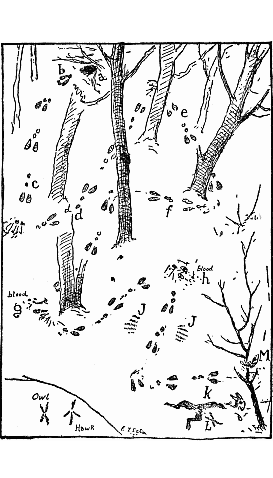
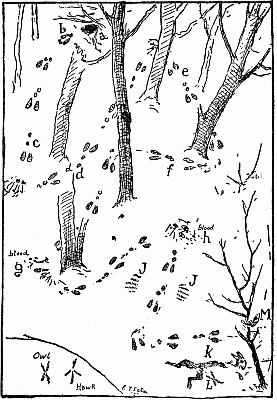
I went through my personal collection and found my 1926 edition of Ernest Thompson Seton's Woodland Tales, not realizing an earlier 1922 edition was already at Project Gutenberg.  In Seton's "Things to See in Wintertime" section he has a "Tale" he called "Tracks and the Stories They Tell" with the most common tracks of Dog, Cat, Sparrow, Chicken, and Robin.  He called it a "Tale", but it's really the following #56 that is actually a Tale.  He found a story  discovered by following the tracks of a rabbit all the way through to some final  feathers to solve a Woodland murder mystery.  His illustration is small and a bit hard to follow.  I was able to enlarge it a bit to make it slightly easier to follow.  I would recommend, if you wanted to re-tell the story, getting an artist to make a larger version.  (There's a limit  as to how large a picture may be enlarged before it becomes unreadable.)

One other quick note, Seton in the Preface called his stories "Mother Carey Tales."  Mother Carey is usually a personification of the sea, but he used it as a Mother Nature figure, complete with all the favoring of the strong over the weak.

TALE 56
A Rabbit's Story of His Life, Written by Himself

Yes, the Rabbit wrote it himself and about himself in the oldest writing on earth, that is the tracks of his feet.

A WOODCRAFT TRAGEDY As shown by the Tracks and Signs in the Snow A WOODCRAFT TRAGEDY
As shown by the Tracks and Signs in the Snow

In February of 1885, one morning after a light snowfall, I went tramping through the woods north of Toronto, when I came on something that always makes me stop and look—the fresh tracks of an animal. This was the track of a Cottontail Rabbit and I followed its windings with thrills of interest. There it began under a little brush pile (a); the bed of brown leaves showing that he settled there, before the snow-fall began. Now here (b) he leaped out after the snow ceased, for the tracks are sharp, and sat looking around. See the two long marks of his hind feet and in front the two smaller prints of his front feet; behind is the mark made by his tail, showing that he was sitting on it.

Then he had taken alarm at something and dashed off at speed (c), for now his hind feet are tracking ahead of the front feet, as in most bounding forefoots, and the faster he goes, the farther ahead those hind feet get.

See now how he dodged about here and there, this way and that, among the trees, as though trying to escape some dreaded enemy (c, d, e, f).

But what enemy? There are no other tracks, and still the wild jumping went on.

I began to think that the Rabbit was crazy, flying from an imaginary foe; possibly that I was on the track of a March Hare. But at "g" I found on the trail for the first time a few drops of blood. That told me that the Rabbit was in real danger but gave no clue to its source.

At "h" I found more blood and at "j" I got a new thrill, for there, plain enough on each side of the Rabbit track, were finger-like marks, and the truth dawned on me that these were the prints of great wings. The Rabbit was fleeing from an eagle, a hawk, or an owl. Some twenty yards farther "k" I found in the snow the remains of the luckless Rabbit partly devoured. Then I knew that the eagle had not done it, for he would have taken the Rabbit's body away, not eaten him up there. So it must have been a hawk or an owl. I looked for something to tell me which, and I got it. Right by the Rabbit's remains was the large twin-toed track (l) that told me that an owl had been there, and that therefore he was the criminal. Had it been a hawk the mark would have been as shown in the left lower corner, three toes forward and one back, whereas the owl usually sets his foot with two toes forward and two backward, as in the sketch. This, then, I felt sure was the work of an owl. But which owl? There were two, maybe three kinds in that valley. I wished to know exactly and, looking for further evidence, I found on a sapling near by a big soft, downy, owlish feather (m) with three brown bars across it; which told me plainly that a Barred Owl or Hoot Owl had been there recently, and that he was almost certainly the killer of the Cottontail.

This may sound like a story of Sherlock Holmes among the animals—a flimsy tale of circumstantial evidence. But while I was making my notes, what should come flying through the woods but the Owl himself, back to make another meal, no doubt. He alighted on a branch just above my head, barely ten feet up, and there gave me the best of proof, next to eye witness of the deed, that all I had gathered from the tracks and signs in the snow was quite true.

I had no camera in those days, but had my sketch book, and as he sat, I made a drawing which hangs to-day among my pictures that are beyond price.

Here, then, is a chapter of wild life which no man saw, which man could not have seen, for the presence of a man would have prevented it. And yet we know it was true, for it was written by the Rabbit himself.

If you have the seeing eye, you will be able to read many strange and thrilling happenings written for you thus in the snow, the mud, and even the sand and the dust.

*******

Seton in this story and the study of animal tracks in "Tale 55" encourages us to see nature's stories.  I try to observe those stories on my snowy hikes, but confess snow depths make it hard to get a clear view.  They're sometimes as difficult to decipher as in Seton's own small illustrations.

*****************

Now for the "fine print" about Keeping the Stories in Public Domain.  (You can always enlarge it on your computer.)

This is part of a series of postings of stories under the category, "Keeping the Public in Public Domain."  The idea behind Public Domain was to preserve our cultural heritage after the authors and their immediate heirs were compensated.  I feel strongly current copyright law delays this intent on works of the 20th century.  My own library of folklore includes so many books within the Public Domain I decided to share stories from them.  I hope you enjoy discovering new stories.  


At the same time, my own involvement in storytelling regularly creates projects requiring research as part of my sharing stories with an audience.  Whenever that research needs to be shown here, the publishing of Public Domain stories will not occur that week.  This is a return to my regular posting of a research project here.  (Don't worry, this isn't dry research, my research is always geared towards future storytelling to an audience.)  Response has convinced me that "Keeping the Public in Public Domain" should continue along with my other postings as often as I can manage it.
Other Public Domain story resources I recommend-
  • There are many online resources for Public Domain stories, maybe none for folklore is as ambitious as fellow storyteller, Yoel Perez's database, Yashpeh, the International Folktales Collection.  I have long recommended it and continue to do so.  He has loaded Stith Thompson's Motif Index into his server as a database so you can search the whole 6 volumes for whatever word or expression you like by pressing one key. http://folkmasa.org/motiv/motif.htm
  • You may have noticed I'm no longer certain Dr. Perez has the largest database, although his offering the Motif Index certainly qualifies for those of us seeking specific types of stories.  There's another site, FairyTalez claiming to be the largest, with "over 2000 fairy tales, folktales, and fables" and they are "fully optimized for phones, tablets, and PCs", free and presented without ads.

    Between those two sites, there is much for story-lovers, but as they say in infomercials, "Wait, there's more!"
The email list for storytellers, Storytell, discussed Online Story Sources and came up with these additional suggestions:            
         - David K. Brown - http://people.ucalgary.ca/~dkbrown/stories.html
         - Richard Martin - http://www.tellatale.eu/tales_page.html
         - Spirit of Trees - http://spiritoftrees.org/featured-folktales
         - Story-Lovers - http://www.story-lovers.com/ is now only accessible through the Wayback Machine, described below, but the late Jackie Baldwin's wonderful site lives on there, fully searchable manually (the Google search doesn't work), at https://archive.org/ .  It's not easy, but go to Story-lovers.com snapshot for October 22 2016  and you can click on SOS: Searching Out Stories to scroll down through the many story topics and click on the story topic that interests you.
       - World of Tales - http://www.worldoftales.com/ 
           - Zalka Csenge Virag - http://multicoloreddiary.blogspot.com doesn't give the actual stories, but her recommendations, working her way through each country on a continent, give excellent ideas for finding new books and stories to love and tell.
     
You're going to find many of the links on these sites have gone down, BUT go to the Internet Archive Wayback Machine to find some of these old links.  Tim's site, for example, is so huge probably updating it would be a full-time job.  In the case of Story-Lovers, it's great that Jackie Baldwin set it up to stay online as long as it did after she could no longer maintain it.  Possibly searches maintained it.  Unfortunately Storytell list member, Papa Joe is on both Tim Sheppard's site and Story-Lovers, but he no longer maintains his old Papa Joe's Traveling Storytelling Show website and his Library (something you want to see!) is now only on the Wayback Machine.  It took some patience working back through claims of snapshots but finally in December of 2006 it appears!
    Somebody as of this writing whose stories can still be found by his website is the late Chuck Larkin - http://chucklarkin.com/stories.html.  I prefer to list these sites by their complete address so they can be found by the Wayback Machine, a.k.a. Archive.org, when that becomes the only way to find them.
You can see why I recommend these to you. Have fun discovering even more stories!

Friday, August 6, 2021

Gatty - The Butterfly - Keeping the Public in Public Domain

Even as the nearby state park remains closed due to tree damage from last week's storm, I was delighted to receive this hopeful nature-related email this week -- I've a butterfly story and resource following it : 

We have exciting news! Bayer, the manufacturer of the pesticide Roundup, has announced that it will be removing glyphosate, the pesticide's main active ingredient, from all its lawn and garden products as early as 2023.1
Thank you

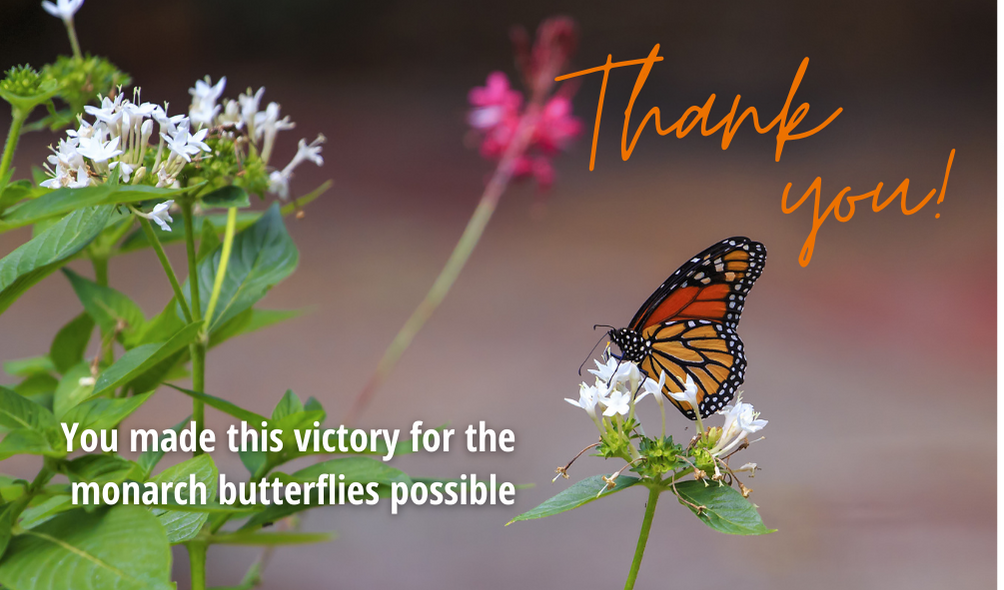
This announcement is a much-needed victory for our monarchs.

The widespread application of glyphosate has decimated the milkweed plant -- the only plant monarch caterpillars will eat. The loss of this crucial food source has contributed to an 80 percent decline in eastern monarch populations and a shocking 99 percent decline of western monarchs.2,3,4

Glyphosate harms more than monarchs, too. A study demonstrated that glyphosate poses a threat to 93 percent of all endangered species, and the World Health Organization's International Agency for Research on Cancer has labeled the chemical "probably carcinogenic to humans."5,6

Bayer's announcement represents an important first step toward protecting human health and our pollinators -- and it would not have been possible without supporters like you. You've stood with us as we've organized for years to ban glyphosate. In the last year alone, you've sent more than 30,000 messages to the Environmental Protection Agency and your state legislators calling for a ban on this harmful pesticide.

Your dedication has led to real change that can help turn the tide for our country's embattled monarch butterflies -- but our fight isn't over yet.

  • Next, we'll work to make sure Bayer doesn't just replace one toxic chemical with another, and actually reformulates Roundup in a way that's proven safe by independent research.
  • We'll continue working to remove glyphosate from agricultural pesticides to build a more sustainable food system.
  • We're still calling to ban the worst uses of neonicotinoids, another class of pesticides that has been linked to pollinator die-offs.

Thank you for making this all possible -- now let's look forward to what else we can accomplish together.

The Environmental Action team

P.S. We'll keep organizing until our pollinators, and our planet, are safe, but we need your help to keep our campaigns running. Will you donate today to keep our campaigns for monarchs, bees and more going strong?

1. "Bayer takes additional $4.5 billion charge for Roundup suits," Associated Press, July 29, 2021.
2. Claire Fahy, "California's Monarch Butterflies Are Down 99%. Can This Plant Help?," New York Times, June 1, 2021.
3. Warren Cornwall, "The Missing Monarchs," Slate, January 29, 2014.
4. Olga R. Rodriguez, "Monarch butterfly population moves closer to extinction," Associated Press, January 19, 2021.
5. Sam Bloch, "New EPA finding: Glyphosate harms 93 percent of endangered species," The Counter, December 2, 2020.
6. "IARC Monograph on Glyphosate," International Agency for Research on Cancer, last accessed December 22, 2020.


Your donation will be used to stand up for wildlife and the wild places they call home, and to support all of our campaigns to protect our environment. The generosity of people just like you is what makes all of our work possible.


On a personal level I will always wonder if my Lymphoma back in 2013 was caused by groundwater contaminated by years of living next to a farmer's cornfield.

I also want to sound the alarm on that final bullet point about neonicotinoids killing off our pollinators.  Often called "neonics", their use is banned in the European Union because the EU recognized their threat to bees.  Our pollinators are critical to our agriculture, affecting not only plants, but those who eat plants, be they cattle or people.  A concise explanation of this information comes from the American Chemical Society's Chemical & Engineering News.  Exposure to neonics poisons a bees' central nervous system, causing a 45.5% loss this past year -- the second highest loss of honeybees on record.  The good news is neonics aren't needed and its sale is now banned in Connecticut, Maine, Maryland, and Massachusetts.  To find out how your state is doing and send a request to your governor about this you can write your own email or use the link at https://environmental-action.org/beeport-card/. 

All right, I'll get off my online soapbox now and present the story.  Following it, I direct you to a really great resource, useful beyond just the topic of butterflies.


This butterfly story comes from Ada Skinner's The Emerald Story Book.   It's written by Margaret Gatty, an English naturalist, marine biologist, and author of children's literature.  Like many women authors in the 19th century, she wrote using her husband's married name, writing as Mrs. Alfred Gatty.  Since her husband was a minister, this probably was needed at that time.  By all means read the linked article on her, especially about her personal life.  You may also recognize her daughter, Julia Horatia Ewing, if you're familiar with 19th century children's literature.  She followed her mother's writing path and was well regarded by such authors as Rudyard Kipling and E. Nesbit and additionally influenced the Baden-Powells.  I'm uncertain which of Gatty's books contained this story.  What I could find online didn't include it.  I'm grateful it's in The Emerald Story Book.

THE BUTTERFLY

                                Mrs. Alfred Gatty

“Let me hire you as a nurse for my poor children,” said a Butterfly to a quiet Caterpillar, who was strolling along a cabbage-leaf in her odd lumbering way. “See these little eggs,” continued the Butterfly; “I don’t know how long it will be before they come to life, and I feel very sick and poorly, and if I should die, who will take care of my baby butterflies when I am gone? Will you, kind, mild, green Caterpillar? But you must mind what you give them to eat, Caterpillar!—they cannot, of course, live on your rough food. You must give them early dew, and honey from the flowers; and you must let them fly about only a little way at first; for, of course, one can’t expect them to use their wings properly all at once. Dear me, it is a sad pity you cannot fly yourself! But I have no time to look for another nurse now, so you will do your best, I hope. Dear, dear! I cannot think what made me come and lay my eggs on a cabbage-leaf! What a place for young butterflies to be born upon! Still you will be kind, will you not, to the poor little ones? Here, take this gold-dust from my wings as a reward. Oh, how dizzy I am! Caterpillar, you will remember about the food—”

And with these words the Butterfly drooped her wings and was gone; and the green Caterpillar, who had not had the opportunity of even saying Yes or No to the request, was left standing alone by the side of the Butterfly’s eggs.

“A pretty nurse she has chosen, indeed, poor lady!” exclaimed she, “and a pretty business I have in hand! Why, her senses must have left her, or she never would have asked a poor crawling creature like me to bring up her dainty little ones! Much they’ll mind me, truly, when they feel the gay wings on their backs, and can fly away out of my sight whenever they choose! Ah! how silly some people are, in spite of their painted clothes and the gold-dust on their wings!”

However, the poor Butterfly was gone, and there lay the eggs on the cabbage-leaf; and the green Caterpillar had a kind heart, so she resolved to do her best. But she got no sleep that night, she was so very anxious. She made her back quite ache with walking all night round her young charges, for fear any harm should happen to them; and in the morning says she to herself—

“Two heads are better than one. I will consult some wise animal upon the matter, and get advice. How should a poor crawling creature like me know what to do without asking my betters?”

But still there was difficulty—whom should the Caterpillar consult? There was the shaggy Dog who sometimes came into the garden. But he was so rough!—he would most likely whisk all the eggs off the cabbage-leaf with one brush of his tail, if she called him near to talk to her, and then she should never forgive herself. There was the Tom Cat, to be sure, who would sometimes sit at the foot of the apple-tree, basking himself and warming his fur in the sunshine; but he was so selfish and indifferent!—there was no hope of his giving himself the trouble to think about butterflies’ eggs. “I wonder which is the wisest of all the animals I know,” sighed the Caterpillar, in great distress; and then she thought, and thought, till at last she thought of the Lark; and she fancied that because he went up so high, and nobody knew where he went to, he must be very clever, and know a great deal; for to go up very high (which she could never do) was the Caterpillar’s idea of perfect glory.

Now in the neighbouring corn-field there lived a Lark, and the Caterpillar sent a message to him, to beg him to come and talk to her, and when he came she told him all her difficulties, and asked him what she was to do to feed and rear the little creatures so different from herself.

“Perhaps you will be able to inquire and hear something about it the next time you go up high,” observed the Caterpillar, timidly.

The Lark said, “Perhaps he should;” but he did not satisfy her curiosity any further. Soon afterwards, however, he went singing upwards into the bright blue sky. By degrees his voice died away in the distance till the green Caterpillar could not hear a sound. It is nothing to say she could not see him, for, poor thing, she never could see far at any time, and had a difficulty in looking upwards at all, even when she reared herself up most carefully, which she did now; but it was of no use, so she dropped upon her legs again, and resumed her walk round the Butterfly’s eggs, nibbling a bit of the cabbage-leaf now and then as she moved along.

“What a time the Lark has been gone!” she cried, at last. “I wonder where he is just now! I would give all my legs to know! He must have flown up higher than usual this time, I do think! How I should like to know where it is that he goes to, and what he hears in that curious blue sky! He always sings going up and coming down, but he never lets any secret out. He is very close!”

And the green Caterpillar took another turn round the Butterfly’s eggs.

At last the Lark’s voice began to be heard again. The Caterpillar almost jumped for joy, and it was not long before she saw her friend descend with hushed note to the cabbage bed.

“News, news, glorious news, friend Caterpillar!” sang the Lark; “but the worst of it is, you won’t believe me!”

“I believe everything I am told,” observed the Caterpillar, hastily.

“Well, then, first of all, I will tell you what these little creatures are to eat”—and the Lark nodded his beak towards the eggs. “What do you think it is to be? Guess!”

“Dew, and the honey out of flowers, I am afraid,” sighed the Caterpillar.

“No such thing! Something simpler than that. Something you can get at quite easily.”

“I can get at nothing quite easily but the cabbage-leaves,” murmured the Caterpillar, in distress.

“Excellent! my good friend,” cried the Lark, exultingly; “you have found it out. You are to feed them with cabbage-leaves.”

“Never!” cried the Caterpillar, indignantly. “It was their mother’s last request that I should do no such thing.”

“Their mother knew nothing about the matter,” persisted the Lark; “but why do you ask me, and then disbelieve what I say? You have neither faith nor trust.”

“Oh, I believe everything I am told,” said the Caterpillar.

“Nay, but you do not,” replied the Lark; “you won’t believe me even about the food, and yet that is but a beginning of what I have to tell you. Why, Caterpillar, what do you think those little eggs will turn out to be?”

“Butterflies, to be sure,” said the Caterpillar.

“Caterpillars!” sang the Lark; “and you’ll find it out in time;” and the Lark flew away, for he did not want to stay and contest the point with his friend.

“I thought the Lark had been wise and kind,” observed the mild green Caterpillar, once more beginning to walk round the eggs, “but I find that he is foolish and saucy instead. Perhaps he went up too high this time. Ah, it’s a pity when people who soar so high are silly and rude nevertheless! Dear! I still wonder whom he sees, and what he does up yonder.”

“I would tell you if you would believe me,” sang the Lark, descending once more.

“I believe everything I am told,” reiterated the Caterpillar, with as grave a face as if it were a fact.

“Then I’ll tell you something else,” cried the Lark; “for the best of my news remains behind. You will one day be a Butterfly yourself.”

“Wretched bird!” exclaimed the Caterpillar, “you jest with my inferiority—now you are cruel as well as foolish. Go away! I will ask your advice no more.”

“I told you you would not believe me,” cried the Lark.

“I believe everything that I am told,” persisted the Caterpillar; “that is”—and she hesitated—“everything that is reasonable to believe. But to tell me that butterflies’ eggs are caterpillars, and that caterpillars leave off crawling and get wings, and become butterflies!—Lark! you are too wise to believe such nonsense yourself, for you know it is impossible.”

“I know no such thing,” said the Lark, warmly. “Whether I hover over the cornfields of earth, or go up into the depths of the sky, I see so many wonderful things, I know no reason why there should not be more. Oh, Caterpillar! it is because you crawl, because you never get beyond your cabbage-leaf, that you call any thing impossible.”

“Nonsense!” shouted the Caterpillar, “I know what’s possible, and what’s not possible, according to my experience and capacity, as well as you do. Look at my long green body and these endless legs, and then talk to me about having wings and a painted feathery coat.”

“You would-be-wise Caterpillar!” cried the indignant Lark. “Do you not hear how my song swells with rejoicing as I soar upwards to the mysterious wonder-world above? Oh, Caterpillar; what comes to you from thence, receive, as I do, upon trust.”

“That is what you call—”

“Faith,” interrupted the Lark.

“How am I to learn Faith?” asked the Caterpillar.

At that moment she felt something at her side. She looked round—eight or ten little green caterpillars were moving about, and had already made a show of a hole in the cabbage-leaf. They had broken from the Butterfly’s eggs!

Shame and amazement filled our green friend’s heart, but joy soon followed; for, as the first wonder was possible, the second might be so too. “Teach me your lesson, Lark!” she would say; and the Lark sang to her of the wonders of the earth below and of the heaven above. And the Caterpillar talked all the rest of her life to her relations of the time when she should be a Butterfly.

But none of them believed her. She nevertheless had learnt the Lark’s lesson of faith, and when she was going into her chrysalis, she said—

“I shall be a Butterfly some day!”

But her relations thought her head was wandering, and they said, “Poor thing!”

And when she was a Butterfly, and was going to die again, she said—

“I have known many wonders—I have faith—I can trust even now for what shall come next!”

***** 

I don't have a week to wait for permission to print here, but you can go to Crayola.com free coloring sheets where you can find a Butterfly mask, Butterfly clip on a clothes pin, a very challenging Butterfly mandala, an appropriate page with both Butterfly and Caterpillar, and a few more pictures.  While there you can also find lesson plans and crafts.  The Butterfly crafts include two types of Butterfly puppets which can be used to help tell this story.  If you're able to take the story outside, there's a Butterfly kite.  Clicking "All" shows coloring sheets, lesson plans, crafts, and creations submitted by young artists.  Don't stop with the Butterfly topic, similarly they have a wide variety of themes.  Their site constantly adds to their resources, so it's an excellent resource to know and use.

One quick note here: I discovered a typo on the label of past posts about butterflies making it "butterfllies."  I corrected it for this post.  Now I am going to have to see if there's a way I can correct the label on the earlier posts so they can stay together.

*****************

This is part of a series of postings of stories under the category, "Keeping the Public in Public Domain."  The idea behind Public Domain was to preserve our cultural heritage after the authors and their immediate heirs were compensated.  I feel strongly current copyright law delays this intent on works of the 20th century.  My own library of folklore includes so many books within the Public Domain I decided to share stories from them.  I hope you enjoy discovering new stories.  


At the same time, my own involvement in storytelling regularly creates projects requiring research as part of my sharing stories with an audience.  Whenever that research needs to be shown here, the publishing of Public Domain stories will not occur that week.  This is a return to my regular posting of a research project here.  (Don't worry, this isn't dry research, my research is always geared towards future storytelling to an audience.)  Response has convinced me that "Keeping the Public in Public Domain" should continue along with my other postings as often as I can manage it.
Other Public Domain story resources I recommend-
  • There are many online resources for Public Domain stories, maybe none for folklore is as ambitious as fellow storyteller, Yoel Perez's database, Yashpeh, the International Folktales Collection.  I have long recommended it and continue to do so.  He has loaded Stith Thompson's Motif Index into his server as a database so you can search the whole 6 volumes for whatever word or expression you like by pressing one key. http://folkmasa.org/motiv/motif.htm
  • You may have noticed I'm no longer certain Dr. Perez has the largest database, although his offering the Motif Index certainly qualifies for those of us seeking specific types of stories.  There's another site, FairyTalez claiming to be the largest, with "over 2000 fairy tales, folktales, and fables" and they are "fully optimized for phones, tablets, and PCs", free and presented without ads.

    Between those two sites, there is much for story-lovers, but as they say in infomercials, "Wait, there's more!"
The email list for storytellers, Storytell, discussed Online Story Sources and came up with these additional suggestions:            
         - David K. Brown - http://people.ucalgary.ca/~dkbrown/stories.html
         - Richard Martin - http://www.tellatale.eu/tales_page.html
         - Spirit of Trees - http://spiritoftrees.org/featured-folktales
         - Story-Lovers - http://www.story-lovers.com/ is now only accessible through the Wayback Machine, described below, but the late Jackie Baldwin's wonderful site lives on there, fully searchable manually (the Google search doesn't work), at https://archive.org/ .  It's not easy, but go to Story-lovers.com snapshot for October 22 2016  and you can click on SOS: Searching Out Stories to scroll down through the many story topics and click on the story topic that interests you.
       - World of Tales - http://www.worldoftales.com/ 
           - Zalka Csenge Virag - http://multicoloreddiary.blogspot.com doesn't give the actual stories, but her recommendations, working her way through each country on a continent, give excellent ideas for finding new books and stories to love and tell.
     
You're going to find many of the links on these sites have gone down, BUT go to the Internet Archive Wayback Machine to find some of these old links.  Tim's site, for example, is so huge probably updating it would be a full-time job.  In the case of Story-Lovers, it's great that Jackie Baldwin set it up to stay online as long as it did after she could no longer maintain it.  Possibly searches maintained it.  Unfortunately Storytell list member, Papa Joe is on both Tim Sheppard's site and Story-Lovers, but he no longer maintains his old Papa Joe's Traveling Storytelling Show website and his Library (something you want to see!) is now only on the Wayback Machine.  It took some patience working back through claims of snapshots but finally in December of 2006 it appears!
    Somebody as of this writing whose stories can still be found by his website is the late Chuck Larkin - http://chucklarkin.com/stories.html.  I prefer to list these sites by their complete address so they can be found by the Wayback Machine, a.k.a. Archive.org, when that becomes the only way to find them.
You can see why I recommend these to you. Have fun discovering even more stories!

Saturday, May 19, 2018

Babbitt - 2 Turtle tales (Keeping the Public in Public Domain) & More

Why did the turtle cross the road?

I know that sounds like the start of an old joke, but it's not.  Spring has awakened turtles and they are slowly on the move.  They were made to be fairly unbreakable, but there are limits and that includes being unable to handle a car running them over.  If you see one on the road, please slow down, putting on your emergency flashers and pull over to the side where you can help.  They're fairly determined, so this may help you.
(Nadilyn Beato is an artist at http://reptilearts.com and, while that is copyrighted, it's her public service announcement -- I found it on Facebook.  She has an Etsy store selling her art and is based in New York.)

Please note that those determined turtles are best moved to the other side of the road where they were headed.  Also they aren't going to believe you are helping them, so do it carefully.  Snapping Turtles are particularly difficult and are fast enough with their mouths, so try to approach from the back.

Here in Oakland County, Michigan I often say we should be called Lakeland County as there are lakes, ponds, and wetlands everywhere!  This means rural and suburban roads often have traveling turtles we should protect.  Turtles date back hundreds of millions of years, older even than crocodiles or snakes, so we need to do what we can to keep them safe from our vehicles.

Of course I want to share a pair of brief turtle stories.  The Jatakas; Tales of India as retold by Ellen C. Babbitt keep some of our oldest stories in a short easily enjoyed form.  Both these stories may be familiar in other cultures.  The first will sound rather like Br'er Rabbit and I'm not saying the story traveled from India, but it's probably just human "reverse psychology."  The other first came to my attention in 1968 when Janina Domanska published a Polish version called Look, There Is a Turtle Flying.  I do believe that came from those old Indian tales moving out into other lands.  Either way here they are for us to enjoy.
"Please don't throw me in the briar patch!"  Br'er Rabbit's version is better known, but maybe Turtles did it first.

The next story is so appropriate for me...and maybe you, too.
I confess I sometimes think I was destined to be a storyteller since I got in trouble for talking from my earliest days, especially in school.  Fortunately it never was as catastrophic as it was for poor Turtle.  I often say "I tell for fun and profit", so keep me and the world of storytelling in mind when you look for a program.
*******************
This is part of a series of postings of stories under the category, "Keeping the Public in Public Domain."  The idea behind Public Domain was to preserve our cultural heritage after the authors and their immediate heirs were compensated.  I feel strongly current copyright law delays this intent on works of the 20th century.  My own library of folklore includes so many books within the Public Domain I decided to share stories from them.  I hope you enjoy discovering new stories.  


At the same time, my own involvement in storytelling regularly creates projects requiring research as part of my sharing stories with an audience.  Whenever that research needs to be shown here, the publishing of Public Domain stories will not occur that week.  This is a return to my regular posting of a research project here.  (Don't worry, this isn't dry research, my research is always geared towards future storytelling to an audience.)  Response has convinced me that "Keeping the Public in Public Domain" should continue along with my other postings as often as I can manage it.
Other Public Domain story resources I recommend-
  • There are many online resources for Public Domain stories, maybe none for folklore is as ambitious as fellow storyteller, Yoel Perez's database, Yashpeh, the International Folktales Collection.  I have long recommended it and continue to do so.  He has loaded Stith Thompson's Motif Index into his server as a database so you can search the whole 6 volumes for whatever word or expression you like by pressing one key. http://folkmasa.org/motiv/motif.htm
  • You may have noticed I'm no longer certain Dr. Perez has the largest database, although his offering the Motif Index certainly qualifies for those of us seeking specific types of stories.  There's another site, FairyTalez claiming to be the largest, with "over 2000 fairy tales, folktales, and fables" and they are "fully optimized for phones, tablets, and PCs", free and presented without ads.

    Between those two sites, there is much for story-lovers, but as they say in infomercials, "Wait, there's more!"
The email list for storytellers, Storytell, discussed Online Story Sources and came up with these additional suggestions:            
         - David K. Brown - http://people.ucalgary.ca/~dkbrown/stories.html
         - Richard Martin - http://www.tellatale.eu/tales_page.html
         - Spirit of Trees - http://spiritoftrees.org/featured-folktales
         - Story-Lovers - http://www.story-lovers.com/ is now only accessible through the Wayback Machine, described below, but Jackie Baldwin's wonderful site lives on there, fully searchable manually (the Google search doesn't work), at https://archive.org/ .  It's not easy, but go to Story-lovers.com snapshot for October 22 2016  and you can click on SOS: Searching Out Stories to scroll down through the many story topics and click on the story topic that interests you.
       - World of Tales - http://www.worldoftales.com/ 
     
You're going to find many of the links on these sites have gone down, BUT go to the Internet Archive Wayback Machine to find some of these old links.  Tim's site, for example, is so huge probably updating it would be a full-time job.  In the case of Story-Lovers, it's great that Jackie Baldwin set it up to stay online as long as it did after she could no longer maintain it.  Possibly searches maintained it.  Unfortunately Storytell list member, Papa Joe is on both Tim Sheppard's site and Story-Lovers, but he no longer maintains his old Papa Joe's Traveling Storytelling Show website and his Library (something you want to see!) is now only on the Wayback Machine.  It took some patience working back through claims of snapshots but finally in December of 2006 it appears!
    Somebody as of this writing whose stories can still be found by his website is the late Chuck Larkin - http://chucklarkin.com/stories.html.  I prefer to list these sites by their complete address so they can be found by the Wayback Machine, a.k.a. Archive.org, when that becomes the only way to find them.
You can see why I recommend these to you. Have fun discovering even more stories!