Tell me if you have a topic you'd like to see. (Contact: LoiS-sez@LoiS-sez.com .)
Please also let others know about this site.
Showing posts with label Mary Catherine Judd. Show all posts

Friday, July 18, 2025

Judd - Story of the Deluge - Keeping the Public in Public Domain

Some have complained that the poster of the picture of a happy Jesus welcoming girls from Camp Mystic is AI generated "exploiting the death of children using ai to gain internet clout by the original poster who is scamming the public!" I'm keeping it up on my Facebook page because, whatever its origins, it certainly fits the other side of this tragic flooding in Texas. 

I certainly recommend comparing today's story from the Anishinaabe tradition (gathered from the Minnesota area around the end of the 19th century) with the Bible's (Genesis chapters 6-9). It is said all the world's earliest traditions tell of a Great Flood. Mary Catherine Judd in Wigwam Stories not only tells "The Story of the Deluge", but includes photos from the era including a traditional wigwam used to travel to hunting grounds. Whether in such a temporary home or winter wigwam lodges, the people of the Great Lakes region did not live in tipis. It's easy to think of this story being told around a campfire. 
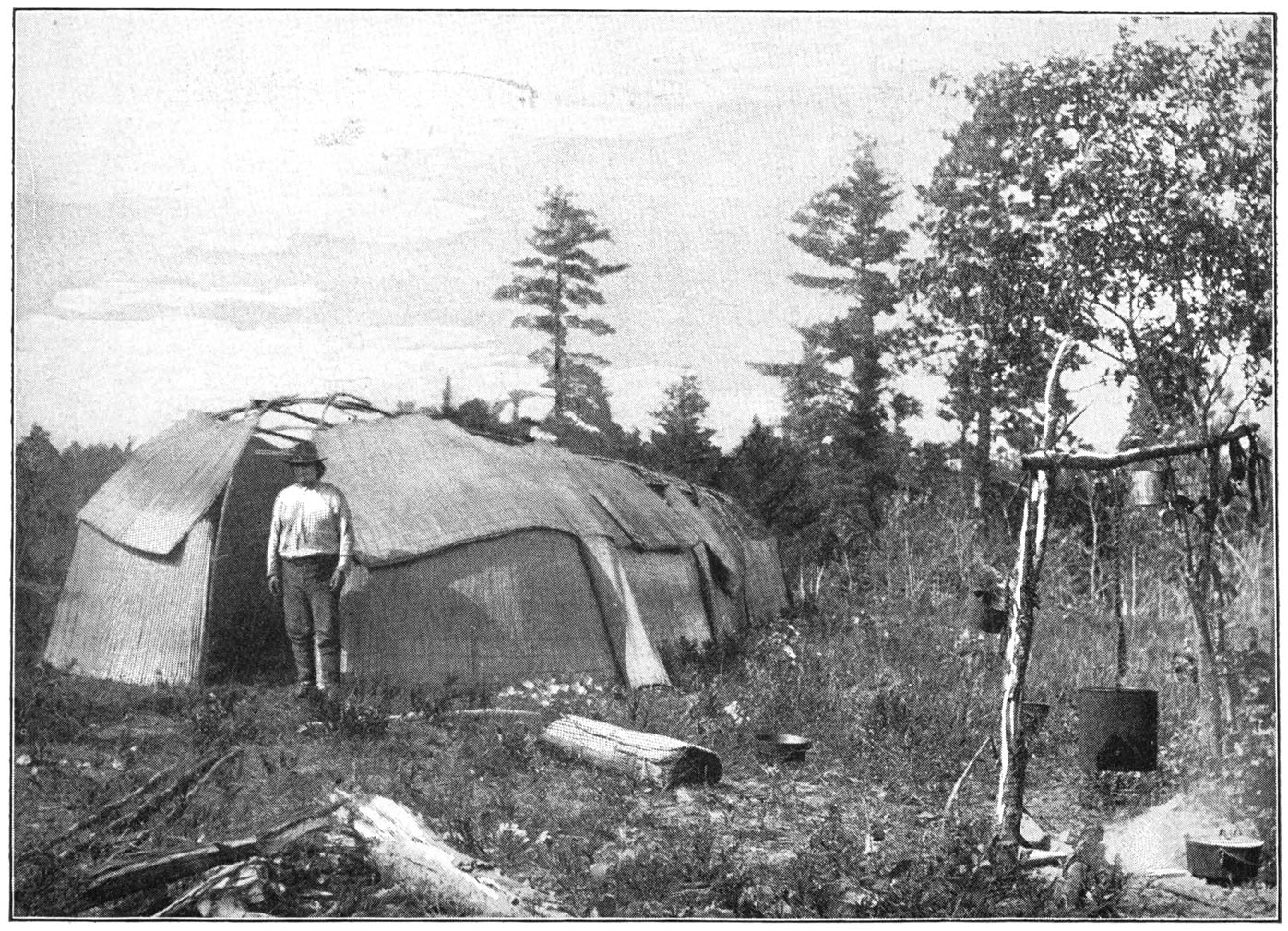
Chippewa Indian’s Summer Wigwam

Chippewa Indian’s Summer Wigwam

Before beginning "The Story of the Deluge", the "hero" of this story has a name that changes slightly depending on local dialect. I know him as Nanabazhoo. Judd explains a bit about him when she says:

 The old myths of years ago are repeated in Indian homes, and many of the stories, like those told in the poem of Hiawatha, are familiar tales to little children in western teepees. Hiawatha the Wise we now know is an Iroquois hero; Menabozho, who is called the Foolish or Sly One, is an Algonquin hero, and they are two very different characters in the lore of two different Indian nations. Hiawatha the Iroquois is always dignified; Menabozho the Algonquin is very powerful but full of boyish tricks.

STORY OF THE DELUGE

(Chippewa, 1900)
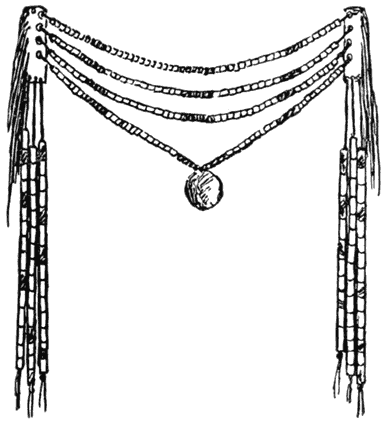
Menabozho, the great land manitou, did not like the water manitous or spirits. One day he saw the chief of the water manitous asleep on a rock, and he shot and killed him with a magic arrow; then the little water manitous called the big rivers to help them and chased Menabozho up a high hill.

The water reached halfway up the hill; the water manitous called all the little rivers then to help them. The water chased Menabozho to the top of the high hill. He climbed up a tall pine tree, but the water came up to his chin; it could not go over his head, for there is not water enough in the whole world to drown the great Menabozho.

He waited a long time while he stood on the top of the pine tree. The rivers would not go back, and he could not see any land.

A loon flew over his head and then dived into the great water. Menabozho said: “Brother Loon, come to me. I must make land for us to stand on. Will you dive down and bring me a little sand?”

The loon put down his head and went through the deep water, but it was too deep even for the great loon-bird. He came up again, but he had left his breath in the deep water. Menabozho caught him as he floated by the pine tree, but he found no sand in his bill nor on his feet.

An otter put his head out of the water close by Menabozho.

“Brother Otter, dive down and bring me up a few grains of sand. We must have land to put our feet upon.”

The otter knew he must do as Menabozho told him, so he put his head down into the deep water. He came up, but he had no life any more, and Menabozho could not find any sand in his paws.

A muskrat came swimming by just then. “Brother Muskrat, you are very brave. Will you dive down to the sand under this deep water and bring me a few grains? I must make land for my brothers,” said Menabozho.

The muskrat was brave, for he dived down, but he came up just like the otter. He had no more life, but he had a little sand in one front paw.

Menabozho held the sand in his own hand and dried it in the sunshine. He blew it with his breath far out on the water, and it made a little island. Menabozho called the sand back to him. He dried it in his hand again and then blew it to its place on the deep water. He did this for two days, and the island grew larger every time it was sent back. Menabozho left the tree and walked on the land.

He called to his brothers, who are the trees, animals, and everything on the land, to come and live on this land. The water had to go back to its place.

*******

While it is worthwhile to look at the Biblical and traditional roots of the Deluge story, I agree completely with Gary Struth about the recent devastating floods when he posted:

Mental health professionals have told us that the absolute worst way to lose a child is when the cause of death is sudden and violent. This horrific tragedy was BOTH.
Texans, Americans, and people around the world ... I encourage you to NOT FORGET the grieving families of Kerr County. Their pain and anguish will be long lasting. Please, pray for them. If you are able to give to their physical needs, I hope you'll do that. In this sad season, when they are weak, let us be strong, for them.

***************************** 

This is part of a series of postings of stories under the category, “Keeping the Public in Public Domain.” The idea behind Public Domain was to preserve our cultural heritage after the authors and their immediate heirs were compensated. I feel strongly current copyright law delays this intent on works of the 20th century. My own library of folklore includes so many books within the Public Domain I decided to share stories from them. I hope you enjoy discovering them.

At the same time, my own involvement in storytelling regularly creates projects requiring research as part of my sharing stories with an audience.  Whenever that research needs to be shown here, the publishing of Public Domain stories will not occur that week.  This is a return to my regular posting of a research project here.  (Don't worry, this isn't dry research, my research is always geared towards future storytelling to an audience.)  Response has convinced me that "Keeping the Public in Public Domain" should continue along with my other postings as often as I can manage it.

See the sidebar for other Public Domain story resources I recommend on the page “Public Domain Story Resources."


Saturday, May 30, 2020

Shelter in Place - week 10 / Three Versions of the Iris Legend - Keeping the Public in Public Domain


Just about everything that should be green has become green.  Kermit the Frog was known for saying "It's not easy being green" and until recently things were cold enough it was certainly true.  Then Michigan barely had time to flirt with spring when it leaped into summer with hot weather that popped everything out at once.  Purple seems to be everywhere!  One day it was the lilacs popping out, then my irises went from barely a bud to full-blown flowers.  Of course wildflowers started it with spring violets when the season was barely a hope.

Here's a bit of my house with Korean Lilacs, Irises and a wildflower I first heard called "Mock Geraniums", but the useful search tool at MyWildflowers.com  has me believing it's probably called "Dame's Rocket" although there are several very similar wildflowers.  Whenever I see Irises I remember their strange other name of "Flags" and it sent me looking to find more about them.  It turns out there are enough mythological stories that I wound up with at least three versions of the story about the flower.

I decided to give all three versions and when I tell my own composite story would pick and choose from all three, leaving out some of the story.  You'll see what I mean and I hope from now on when you see an Iris you'll think of this early legend.

The simplest version comes from The Turquoise Story Book; Stories and Legends of Summer and Nature compiled by Ada M. and Eleanor L. Skinner, with this version credited to Ada Skinner.
Another popular anthologist was Frances Jenkins Olcott and her book, The Wonder Garden; Nature Myths and Tales from All the World Over does a good job of crediting many sources, but doesn't mention a source for her story, merely calling it an "Old Tale," BUT her first page tells us new information about Iris and her origin.
the second page gets more into the story as Skinner told it.
It's interesting that Olcott has one story in her book from Skinner's The Turquoise Story Book, but obviously felt it was necessary to give us Iris's background.  At the same time she simplified the story of the colors omitting the three flower sisters.

Finally I want to give Mary Catherine Judd's version which she retold "for Primary Pupils" in her Classic Myths; Greek, German, and Scandinavian.  The book opens with teacher suggestions, by the way, using examples of Phaeton for the sun, Diana for the moon, Jupiter for the stars, and a few tales for studying the winds and water.  She closes her 1898 edition of the book by inserting the Finnish myth of "Where Language Came From", adding a pair of Russian myths, and an Egyptian myth.  After the basics about Iris, she presents an interesting additional aspect of Iris.  I do have one caution to her book, but I'll give after her version of the Iris story.  Maybe you will guess it.

From here on it can get picky or sticky, so I'll understand if you don't feel like going beyond these three stories of Iris.  In fact it reminds me of this John D. Batten illustration in Joseph Jacob's Celtic Fairy Tales right before the section called "Notes and References" because it can get dry and complicated.

Classical mythology purists would probably say this is Roman and not Greek mythology, but the Romans managed to thoroughly intermingle their myths with the Greeks, causing sometimes the names to be changed and sometimes not.  Jupiter is definitely the Roman version of the Greek's Jove or Zeus.  I went to Wikipedia and found Juno's story oh so complicated.  Then I decided to see what Wikipedia could tell us about Iris herself.  Olcott's story of her family is completely discounted by a whole different family tree in Wikipedia's look at Iris.  It does mention the Harpies in relation to Iris turning back the Argonauts who pursued them, but not that they were her sisters.

By now I began to wonder if this tangled mess of a myth could be unraveled and went to some of the more standard works on mythology.  If you're interested or trying to make a complete story about Iris, it's really necessary to look further.  Fortunately I have reference works on hand even if libraries are closed.  First off I would challenge Wikipedia, because I did indeed find her sisters listed as the Harpies.  Olcott appears to be correct!  The simplest yet most thorough information is in Herbert Spencer Robinson and Knox Wilson's Myths and Legends of All Nations states:
Thaumas (whose name means Wonder) was the husband of Electra (meaning Brightness), one of the Oceanids (not the Electra of the Agamemnon story), and was by her the father of Iris, the beautiful goddess of the rainbow, and also father of the three Harpies, terrifying winged creatures representing the speed and horror of the storm.  The Harpies are mentioned as two or three -- Aello (Storm) and Ocypete (Swift-flyer); with Podarge (Swift-foot) sometimes added.
While a few sources say it should be Hera (not Juno) and Zeus (not Jupiter), putting it squarely back in Greek mythology, it is agreed with in Funk & Wagnall Standard Dictionary of Folklore and in Classical Mythology by Mark P.O. Morford and Robert J. Lenardon.  Interestingly Isaac Asimov in Words from the Myths doesn't deal with any of that as his focus is how the Greek word "iris" means "rainbow."   He goes on to talk about the multi-colored rainbow and how the word "iris" is applied to other objects having many colors including the colored part of the eye.  He goes on to mention the plant, calling it the flag, and that it, too, comes in many colors.  (His comments also go on to talk about how it led to the word "iridescence.")  I found it interesting that another standard look at mythology, The New Golden Bough by Sir James Frazer and revised by Theodor H. Gaster doesn't even talk about Iris.

****
WAKE UP!  Now surely some of this lodged itself in your brain and I hope you think of it when you see irises and maybe even the rainbow.
Photo by Yulia Gadalina on Unsplash
I was all set to end this story with that rainbow and then I saw this wonderful iris on a friend's Facebook page and knew this should be updated as her iris has that multicolored idea in one flower.
by Rosie M. Chapman

That certainly gives the "flag" idea and rainbow, doesn't it!  Thanks, Miz Rosie!
******************
This is part of a series of postings of stories under the category, "Keeping the Public in Public Domain."  The idea behind Public Domain was to preserve our cultural heritage after the authors and their immediate heirs were compensated.  I feel strongly current copyright law delays this intent on works of the 20th century.  My own library of folklore includes so many books within the Public Domain I decided to share stories from them.  I hope you enjoy discovering new stories.  


At the same time, my own involvement in storytelling regularly creates projects requiring research as part of my sharing stories with an audience.  Whenever that research needs to be shown here, the publishing of Public Domain stories will not occur that week.  This is a return to my regular posting of a research project here.  (Don't worry, this isn't dry research, my research is always geared towards future storytelling to an audience.)  Response has convinced me that "Keeping the Public in Public Domain" should continue along with my other postings as often as I can manage it.
Other Public Domain story resources I recommend-
  • There are many online resources for Public Domain stories, maybe none for folklore is as ambitious as fellow storyteller, Yoel Perez's database, Yashpeh, the International Folktales Collection.  I have long recommended it and continue to do so.  He has loaded Stith Thompson's Motif Index into his server as a database so you can search the whole 6 volumes for whatever word or expression you like by pressing one key. http://folkmasa.org/motiv/motif.htm
  • You may have noticed I'm no longer certain Dr. Perez has the largest database, although his offering the Motif Index certainly qualifies for those of us seeking specific types of stories.  There's another site, FairyTalez claiming to be the largest, with "over 2000 fairy tales, folktales, and fables" and they are "fully optimized for phones, tablets, and PCs", free and presented without ads.

    Between those two sites, there is much for story-lovers, but as they say in infomercials, "Wait, there's more!"
The email list for storytellers, Storytell, discussed Online Story Sources and came up with these additional suggestions:            
         - David K. Brown - http://people.ucalgary.ca/~dkbrown/stories.html
         - Richard Martin - http://www.tellatale.eu/tales_page.html
         - Spirit of Trees - http://spiritoftrees.org/featured-folktales
         - Story-Lovers - http://www.story-lovers.com/ is now only accessible through the Wayback Machine, described below, but Jackie Baldwin's wonderful site lives on there, fully searchable manually (the Google search doesn't work), at https://archive.org/ .  It's not easy, but go to Story-lovers.com snapshot for October 22 2016  and you can click on SOS: Searching Out Stories to scroll down through the many story topics and click on the story topic that interests you.
       - World of Tales - http://www.worldoftales.com/ 
           - Zalka Csenge Virag - http://multicoloreddiary.blogspot.com doesn't give the actual stories, but her recommendations, working her way through each country on a continent, give excellent ideas for finding new books and stories to love and tell.
     
You're going to find many of the links on these sites have gone down, BUT go to the Internet Archive Wayback Machine to find some of these old links.  Tim's site, for example, is so huge probably updating it would be a full-time job.  In the case of Story-Lovers, it's great that Jackie Baldwin set it up to stay online as long as it did after she could no longer maintain it.  Possibly searches maintained it.  Unfortunately Storytell list member, Papa Joe is on both Tim Sheppard's site and Story-Lovers, but he no longer maintains his old Papa Joe's Traveling Storytelling Show website and his Library (something you want to see!) is now only on the Wayback Machine.  It took some patience working back through claims of snapshots but finally in December of 2006 it appears!
    Somebody as of this writing whose stories can still be found by his website is the late Chuck Larkin - http://chucklarkin.com/stories.html.  I prefer to list these sites by their complete address so they can be found by the Wayback Machine, a.k.a. Archive.org, when that becomes the only way to find them.
You can see why I recommend these to you. Have fun discovering even more stories!

Saturday, June 22, 2019

Copway - How the Water Lily Came - Keeping the Public in Public Domain

I love to take my husky/malamute (I lovingly call him a Malamutt!) out for long walks in local parks.  Horse trails are particularly good and a nearly unknown gem among the Oakland County Parks is  Rose Oaks out in Rose Township.  With all the rain I usually wouldn't go there, but earlier this week I put on my muck boots and headed out.  What a treat!  I remembered the lake, but don't recall the lovely section that formed a smaller pond with many lovely water lilies.  I also watched a heron and a crane in the distance.  I'm no photographer so that photo came from a site I'll mention later, but it comes the closest to looking like what I saw.

Those water lilies made me hunt for an Anishinaabe story I've never told, but remembered.  Was sure it was collected by Schoolcraft . . . nope.  Looked online and found the only version of it at the site I will mention in a bit.  Turns out there are "any of 58 species in 6 genera of freshwater plants native to the temperate and tropical parts of the world" according to Britannica.com in the scientific family Nymphaeaceae.  Wikipedia disagrees and claims 70 known species as of a 2018 source with only 5 genera.  I'll leave it to the scientists to argue about that.

Fortunately the original story was easily found in the original  Index to Fairy Tales Myths and Legends .  That old 1915 reference book by Mary Huse Eastman continues in value, helping find wonderful stories now safely in the Public Domain.  Looking under Water Lily the searcher is sent to the story of "The Star Maiden" and I remembered the picture book version retelling by Barbara Juster Esbensen with beautiful illustrations by Helen K. Davie.  I don't own the book and don't know how much the story's "retelling" changes it, but the Index gave many books and Mary Catherine Judd's Wigwam Stories always gave her sources and this one helped me find "the first published history of the Ojibwa in English."  It seems that George Copway, or Kah-Ge-Ga-Gah-Bowh meaning "He Who Stands Forever" was "Canada's first literary celebrity in the United States."  This was before Canada in the 1980s adopted the term "First Nations", but Michigan's Native People, the Anishinaabe are on both sides of the border.


George Copway, or Kah-Ge-Ga-Gah-Bowh may not be as lovely as the Star Maiden, but "He Who Stands Forever" has given us a memorable story.

Water Lily by Jay Castor on https://unsplash.com/
The pond photo at the start of today's story came from Dibaajimowin, a site I recommend you prowl for stories from modern day Ojibwe and Metis and on https://www.dibaajimowin.com/myths/the-legend-of-the-water-lily you will find yet another retelling of the story.

Ojibwe elder and author, Simon Otto, was one of my mentors and I'm proud that he called me "negee" or "friend."  He didn't write about the Star Maiden, but in the preface to his Walk in Peace; Legends and Stories of the Michigan Indians he said his stories were from his own memories and he respected "all versions of the same basic legend themes and does not intend that only his stories be rigidly authentic.  Legends grow from different circumstances and are told in highly personal styles.  There are many varied tribal dialects in the Indian language.  Moreover, the legends and stories differ in detail but concur, generally.  That the legend itself can enhance the teaching of Native American culture, is of the greater importance."  Simon has left us to go on the Long Walk, but he often ended his storytelling with the phrase, "Walk in Peace", and it certainly was his desire in his many books.  I can hope you have a chance to appreciate his work and "the teaching of Native American culture."  I'm sure George Copway or "He Who Stands Forever" would agree.
********************
This is part of a series of postings of stories under the category, "Keeping the Public in Public Domain."  The idea behind Public Domain was to preserve our cultural heritage after the authors and their immediate heirs were compensated.  I feel strongly current copyright law delays this intent on works of the 20th century.  My own library of folklore includes so many books within the Public Domain I decided to share stories from them.  I hope you enjoy discovering new stories.  


At the same time, my own involvement in storytelling regularly creates projects requiring research as part of my sharing stories with an audience.  Whenever that research needs to be shown here, the publishing of Public Domain stories will not occur that week.  This is a return to my regular posting of a research project here.  (Don't worry, this isn't dry research, my research is always geared towards future storytelling to an audience.)  Response has convinced me that "Keeping the Public in Public Domain" should continue along with my other postings as often as I can manage it.
Other Public Domain story resources I recommend-
  • There are many online resources for Public Domain stories, maybe none for folklore is as ambitious as fellow storyteller, Yoel Perez's database, Yashpeh, the International Folktales Collection.  I have long recommended it and continue to do so.  He has loaded Stith Thompson's Motif Index into his server as a database so you can search the whole 6 volumes for whatever word or expression you like by pressing one key. http://folkmasa.org/motiv/motif.htm
  • You may have noticed I'm no longer certain Dr. Perez has the largest database, although his offering the Motif Index certainly qualifies for those of us seeking specific types of stories.  There's another site, FairyTalez claiming to be the largest, with "over 2000 fairy tales, folktales, and fables" and they are "fully optimized for phones, tablets, and PCs", free and presented without ads.

    Between those two sites, there is much for story-lovers, but as they say in infomercials, "Wait, there's more!"
The email list for storytellers, Storytell, discussed Online Story Sources and came up with these additional suggestions:            
         - David K. Brown - http://people.ucalgary.ca/~dkbrown/stories.html
         - Richard Martin - http://www.tellatale.eu/tales_page.html
         - Spirit of Trees - http://spiritoftrees.org/featured-folktales
         - Story-Lovers - http://www.story-lovers.com/ is now only accessible through the Wayback Machine, described below, but Jackie Baldwin's wonderful site lives on there, fully searchable manually (the Google search doesn't work), at https://archive.org/ .  It's not easy, but go to Story-lovers.com snapshot for October 22 2016  and you can click on SOS: Searching Out Stories to scroll down through the many story topics and click on the story topic that interests you.
       - World of Tales - http://www.worldoftales.com/ 
           - Zalka Csenge Virag - http://multicoloreddiary.blogspot.com doesn't give the actual stories, but her recommendations, working her way through each country on a continent, give excellent ideas for finding new books and stories to love and tell.
     
You're going to find many of the links on these sites have gone down, BUT go to the Internet Archive Wayback Machine to find some of these old links.  Tim's site, for example, is so huge probably updating it would be a full-time job.  In the case of Story-Lovers, it's great that Jackie Baldwin set it up to stay online as long as it did after she could no longer maintain it.  Possibly searches maintained it.  Unfortunately Storytell list member, Papa Joe is on both Tim Sheppard's site and Story-Lovers, but he no longer maintains his old Papa Joe's Traveling Storytelling Show website and his Library (something you want to see!) is now only on the Wayback Machine.  It took some patience working back through claims of snapshots but finally in December of 2006 it appears!
    Somebody as of this writing whose stories can still be found by his website is the late Chuck Larkin - http://chucklarkin.com/stories.html.  I prefer to list these sites by their complete address so they can be found by the Wayback Machine, a.k.a. Archive.org, when that becomes the only way to find them.
You can see why I recommend these to you. Have fun discovering even more stories!


Saturday, April 7, 2018

Schoolcraft (Judd) - Opeechee the Robin Redbreast

The calendar officially says the first day of summer is 75 days from now (April 7)!  I would appreciate spring coming, too, thank you.
Photo by Joshua Little http://littlebirder.blogspot.com/2014/03
Every year I always see a few robins sitting in the snow.  They always look like southern gentlemen with their chests stuck out proudly with an orange vest.


April is a fickle month.  I've seen some doozies of snow storms in April, even as the days lengthen, early spring flowers start to pop up  and grass begins to turn green.

As long as there is food available, American Robins may stay north in cold climates. Photo by Chuck Porter via Birdshare.
Cornell Lab of Ornithology's blog, All About Birds, says many robins may not migrate.  Take a look at the article, "Is it unusual to see American Robins in the middle of winter?"  According to them, the non-migrating robins change their behavior to find food, but in spring revert back to the worm-catching we see all over our lawns.

Michigan's state bird is officially the robin -- although I'd say the mosquito would be more accurate.  I've heard and read many versions of the Anishinaabe pourquois tale of how robins came to be.  Mary Catherine Judd in Wigwam Stories only calls herself the book's compiler and says she has "gone directly to the works of Schoolcraft", but I prefer her retelling to the one Schoolcraft published and also find its conclusion is closer to the telling I have heard from Anishinaabe elders and friends.


Stay warm, if you have a bird feeder, fill it, and lets hope spring comes SOON!
********************
This is part of a series of postings of stories under the category, "Keeping the Public in Public Domain."  The idea behind Public Domain was to preserve our cultural heritage after the authors and their immediate heirs were compensated.  I feel strongly current copyright law delays this intent on works of the 20th century.  My own library of folklore includes so many books within the Public Domain I decided to share stories from them.  I hope you enjoy discovering new stories.  


At the same time, my own involvement in storytelling regularly creates projects requiring research as part of my sharing stories with an audience.  Whenever that research needs to be shown here, the publishing of Public Domain stories will not occur that week.  This is a return to my regular posting of a research project here.  (Don't worry, this isn't dry research, my research is always geared towards future storytelling to an audience.)  Response has convinced me that "Keeping the Public in Public Domain" should continue along with my other postings as often as I can manage it.
Other Public Domain story resources I recommend-
  • There are many online resources for Public Domain stories, maybe none for folklore is as ambitious as fellow storyteller, Yoel Perez's database, Yashpeh, the International Folktales Collection.  I have long recommended it and continue to do so.  He has loaded Stith Thompson's Motif Index into his server as a database so you can search the whole 6 volumes for whatever word or expression you like by pressing one key. http://folkmasa.org/motiv/motif.htm
  • You may have noticed I'm no longer certain Dr. Perez has the largest database, although his offering the Motif Index certainly qualifies for those of us seeking specific types of stories.  There's another site, FairyTalez claiming to be the largest, with "over 2000 fairy tales, folktales, and fables" and they are "fully optimized for phones, tablets, and PCs", free and presented without ads.

    Between those two sites, there is much for story-lovers, but as they say in infomercials, "Wait, there's more!"
The email list for storytellers, Storytell, discussed Online Story Sources and came up with these additional suggestions:            
         - David K. Brown - http://people.ucalgary.ca/~dkbrown/stories.html
         - Richard Martin - http://www.tellatale.eu/tales_page.html
         - Spirit of Trees - http://spiritoftrees.org/featured-folktales
         - Story-Lovers - http://www.story-lovers.com/ is now only accessible through the Wayback Machine, described below, but Jackie Baldwin's wonderful site lives on there, fully searchable manually (the Google search doesn't work), at https://archive.org/ .  It's not easy, but go to Story-lovers.com snapshot for October 22 2016  and you can click on SOS: Searching Out Stories to scroll down through the many story topics and click on the story topic that interests you.
       - World of Tales - http://www.worldoftales.com/ 
     
You're going to find many of the links on these sites have gone down, BUT go to the Internet Archive Wayback Machine to find some of these old links.  Tim's site, for example, is so huge probably updating it would be a full-time job.  In the case of Story-Lovers, it's great that Jackie Baldwin set it up to stay online as long as it did after she could no longer maintain it.  Possibly searches maintained it.  Unfortunately Storytell list member, Papa Joe is on both Tim Sheppard's site and Story-Lovers, but he no longer maintains his old Papa Joe's Traveling Storytelling Show website and his Library (something you want to see!) is now only on the Wayback Machine.  It took some patience working back through claims of snapshots but finally in December of 2006 it appears!
    Somebody as of this writing whose stories can still be found by his website is the late Chuck Larkin - http://chucklarkin.com/stories.html.  I prefer to list these sites by their complete address so they can be found by the Wayback Machine, a.k.a. Archive.org, when that becomes the only way to find them.
You can see why I recommend these to you. Have fun discovering even more stories!