Tell me if you have a topic you'd like to see. (Contact: LoiS-sez@LoiS-sez.com .)
Please also let others know about this site.
Showing posts with label Canadian folklore. Show all posts

Friday, April 10, 2026

Macmillan - The Moon and His Frog-Wife - Keeping the Public in Public Domain

There have already been a half dozen tales here about the moon, but this week's travels by Artemis 2 around the dark side of the moon had me looking for more. I confess I wasn't happy with what I found until I discovered today's story. It even fits the idea of the dark side of the moon!

Photo by Chris Linnett on Unsplash 

Cyrus Macmillan produced more than one version of his Canadian Wonder Tales, starting in 1918, but this story didn't appear until 1920 and in later editions. I have a 1974 version which includes an illustration of the frog in this story, but that would still be under copyright. Frankly the 1974 frog illustration doesn't show the frog on the moon, so the story requires you to picture it anyway. Something else I found more challenging is the way the story explains the change in names for the Sun and the Moon. Telling the story is best set up by explaining this carefully until the audience understands that for the first part of the story they are the opposite of what they are now and this story explains how that happened. If the idea of Glooskap, the Canadian First Nations creator or first human, is new to listeners, that, too, should be explained although his role in the story is fairly obvious.

 
******************** 

This is part of a series of postings of stories under the category, “Keeping the Public in Public Domain.” The idea behind Public Domain was to preserve our cultural heritage after the authors and their immediate heirs were compensated. I feel strongly current copyright law delays this intent on works of the 20th century. My own library of folklore includes so many books within the Public Domain I decided to share stories from them. I hope you enjoy discovering them.

At the same time, my own involvement in storytelling regularly creates projects requiring research as part of my sharing stories with an audience.  Whenever that research needs to be shown here, the publishing of Public Domain stories will not occur that week.  This is a return to my regular posting of a research project here.  (Don't worry, this isn't dry research, my research is always geared towards future storytelling to an audience.)  Response has convinced me that "Keeping the Public in Public Domain" should continue along with my other postings as often as I can manage it.

See the sidebar for other Public Domain story resources I recommend on the page “Public Domain Story Resources."


Friday, June 13, 2025

Olcott - Why Wild Roses Have Thorns - Keeping the Public in Public Domain

With summer days being enveloped in clouds from the Canadian wildfires, it may be tempting to stay indoors. The very area where these fire originate has a story about a wildflower that sometimes catches us -- quite literally -- and how it came to have thorns.

Today's story is from the Saulteaux, also Anishinaabe, who spread out from here in the Great Lakes to western Canada. The tale itself is found in Frances Jenkins Olcott's The Red Indian Fairy Book. While the book title might seem disrespectful in today's terminology, her retelling fits perfectly with the way I've heard elders tell Anishinaabe tales. 


May the firefighters win their battle so we may safely enjoy the beauties of nature. As my friend, the elder Simon Otto, who has gone on the Long Walk, would say "May you Walk in Peace."
 
********************** 

This is part of a series of postings of stories under the category, “Keeping the Public in Public Domain.” The idea behind Public Domain was to preserve our cultural heritage after the authors and their immediate heirs were compensated. I feel strongly current copyright law delays this intent on works of the 20th century. My own library of folklore includes so many books within the Public Domain I decided to share stories from them. I hope you enjoy discovering them.

At the same time, my own involvement in storytelling regularly creates projects requiring research as part of my sharing stories with an audience.  Whenever that research needs to be shown here, the publishing of Public Domain stories will not occur that week.  This is a return to my regular posting of a research project here.  (Don't worry, this isn't dry research, my research is always geared towards future storytelling to an audience.)  Response has convinced me that "Keeping the Public in Public Domain" should continue along with my other postings as often as I can manage it.

See the sidebar for other Public Domain story resources I recommend on the page “Public Domain Story Resources."

Friday, March 3, 2023

Good and Bad Weather - Riggs - Keeping the Public in Public Domain

As a northern peninsula, Michigan manages to have many weeks where there can be two seasons in it and even a day with two seasons.  The weather has been so awful in the rest of the country, that we've grown accustomed to this winter seeming balmy and almost over.  Yeahrightsure.  As I started to write this, the weather began with another "wintry mix", but fortunately not another ice storm.  The two storms this past week and a half coated everything with ice that was beautiful, but caused too many to lose power.  On Wednesday after that wintry mix we got to 50 degrees (don't ask me the celsius, please!) before plunging back on Friday into winter for accumulating snow.  Then came a major snow storm to our "bunny slope " of a hill that even our snow plow can't handle, preventing a storytelling trip to Jackson.  I've been on the other end of telling an audience a performer had to cancel.  I wouldn't do it if there was any way to prevent it.  UPDATE: Early morning call said they closed, too.

Other than coping with ice, this winter hasn't been too bad, but the Michigan March forecast has been for "normal" temperatures with "above normal" precipitation (a.k.a. winter's not finished with us yet even if I do see some crazy Michiganders in shorts!)

All this sent me looking for stories about the fickleness of weather.  The most northern state of Alaska has one I like.  Doctor Daniel Neuman was an amateur collector of both Alaskan artifacts and Native stories, making him a founding father of the Alaska State Museum.  His own story, complete with his father moving the family from Russia before the Revolution, is interesting enough, but he also came at a time when ethnography was catching the world's attention.  Those stories might have sat in a dusty collection except for Renée Coudert Riggs, who rewrote the stories for children.  While there may be some simplification, it does lend itself to storytelling.  In her introduction to Animal Stories from Eskimo Land (with the subtitle crediting Dr. Neuman) she explains:

It was Dr. Neuman who painstakingly made the splendid and unequaled collection of Eskimo antiquities and modern implements now on exhibit in the territorial museum at Juneau. The acquiring of this collection for the Territory was one of my husband’s last official acts as governor.

Every story in the anthology except this one has at least an introductory illustration by  George W. Hood and sometimes a second within the story.  Perhaps because this tale is so brief the illustration may have been omitted, but there are three in the book I think fit the problem facing the two boys.

Nowadays the use of the term Eskimo is controversial as it refers to both the Inuit and Yupik peoples and many consider it "of a disputed etymology, to be unacceptable and even pejorative."  Unfortunately the anthology doesn't mention either Inuit or Yupik, but the story would certainly fit both . . . as well as the rest of us in a time of changeable weather.  The Wikipedia article linked at the start of this paragraph goes on to say "Eskimo continues to be used within a historical, linguistic, archaeological, and cultural context."

So whether you are talking about the weather historically, linguistically, archaeologically, or culturally, this story uses Eskimo as stories, like the weather, blow from one place to another. 

GOOD AND BAD WEATHER

Long ago, on the shores of the Arctic Ocean, two Eskimo boys were walking from their own home to a far-away village. While they were going along, a terrible storm overtook them and they had to hold each other by the hand to keep from falling. Pretty soon the wind rose so high, and the snow fell so fast, they felt they could go no farther. In despair, they clung to each other, blinded by the snow, when a tremendous gust of wind suddenly caught them, and blew them against the side of a little snow house. How glad they were to find shelter!

Inside the house was an old woman, living all alone. She was very kind and invited them to sit down and rest; then she gave them something to eat, and told them that she was going out.

“Do not look after me to see what I am doing,” said she, “or you will be sorry.”

She put on her parka and mukluks, and took her stone skin scraper in her hand and went out the door.

The Eskimo women have a scraper which they use to scrape the flesh, or meat, from the skin of the animals they prepare for clothing. This scraper is somewhat the shape of a carpenter’s plane. The blade is made of a sharp piece of stone. That was the kind of thing the old woman took out with her.

The boys were devoured with curiosity, and after she had gone the oldest one said, “Let us go out and look at her.” But the younger boy whispered, “No, no.” He was afraid; but his brother was determined to see what that old woman was doing out there with her knife, so he persuaded the little one to creep softly to the door with him, and peek out.

Where do you think the old woman was? And what do you think she was doing? Way up in the sky she sat, scraping away at the clouds. She had already scraped off half the clouds, and where she had scraped, the sky was as blue, as blue as could be, but the other half was still covered with thick black clouds.

When she saw the two boys peeping at her, she let go of the sky and fell down. As she came into the house, the boys were sitting on the floor, just as she had left them, hoping she had not really seen them looking at her.

“You rascals! You bad boys!” she cried. “You did just what I told you not to do. If you had not looked out at me, and made me fall off, I would have cleaned all the clouds away, and we should never have had any more storms. But alas! I cannot go up there again, and now we shall have both clear and cloudy weather.”

Ever since then it has been sometimes clear and sometimes stormy, because the old woman had only had time to clean off one-half of the sky.


***

I guess, like the old woman left it, we still must scrape away the snow and ice a bit longer.  Darn those boys!

********************

This is part of a series of postings of stories under the category, "Keeping the Public in Public Domain."  The idea behind Public Domain was to preserve our cultural heritage after the authors and their immediate heirs were compensated.  I feel strongly current copyright law delays this intent on works of the 20th century.  My own library of folklore includes so many books within the Public Domain I decided to share stories from them.  I hope you enjoy discovering new stories.  


At the same time, my own involvement in storytelling regularly creates projects requiring research as part of my sharing stories with an audience.  Whenever that research needs to be shown here, the publishing of Public Domain stories will not occur that week.  This is a return to my regular posting of a research project here.  (Don't worry, this isn't dry research, my research is always geared towards future storytelling to an audience.)  Response has convinced me that "Keeping the Public in Public Domain" should continue along with my other postings as often as I can manage it.

Other Public Domain story resources I recommend-

  • There are many online resources for Public Domain stories, maybe none for folklore is as ambitious as fellow storyteller, Yoel Perez's database, Yashpeh, the International Folktales Collection.  I have long recommended it and continue to do so.  He has loaded Stith Thompson's Motif Index into his server as a database so you can search the whole 6 volumes for whatever word or expression you like by pressing one key. http://folkmasa.org/motiv/motif.htm

  • You may have noticed I'm no longer certain Dr. Perez has the largest database, although his offering the Motif Index certainly qualifies for those of us seeking specific types of stories.  There's another site, FairyTalez claiming to be the largest, with "over 2000 fairy tales, folktales, and fables" and they are "fully optimized for phones, tablets, and PCs", free and presented without ads.
    Between those two sites, there is much for story-lovers, but as they say in infomercials, "Wait, there's more!"

The email list for storytellers, Storytell, discussed Online Story Sources and came up with these additional suggestions:        

         - David K. Brown - http://people.ucalgary.ca/~dkbrown/stories.html

         - Richard Martin - http://www.tellatale.eu/tales_page.html

         - Spirit of Trees - http://spiritoftrees.org/featured-folktales

         - Story-Lovers - http://www.story-lovers.com/ is now only accessible through the Wayback Machine, described below, but the late Jackie Baldwin's wonderful site lives on there, fully searchable manually (the Google search doesn't work), at https://archive.org/ .  It's not easy, but go to Story-lovers.com snapshot for October 22 2016  and you can click on SOS: Searching Out Stories to scroll down through the many story topics and click on the story topic that interests you.

       - World of Tales - http://www.worldoftales.com/ 

 
           - Zalka Csenge Virag - http://multicoloreddiary.blogspot.com doesn't give the actual stories, but her recommendations, working her way through each country on a continent, give excellent ideas for finding new books and stories to love and tell.

     
You're going to find many of the links on these sites have gone down, BUT go to the Internet Archive Wayback Machine to find some of these old links.  Tim's site, for example, is so huge probably updating it would be a full-time job.  In the case of Story-Lovers, it's great that Jackie Baldwin set it up to stay online as long as it did after she could no longer maintain it.  Possibly searches maintained it.  Unfortunately Storytell list member, Papa Joe is on both Tim Sheppard's site and Story-Lovers, but he no longer maintains his old Papa Joe's Traveling Storytelling Show website and his Library (something you want to see!) is now only on the Wayback Machine.  It took some patience working back through claims of snapshots but finally in December of 2006 it appears!

    Somebody as of this writing whose stories can still be found by his website is the late Chuck Larkin - http://chucklarkin.com/stories.html.  I prefer to list these sites by their complete address so they can be found by the Wayback Machine, a.k.a. Archive.org, when that becomes the only way to find them.

You can see why I recommend these to you. 

Have fun discovering even more stories


Friday, June 25, 2021

Macmillan - Sparrow's Search for the Rain - Keeping the Public in Public Domain

As of Friday Michigan is in for rain, rain, and more rain for the foreseeable future.  Actually this is also true for most of the country from the Mississippi River area and east, with the South having started this much earlier to the point of flooding.  Here in the Great Lakes area, while we may be feeling soggy, it's much needed for lake water levels.  Our drought is nothing compared with the drought of the West, but we've been in one, too.  This Canadian First Nations tale comes from Cyrus Macmillan's Canadian Fairy Tales and deals with both rain and drought.  Beyond that I find it interesting how it includes a woman's unconventional life choice and the reactions to it, including an unwise governmental ruling on the environment.

After including stories from  Canadian Fairy Tales and its predecessor, Canadian Wonder Tales, I've also decided Macmillan's Preface to the book is worth noting his intentions before giving today's story.

PREFACE

The tales in this collection, like those in "Canadian Wonder Tales," were gathered in various parts of Canada—by river and lake and ocean where sailors and fishermen still watch the stars; in forest clearings where lumbermen yet retain some remnant of the old vanished voyageur life and where Indians still barter for their furs; in remote country places where women spin while they speak with reverence of their fathers' days. The skeleton of each story has been left for the most part unchanged, although the language naturally differs somewhat from that of the story-tellers from whose lips the writer heard them.

It is too often forgotten that long before the time of Arthur and his Round Table these tales were known and treasured by the early inhabitants of our land. However much they may have changed in the oral passing from generation to generation the germ of the story goes back to very early days beyond the dawn of Canadian history. Canada is rich in this ancient lore. The effort to save it from oblivion needs no apology. Fairy literature has an important place in the development of the child mind, and there is no better fairy lore than that of our own country. Through the eyes of the Indian story-teller and the Indian dreamer, inheriting his tales from a romantic past, we can still look through "magic casements opening on the foam of perilous seas in fairy lands forlorn"; we can still feel something of the atmosphere of that mysterious past in which our ancestors dwelt and laboured. The author's sincerest hope in publishing this volume is that to the children of to-day the traditions of our romantic Canadian past will not be lost in our practical Canadian present.

McGill University,

May 1921

SPARROW'S SEARCH FOR THE RAIN

Long ago, in a village near the sea, many Indian people were living. Among them was a very nice old warrior who had been given great power at his birth, and who, therefore, could do many wonderful deeds. There was nothing that was beyond his understanding, for he knew all things. His wife had long been dead, but he had one daughter. She was very beautiful and gentle, and she was as nearly perfect as any woman could be. She took no interest in frivolous things and she lived a very quiet life, but all the people liked her well, and she was always welcome wherever she went. Her old father was very proud of her, and he said boastfully, "She has inherited much of my wisdom, and some day she will marry a great man." But the girl on her part had little thought of marriage or of men, for she said they had small minds, and she would rather live alone than listen always to their boastfulness and their foolish chatter.

Soon the daughter's fame spread far and wide through the sea-coast villages, and many suitors came seeking for her hand. But her father said, "I have nothing to say. She will make her own choice. She must please herself. For to-day children please themselves and not their parents." And she said, "I will marry only some one who can amuse me and interest me and keep me company. I have scant liking for dull people." One day Loon came to see her. He was very good looking although he was somewhat tall and skinny, and his neck was a bit longer and more scrawny than ordinary, but he wore good clothes and he had great skill as a fisherman. He came because he thought he was very handsome, and he believed that his good looks would win the maiden. But she had no love for Loon, for he had not a word to say. When she talked to him he only stared, and at last he burst out into loud and foolish laughter. Then the maiden said, "You have a small mind like the others," and in disgust she withdrew from his presence.

Then Fox came in an effort to win the maiden as his wife. And for a whole day he cut capers, and chased his tail round and round in a circle, trying to amuse the serious girl. But he did not succeed very well, and like Loon he departed in despair. And many others came, but they met the same fate, and at last the girl decided to see no more of them, but to live alone with her father. The young men of the village were all very angry because the girl had spoken of them all so scornfully, and often they talked among themselves of her proud and haughty air. "She calls us Scattered-Brains," said one. "She says we have small minds," said another. "She must pay for these insults," said a third. So they vowed that they would somehow break her proud spirit and bring her sorrow because of her ideas and her decision to stay single all her life. One of the great men of the village was Whirlwind. He could make himself invisible, and he was often guilty of many wicked pranks. So the young men went to him and asked his aid in humbling the pride of the haughty maiden. As they were talking to him, they saw the girl approaching not far off. And quite unawares, Whirlwind rushed towards her and knocked her down in the mud and tore her hat from her head and swept it into the sea. The young men looked on at her plight and they all laughed loudly, and the girl was very much ashamed. She went back home and told her father what had happened, and showed him her soiled clothes and her blown hair falling about her face. Her father was very angry, and he said, "Whirlwind must pay for this. He shall be banished at once."

Then her father went to the Chief and made complaint against Whirlwind, and the Chief decreed that Whirlwind must leave the village forthwith. He did not consider very carefully what the result of this decree might be, and he acted hastily and without thought, for he feared to differ from the wise man. So Whirlwind prepared to leave the place. Now his best friend was Rain. Rain had been born without eyes. He was black blind, and Whirlwind always had to lead him along wherever he wished to go. So Rain said, "If you are leaving the village, I want to leave it too, for I cannot live here without you. I will be helpless if I have no one to lead me." So the two set out together, Whirlwind leading old Rain along by his side. Where they went no man knew, for they had told nobody of their destination. They were gone for many months before the people missed them very much. Then their absence began to be felt in all the land, for there was no wind and there was no rain.

At last the Chief summoned a council, and the decree of banishment against Whirlwind was revoked. The people decided to send messengers to the two wandering ones to tell them what had happened and to bring them back. So they first sent Fox out on the quest. Fox went through the land for many weeks, running as fast as he could over many roads, in and out among marshy lake shores and over high wooded mountains. He searched every cave and crevice, but he had no success. Not a leaf or a blade of grass was stirring, and the country was all parched and the grass was withered brown and the streams were all getting dry. At last, after a fruitless search, he came home and shamefully confessed that his quest had failed.

Then the people called on Bear to continue the search. And Bear went lumbering over the earth, sniffing the air, and turning over logs and great rocks with his powerful shoulders, and venturing into deep caverns. And he made many inquiries, and he asked the Mountain Ash, "Where is Whirlwind?" But Mountain Ash said, "I do not know. I have not seen him for many months." And he asked the Red Fir, and the Pine, and the Aspen, which always sees Whirlwind first, but they were all ignorant of his whereabouts. So Bear came home and said, "Not a trace of either of them have I found."

The Chief was very angry because of the failure of Fox and Bear, but the wise man said, "The animals are useless in a quest like this. Let us try the birds. They often succeed where the animals fail." And the Chief agreed, for the land was in great distress. Many fishing-boats lay silent on the sea near the coast unable to move because Whirlwind was away, and the wells and streams were all dry because Rain was absent, and the grass and the flowers were withering to decay. So they called the birds to their aid. The great Crane searched in the shallows and among the reeds, thrusting his long neck into deep places, and Crow looked among the hills, and Kingfisher flew far out to sea, but they all came back and said, "We, too, have failed. The wandering ones are nowhere on the land or upon the sea." Then little Sparrow took up the search. Before he set out, he plucked from his breast a small down-feather and fastened it to a stick no bigger than a wisp of hay. He held the stick in his bill and flew off. For many days he went towards the south-land, all the time watching the feather hanging to the stick in his bill. But it hung there motionless. One day, after he had travelled a great distance, he saw the down-feather moving very gently, and he knew that Whirlwind must be not far away. He went in the direction from which the feather was blowing. Soon he saw beneath him soft green grass and wonderful flowers of varied colours, and trees with green leaves and many rippling streams of running water. And he said to himself, "At last I have found the wanderers." He followed a little stream for some distance until it ended in a cave in the hills. In front of the cave many flowers were blooming and the grass was soft and green, and the tall grasses were nodding their heads very gently. He knew that those he was seeking were inside, and he entered the cave very quietly. Just beyond the door a fire was smouldering and near it lay Rain and Whirlwind both fast asleep. Sparrow tried to wake them with his bill and his cries, but they were sleeping too soundly. Then he took a coal from the fire and put it on Rain's back, but it spluttered and fizzled and soon went out. He tried another, but the same thing happened. Then he took a third coal, and this time Rain woke up. He was much surprised to hear a stranger in the cave, but he could not see him because he was blind. So he woke up Whirlwind to protect him.

Then Sparrow told them of the great trouble in the north country and of the great hardship and sorrow their absence had brought to the people, and of how sadly they had been missed and of the decision of the council to call them back. And Whirlwind said, "We shall return to-morrow if we are so badly needed. You may go back and tell your people that we are coming. We shall be there the day after you arrive." So Sparrow, feeling very proud of his success, flew back home. But when he arrived after many days, he went first to his own people to tell them the good news. And the Sparrow-people all gathered together and held a feast of celebration, and they twittered and danced and made a great hub-bub in their excitement because Rain was coming back on the morrow. Then Sparrow went to the Chief and said, "Oh, Chief, I have found Rain and Whirlwind and to-morrow they will be here," and he told the story of his flight to the south and of his discovery. And the Chief said, "Because of your success, you will never be hunted for game or killed for food."

The next morning the two travellers who had been so long away came back to the land. Whirlwind came first and great clouds of dust foretold his coming, and the sea dashed high against the rocks, and the trees shrieked and tossed their heads, all dancing gaily because of his return. When Whirlwind had passed by, Rain came along following close, because of his blindness. For several days Rain stayed with the people and the flowers bloomed and the grass was green again and the wells and streams were no longer dry. And since that time Wind and Rain have never long been absent from the Atlantic Coast. And to this day the Sparrow-people know when Rain is coming, and to signal his approach they gather together and twitter and hop along and make a great hub-bub, just as they did when their ancestor found him by means of his down-feather in the olden days. But the Indians have been true to the Chief's promise, and they will not hunt Sparrows for game nor kill them for food or for their feathers. For they remember that of all the birds it was old Sparrow who long ago searched successfully for the Rain.


I don't know how much the Sparrow-people will "make a great hub-bub", but I imagine they'll be dashing through the rain to find their food.

May the wind and rain let you be well.  Friend and Anishinaabe author, the late Simon Otto, ended his stories with "Walk in peace."  You may need to splash to do it, but Walk in Peace.

*****************

This is part of a series of postings of stories under the category, "Keeping the Public in Public Domain."  The idea behind Public Domain was to preserve our cultural heritage after the authors and their immediate heirs were compensated.  I feel strongly current copyright law delays this intent on works of the 20th century.  My own library of folklore includes so many books within the Public Domain I decided to share stories from them.  I hope you enjoy discovering new stories.  


At the same time, my own involvement in storytelling regularly creates projects requiring research as part of my sharing stories with an audience.  Whenever that research needs to be shown here, the publishing of Public Domain stories will not occur that week.  This is a return to my regular posting of a research project here.  (Don't worry, this isn't dry research, my research is always geared towards future storytelling to an audience.)  Response has convinced me that "Keeping the Public in Public Domain" should continue along with my other postings as often as I can manage it.
Other Public Domain story resources I recommend-
  • There are many online resources for Public Domain stories, maybe none for folklore is as ambitious as fellow storyteller, Yoel Perez's database, Yashpeh, the International Folktales Collection.  I have long recommended it and continue to do so.  He has loaded Stith Thompson's Motif Index into his server as a database so you can search the whole 6 volumes for whatever word or expression you like by pressing one key. http://folkmasa.org/motiv/motif.htm
  • You may have noticed I'm no longer certain Dr. Perez has the largest database, although his offering the Motif Index certainly qualifies for those of us seeking specific types of stories.  There's another site, FairyTalez claiming to be the largest, with "over 2000 fairy tales, folktales, and fables" and they are "fully optimized for phones, tablets, and PCs", free and presented without ads.

    Between those two sites, there is much for story-lovers, but as they say in infomercials, "Wait, there's more!"
The email list for storytellers, Storytell, discussed Online Story Sources and came up with these additional suggestions:            
         - David K. Brown - http://people.ucalgary.ca/~dkbrown/stories.html
         - Richard Martin - http://www.tellatale.eu/tales_page.html
         - Spirit of Trees - http://spiritoftrees.org/featured-folktales
         - Story-Lovers - http://www.story-lovers.com/ is now only accessible through the Wayback Machine, described below, but the late Jackie Baldwin's wonderful site lives on there, fully searchable manually (the Google search doesn't work), at https://archive.org/ .  It's not easy, but go to Story-lovers.com snapshot for October 22 2016  and you can click on SOS: Searching Out Stories to scroll down through the many story topics and click on the story topic that interests you.
       - World of Tales - http://www.worldoftales.com/ 
           - Zalka Csenge Virag - http://multicoloreddiary.blogspot.com doesn't give the actual stories, but her recommendations, working her way through each country on a continent, give excellent ideas for finding new books and stories to love and tell.
     
You're going to find many of the links on these sites have gone down, BUT go to the Internet Archive Wayback Machine to find some of these old links.  Tim's site, for example, is so huge probably updating it would be a full-time job.  In the case of Story-Lovers, it's great that Jackie Baldwin set it up to stay online as long as it did after she could no longer maintain it.  Possibly searches maintained it.  Unfortunately Storytell list member, Papa Joe is on both Tim Sheppard's site and Story-Lovers, but he no longer maintains his old Papa Joe's Traveling Storytelling Show website and his Library (something you want to see!) is now only on the Wayback Machine.  It took some patience working back through claims of snapshots but finally in December of 2006 it appears!
    Somebody as of this writing whose stories can still be found by his website is the late Chuck Larkin - http://chucklarkin.com/stories.html.  I prefer to list these sites by their complete address so they can be found by the Wayback Machine, a.k.a. Archive.org, when that becomes the only way to find them.
You can see why I recommend these to you. Have fun discovering even more stories!

Saturday, September 14, 2019

Macmillan - Rainbow and the Autumn Leaves - Keeping the Public in Public Domain

The first trees turning to spectacular autumn colors had just begun here in Michigan, when summer temperatures decided to torture students stuck in school.  Those two trees on the road near my house are always earlier than all others, but I'm seeing the purple and golden wildflowers hiking with my dog, so I think it's time for this story even as it comes from further north in Canada where the season may come even a bit later. 
illustration from Canadian Fairy Tales by Marcia Lane Foster
Today's story comes from Cyrus Macmillan's Canadian Fairy Tales, but that 1922 title is misleading as it's from his collection of what would now be called First Nations tales.  Some of those First Nations include the same people in Michigan's Anishinaabe, but while Professor Macmillan did a thorough job of traveling and recording tales from the Micmac in the east and then proceeded over the prairies to the pacific coast, unfortunately he didn't identify the nations telling the stories.   The animals in this story are woodland animals and could easily fit in our own mitten-shaped state where today's borders don't match the traditional movement of our North American native people.

Linking animals with the start of  autumn is not unique to Canada's First Nations tales and even the blood of bear is attributed to the color change in the tale "Why the oaks and sumachs redden" in Katherine B. Judson's Myths and Legends of the Mississippi Valley and the Great Lakes told by the Meskwaki (named the Fox in the book).  The story is very bloody and is not the version I would tell, but that link lets you choose as it, too, is in the Public Domain. 
*******************
This is part of a series of postings of stories under the category, "Keeping the Public in Public Domain."  The idea behind Public Domain was to preserve our cultural heritage after the authors and their immediate heirs were compensated.  I feel strongly current copyright law delays this intent on works of the 20th century.  My own library of folklore includes so many books within the Public Domain I decided to share stories from them.  I hope you enjoy discovering new stories.  


At the same time, my own involvement in storytelling regularly creates projects requiring research as part of my sharing stories with an audience.  Whenever that research needs to be shown here, the publishing of Public Domain stories will not occur that week.  This is a return to my regular posting of a research project here.  (Don't worry, this isn't dry research, my research is always geared towards future storytelling to an audience.)  Response has convinced me that "Keeping the Public in Public Domain" should continue along with my other postings as often as I can manage it.
Other Public Domain story resources I recommend-
  • There are many online resources for Public Domain stories, maybe none for folklore is as ambitious as fellow storyteller, Yoel Perez's database, Yashpeh, the International Folktales Collection.  I have long recommended it and continue to do so.  He has loaded Stith Thompson's Motif Index into his server as a database so you can search the whole 6 volumes for whatever word or expression you like by pressing one key. http://folkmasa.org/motiv/motif.htm
  • You may have noticed I'm no longer certain Dr. Perez has the largest database, although his offering the Motif Index certainly qualifies for those of us seeking specific types of stories.  There's another site, FairyTalez claiming to be the largest, with "over 2000 fairy tales, folktales, and fables" and they are "fully optimized for phones, tablets, and PCs", free and presented without ads.

    Between those two sites, there is much for story-lovers, but as they say in infomercials, "Wait, there's more!"
The email list for storytellers, Storytell, discussed Online Story Sources and came up with these additional suggestions:            
         - David K. Brown - http://people.ucalgary.ca/~dkbrown/stories.html
         - Richard Martin - http://www.tellatale.eu/tales_page.html
         - Spirit of Trees - http://spiritoftrees.org/featured-folktales
         - Story-Lovers - http://www.story-lovers.com/ is now only accessible through the Wayback Machine, described below, but Jackie Baldwin's wonderful site lives on there, fully searchable manually (the Google search doesn't work), at https://archive.org/ .  It's not easy, but go to Story-lovers.com snapshot for October 22 2016  and you can click on SOS: Searching Out Stories to scroll down through the many story topics and click on the story topic that interests you.
       - World of Tales - http://www.worldoftales.com/ 
           - Zalka Csenge Virag - http://multicoloreddiary.blogspot.com doesn't give the actual stories, but her recommendations, working her way through each country on a continent, give excellent ideas for finding new books and stories to love and tell.
     
You're going to find many of the links on these sites have gone down, BUT go to the Internet Archive Wayback Machine to find some of these old links.  Tim's site, for example, is so huge probably updating it would be a full-time job.  In the case of Story-Lovers, it's great that Jackie Baldwin set it up to stay online as long as it did after she could no longer maintain it.  Possibly searches maintained it.  Unfortunately Storytell list member, Papa Joe is on both Tim Sheppard's site and Story-Lovers, but he no longer maintains his old Papa Joe's Traveling Storytelling Show website and his Library (something you want to see!) is now only on the Wayback Machine.  It took some patience working back through claims of snapshots but finally in December of 2006 it appears!
    Somebody as of this writing whose stories can still be found by his website is the late Chuck Larkin - http://chucklarkin.com/stories.html.  I prefer to list these sites by their complete address so they can be found by the Wayback Machine, a.k.a. Archive.org, when that becomes the only way to find them.
You can see why I recommend these to you. Have fun discovering even more stories!

Saturday, January 14, 2017

Bell - The Long Winter - Keeping the Public in Public Domain

"Now is the winter of our discontent."  Shakespeare definitely said it best.  Last weekend all but Florida in the contiguous United States had snow on the ground.  Even when it was raining, people had reason to complain for, while snow melts slower with less flooding, California and Nevada were looking at a decade level of flooding even as it lessened their drought.  It's not likely to improve, once we get past a brief warm-up, because the full moon was the 12th and the weather after that always seems to get worse.  Possibly caused by the tides and then the storms off the ocean?
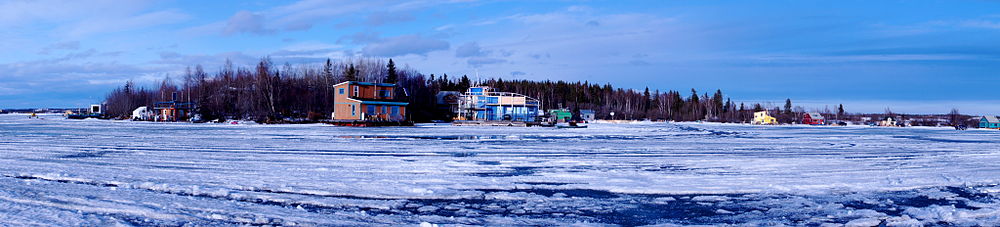
Great Slave Lake has one ice road known as the Dettah ice road, connecting Yellowknife, the Northwest Territories capital, to the small First Nations fishing community of Dettah -- also in the Northwest Territories.


Slavey (Dene) girls, Mackenzie River, Northwest Territories
I was torn between presenting a story from somewhere warm or one looking frankly at winter.  Winter won out because it's so much easier to find.  Today's story come from the Dene people of northwestern Alberta, Canada, and especially the country's southern Northwest Territories on the Mackenzie River from the people also known as the Slavey or Slave Indians.  Before you jump to wrong conclusions, they come from the Slave Lake region and "The people now known as Slavey in English were not necessarily taken as slaves" Wikipedia cautions.

The story comes from a 1901 issue of Journal of American Folk-Lore and is one of two stories read at the American Folk-Lore Society's annual meeting over a hundred years ago at the end of 1900.

Since I'm familiar with Michigan's Anishinaabe tale often called "The Summer Maker" given here in 2013, I enjoyed its similarity at times, plus noted its prehistoric worldwide flood at the end.  It's also wonderful in showing "It could be worse" since winter has a way of leaving me thinking the worst has happened.


Journal of American Folk-Lore. Volume XIV (1901)

LEGENDS OF THE SLAVEY INDIANS OF THE MAC-
KENZIE RIVER.
Read at the Twelfth Annual Meeting of the American Folk- Lore Society at
Baltimore, Md., December 28, 1900.

I. THE LONG WINTER.

Before the present state of the world was established, and when
there were as yet no men, a very long winter set in. The sun was
never seen, the air was dark, and thick clouds always covered the 
sky and hung low down.  It snowed continually.  After this had 
lasted three years, all the animals were suffering very much from 
want of food and still more from want of heat. They became 
greatly alarmed. A grand council was held, which beasts, birds, 
and fishes attended. It was noticed that no bears had been seen 
for three years, and that they were the only creatures which did 
not go to the council.

The meeting decided that the great thing was to find out what had
become of the heat, whose long absence was the cause of all their
sufferings, and if possible to bring it back again. In order to do this
they resolved that as many of them as possible, representing all
classes, should go on a search expedition to the upper world where
they thought the heat was detained. When the council broke up
they all set out, and after much travelling far and wide through the
air, some of them were fortunate enough to find the door or opening
to the upper regions, and they went in. Among those which were
fortunate enough to get in were the lynx, the fox, the wolf, the car-
cajou, the mouse, the pike, and the mari (dogfish or fresh-water ling).
After exploring for some time they saw a lake and beside it a camp
with a fire burning. On going to the camp they found two young
bears living there. They asked the cubs where their mother was,
and were told she was off hunting. In the tipi a number of full,
round bags were hanging up. The visitors pointed to the first one
and asked the young bears, —

" What is in this bag ? "

" That," said they, " is where our mother keeps the rain."

" And what is in this one," pointing to the second bag.

" That," they answered, " is the wind."

"And this one?"

" That is where mother keeps the fog."

" And what may be in this next one ? "

" Oh, we cannot let you know that," said the cubs, "for our mother
told us it was a great secret, and if we tell, she will be very angry
and will cuff our heads when she returns."

" Oh, don't be afraid," said the fox, "she will never know that you
told us."

Then the cubs answered, " That is the bag where she keeps the
heat."

The visitors had ascertained what they wanted, and they all went
out of the tipi to hold a consultation. It was decided to retire to a
distance, as the old bear might return at any time. But first they
advised the young bears to keep a lookout for any deer (caribou)
which might come to the opposite shore of the lake.

It was resolved that the lynx should go round to the other side
of the lake, turn into a deer, and show himself so as to attract the
attention of the young bears. Meantime the mouse was to go into
the bear's canoe and gnaw a deep cut in the handle of her paddle
close to the blade. The others were all to conceal themselves near
the bear's tipi. The scheme proved successful. When one of the
little bears saw the supposed buck across the lake he cried out,
" Mother, mother, look at the deer on the opposite shore." The old
bear immediately jumped into her canoe, and paddled towards it.
The deer walked leisurely along the beach pretending not to see the
canoe, so as to tempt the bear to paddle up close to him. Then all
at once he doubled about and ran the opposite way. The bear
hastened to turn her canoe by a few powerful strokes, throwing her
whole weight on the paddle, which broke suddenly where the mouse
had gnawed it ; and the bear, falling at the same time on the side of
the canoe, upset herself into the water. The other animals were
watching the hunt from the opposite side, and as soon as. they saw
the bear floundering in the water, they ran into the tipi, pulled down
the bag containing the heat, and tugged it, one at a time, through the
air towards the opening to the lower world from which they had
come. They hastened along as fast as they could, but the bag was
very large, and none of them were able to keep up the pace very
long ; but whenever one became tired out, another would take the
bag, and so they all hurried along at a rapid rate, for they knew that
the bear would soon get ashore and return to her tipi, and that when
she discovered her loss she would make haste to follow them. Sure
enough, she was soon in hot pursuit, and had almost overtaken them
before they reached the opening to the underworld. By this time
the stronger animals were all exhausted, and now the mari took the
bag and pulled it along a good way, and finally the pike caught it up
and managed to get it through the hole just as the bear was upon
the party. But every one of them passed safely through at the same
time, and the moment the bag was within the underworld all the
animals seized upon it and tore it open. The heat rushed out and
spread at once to all parts of the world and quickly thawed the vast
accumulation of ice and snow. Its rapid melting flooded the earth,
and the water rose till it threatened to drown all the animals which
had survived the long winter. Many of them saved their lives by
climbing up a particularly big tree which was much taller than any
of the others in the woods. There was also a high mountain which
others reached and were saved. The poor beasts now cried loudly
for some one to remove the water, and a great creature, something
like a fish, appeared and drank it until he became as large as a moun-
tain. So the dry land returned, and as summer had come again, the
trees and bushes and flowers which had been covered by the ice
leaved out once more, and from that time till now the world has
always been just as we see it at the present day.

Robert Bell.

Ottawa, Canada.


Shortly after the story was presented and then published, another version was published by G.E.Jamme as "Dogrib Legend of the Flood" in The Coast, volume 11, pages 180-181 and can be found in a free Google Books publication.  Jamme spends some time in his 1906 article telling about his hearing the story from the people at Great Slave Lake.  Beyond that look at the story's original tellers, there are some interesting differences.  I suggest also going to a book by the late Ella Elizabeth Clark to read how she combines the two versions in her Indian Legends of Canada.

However you choose to re-tell the story, it's definitely winter, the time when the Native Peoples of North America all told stories to get through the winter.  I think that's a great idea!
*********************
Here's my closing for days when I have a story in Keeping the Public in Public Domain
***************** 

This is part of a series of postings of stories under the category, "Keeping the Public in Public Domain."  The idea behind Public Domain was to preserve our cultural heritage after the authors and their immediate heirs were compensated.  I feel strongly current copyright law delays this intent on works of the 20th century.  My own library of folklore includes so many books within the Public Domain I decided to share stories from them.  I hope you enjoy discovering new stories.  


At the same time, my own involvement in storytelling regularly creates projects requiring research as part of my sharing stories with an audience.  Whenever that research needs to be shown here, the publishing of Public Domain stories will not occur that week.  This is a return to my regular posting of a research project here.  (Don't worry, this isn't dry research, my research is always geared towards future storytelling to an audience.)  Response has convinced me that "Keeping the Public in Public Domain" should continue along with my other postings as often as I can manage it. 

Other Public Domain story resources I recommend -
  • There are many online resources for Public Domain stories, maybe none for folklore is as ambitious as fellow storyteller, Yoel Perez's database, Yashpeh, the International Folktales Collection.  I have long recommended it and continue to do so.  He has loaded Stith Thompson's Motif Index into his server as a database so you can search the whole 6 volumes for whatever word or expression you like by pressing one key. http://folkmasa.org/motiv/motif.htm
  • You may have noticed I'm no longer certain Dr. Perez has the largest database, although his offering the Motif Index certainly qualifies for those of us seeking specific types of stories.  There's another site, FairyTalez claiming to be the largest, with "over 2000 fairy tales, folktales, and fables" and they are "fully optimized for phones, tablets, and PCs", free and presented without ads.
Between those two sites, there is much for story-lovers, but as they say in infomercials, "Wait, there's more!"
You can see why I recommend these to you. Have fun discovering even more stories!