Tell me if you have a topic you'd like to see. (Contact: LoiS-sez@LoiS-sez.com .)
Please also let others know about this site.
Showing posts with label Renee Englot. Show all posts

Thursday, July 12, 2012

A Conference to Remember!

Fellow storytellers said they found my account of the 2012 National Storytelling Conference like being there with me.  Starting with the Pre-conference, looking at Cincinnati and the Kentucky elements, this may encourage you to find out more about some of the sessions and other experiences.  It may even encourage you to plan towards the August! 2013 conference in Richmond, VA.

Signed up for the National Storytelling Network conference waaay in advance, as the earliest of Early Bird registration saved money, also a year ago I promised YES! chair, Lyn Ford, I'd help with the Youth, Educators, Storytellers (YES!) Alliance pre-conference.  In the past, since the NSN conference always moves to various locations, I'd stayed offsite (a) at a relative's home; (b) with my husband in a tourist cabin near a commuting route; (c) at a "sleep cheap" with a roommate.  As a result of "c" I waited, expecting to find a MI or other roommate, but as the conference approached I began to panic.  MI residents either couldn't attend or weren't coming for my entire time.  (The pre-conference meant arriving Tuesday to help with set-up, NOT a popular option, but still within the range of any others attending the two pre-conferences which began early Wednesday.)  Cincinnati's nicknamed the Queen City and it began to look like it might require a queen's ransom.   This time the bulletin board for roommate and travel didn't help me because I wanted to stay in one place throughout.  The incredibly helpful Kit and Karin at the NSN office -- multiply me times similar members to show how spectacular these 2 are -- suggested hotels on the trolley line since the conference hotel was booked.  They also suggested parking garages, local members to answer questions, and taxi possibilities for when the trolley stopped at 10 or started late on the weekend. 

Couldn't micro-manage it from a distance.  Was incredibly lucky to find a roommate in Renee Englot from Canada.  She thought surely I'd found a roommate when she requested 1 on Storytell, the international email list for storytellers.  We took a chance on a downtown Cincy 3 star hotel w/o knowing what it was.  Reviews, factoring out snobs and the hard to please, still were worrisome -- that + trolley/parking difficulties.  Through it all Renee was a great mate in the week's constant activity.  (The hotel, the Milennium, also turned out fine.)

Not to worry.  It was easy circling downtown Cincy and KY areas to find the best parking choices.  The trolley  was fun, even when I accidentally caught the Newport trolley.  Got a story loving driver who gave a tour through Newport.  Passed Thompson House -- owned by the inventor of the Tommie Gun.  Go to Thompson House history to learn way more than just the marker mentions.  It has history in the War of 1812 -- see my 2 April posts about the War of 1812 and the River Raisin Massacre for a bit more on Kentucky in that war, was part of the Underground Railroad, and is said to be haunted.  Perfect material for storytellers.

Even my briefest of visiting revealed downtown Cincinnati was fun to walk, with the Cincinnati Library (had to visit it, of course!), interesting decorated pigs all over, the Underground Railroad Freedom Center,  the river -- I'm a born and bred St. Louisan so it felt like home, and lively nightly music in Fountain Square where I could pick up and return on the trolley.

Tuesday night we learned YES!'s 2d of our 2 afternoon pre-conference speakers flight was canceled.  We managed with our a.m. keynote from Susan O'Halloran and our other afternoon speaker, Karen Chace.  I was to introduce Karen and was confident, correctly so, as she talked about the many ways she handles youth storytelling clubs.  I've known her and her work from Storytell for a long time.  Fabulous job...of course.  Karen's website and blog has a great many of her ideas and handouts on storytelling clubs and much more. The evening ended with a lively performance by Filament Theatre inspired by folktales.
From the Circle, Filament Theatre Ensemble, Folktales, Sustainability, Chicago, Theatre, Music
From the Circle: Remembering the Earth Through Folktales

Thursday I walked to the library for a few questions and then spent the rest of the day at the Underground Railroad Freedom Center.  There's also a surprising amount of Native American information there and their research library gave leads on an UGRR conductor important to the woman, Liberetta Lerich Green, whom I portray.  (See past posts.) She grew up on a local UGRR station.  I'll check the Troy, MI location where Peter Jackson apparently lived in the 1850s, then more on his later family life in Canada's Essex County.

I read somebody's (?) post about storytelling friend, the late Mark Wilson, and continue to learn from him...I plan to set aside money all year long to decide if I can afford future conferences.  My Scottish ancestors might have fits at how I committed myself, then began to panic, but the conference was needed and useful.  Such conferences
  1. reconnect me with friends and colleagues; 
  2. provide new ideas and stories; 
  3. refresh my commitment to a career that often can feel as if I'm all alone.  My next post will hit the high points about the actual conference's value.  Not the same as attending, but still hope it may provide leads to you on those 3 conference benefits.
LoiS(orting through a PACKED week)

Saturday, December 24, 2011

Staying Alive with Oral History - Part 3


This continues the ideas of my fellow storytellers on the topic of Staying Alive with Oral History

Two storytellers had articles deserving of publishing on this topic.  Part 2 was by Judy Schmidt, of the Ann Arbor Storytellers' Guild.  This is Part 3 with Canadian storyteller, Renee Englott, from Edmonton in Alberta.  Part 4 will be the bibliography including Lynn Rubright's book.

Renee breaks the interview process into three parts: Framing Questions; Tips for Shaping and Conducting an Interview; and After the Interview.


Framing Questions

1. A mix of open and closed question will work best. Too many open ended questions will result in an interview without direction.

Examples of open and closed format for the same questions:
Closed
·        Was religion important to your family?
·        Did you serve as a soldier during WWII?

Open:
·        Tell me about religious observances in your family…
     ·        What did you do during WWII?
 
2. Examples of questions that elicit  1. DESCRIPTIVE, 2 NARRATIVE or 3 REFLECTIVE response:

·        1. Describe how the ice was prepared each year….

·        2. What did Mr. X do next?

·        3. Why do you think it was done that way?
 
3. Sometimes it is a good idea to start out with an open-ended question on a given topic to give the interviewee a chance to decide what to talk about. Then you can ask more specific or closed questions to elicit further information:

Example:
·        What was it like to go to King Edward School?
·        What games did you play?
·        Who was your grade 3 teacher?

4. Be as objective as possible in asking questions to avoid suggesting a required or preferred response:
WHO, WHAT, HOW? WHERE? WHY? WHEN? are all objective questions.

5. Ask neutral rather than leading questions:

Leading
·        You must have been pleased on election night?
·        You disapproved of dancing after midnight then?
·        Is it true that Mr X was a difficult employer?
·        Where most of these barns built during the 1920s?

Neutral
·        Tell me how you felt on election night?
·        How did you feel about dancing after midnight?
·        How did Mr. X treat his employees?
·        When were most of these barns built?
 
6. Negative versus Positive Connotation in word choice – particularly important around sensitive issues. 


Tips for Shaping and conducting an interview 


1.      Chat easily as you set up your equipment efficiently.

2.      Discourage third parties; identify everyone who will be participating if more than one interviewee is unavoidable.

3.      Run a test as you talk to check everything is working and volume is set correctly etc. indicate that the interview is now ready to begin. Leave lead time if using a cassette tape.

4.      Formally start the interview with an introduction: it should state who the interviewer is, (if the interview is on behalf of an organization say so), who the interviewee is, where it is taking place, date giving year. You might consider indicating something of why the interviewee is being interviewed. E.g. “ Mrs. Fornelli was the president of the X Community League for 25 years and the organizer of the X festival in 1965.”

5.      Start out with easy open ended questions. Tell me a little about growing up in X, your family – whatever you think will get the interviewee relaxed and focussed. Sometimes this proves too open ended and it is preferable to start with “Where and when were you born?” This is something that everyone has no hesitation with and it often works to get someone settled into answering questions.

6.      Then move to more general questions to lead you to the focus of the interview.

7.      Ask one question at a time.

8.      Remember that although you may have a definite line of inquiry the questions should be conservational in tone rather than an interrogation!

9.      Refer to your question sheet as you go but reframe your questions and adjust the questions as you go. Avoid asking a question on the list when it has already been answered without being asked, for example.

10.  Clarify chronology occasionally especially if it seems a bit murky – also shows you are paying attention.

11.  Keep note pad close at hand- jot down names, places that you will need to check spelling of later; make a quick note of Q you want to come back to or anything that that occurs to you that you want to ask at an opportune moment later.

12.   Be judicious in deciding when the interviewee is rambling or going off topic, sometimes you need to be patient. The interviewee may bring themselves back.  They may, along the way, raise another whole issue for investigation as they talk. Too abrupt an attempt to bring them back to topic may also diminish rapport.

13.  Try to find a natural break in the conversation before asking the next question.

14.  Make sure you have clear explanations of technical processes – ask someone to repeat if necessary.

15.  Stay present and relaxed. Pay close attention to what is being said; this will produce the best and most relevant questions.

16.  Use photos and documents including news clippings as possible as prompts. Be sure to identify everything verbally on tape. i.e. “clipping from the Edmonton Journal 25 April, 1965 or “Photo number A taken of your mother in January 1945.” Slip this info as an interjection as smoothly as you can. If there is a lot of this material you might explain before the interview begins that you will be doing “this so anyone listen later will know what we are discussing.”

17.  Pause the tape when asked to do so. But try to avoid off tape discussions in the middle of an interview it is distracting breaks the focus and flow and can be hard to restart the tape easily and can lead to mistakes.

18.  Avoid asking questions that make a statement/judgement or conclusion about what the interviewee has said.

19.  Avoid comments on what is being said. Let the interview express feelings; whatever discomfort /urge to share you experience keep it to yourself! Avoid supplying the interviewee with what you think his or her feelings must have been.

20.  Use body language to express surprise, agreement, understanding. Nod, smile, raise an eyebrow, do a silent laugh. The less that is heard from the interviewer on tape the most useful the interview is for later use.

21.  If someone becomes emotional, pause the tape and give them time to regroup before continuing... reset the conversation … “we were talking about…..”  Or conversely, set a new topic, “I’d like to move on and ask you about …..”

22.  Try to keep more sensitive questions towards the end of the interview when trust and rapport has been established.

23.   Be prepared to change subject and clarify information as necessary – (see tip sheet on this).

24.  Keep an eye on the time – if using cassette tapes be aware of 45 minute length of tape. Try to find a natural break in conversation to turn the tape over. Err on the side of too son rather than too late to avoid a sentence being cut off in mid stream. It is better to turn it over your self than have the recorder do it automatically.

25.  One and half hours is generally enough. Make it clear that the interview is about to end. Before we finish up for today I have a couple of last questions….

26.  Make sure to thank the interviewee on tape.

27.  Ask the interviewee to sign the release form which you mentioned before the interview began.

28.  Return to your note pad for any questions/ spellings that are outstanding.

29.  Have tea and let the interviewee know you will be in contact if you have questions or to review the transcript if that is what you are planning to do.

After the interview….Follow up and paper work!

1.      Make sure you take steps to preserve your interview.  For cassette tapes, push out tab on the corners. For digital, download into your computer immediately. In both cases make a copy and use this for working with, playing back, editing as relevant, and keep the master copy as the archival copy.
2.      Label the cassette/file – name of interviewer, interviewee, date, indicate 1/1 or of 1/2 tapes/files, and give it a number of some sequential sort. Museums use accession numbers that include the year. Eg. 2010 1.1 . The first tape in the first interview of 2010. Therefore 2010 4:2 – would be the second tape of the fourth interview.
3.      Undertake some sort of guide to the interview for quick reference. This might be a subject reference, summary or transcript. Transcripts are very time consuming about 10 hours per one hour recording but give you a verbatim coverage of the tape. An index is exactly that names of places, people subject topics. A detailed summary gives you a little more -some idea of the flow of the conversation. See separate sheet for an example.
4.      If you borrowed photos make copies and return them to the interviewee. If you are working in a museum or representing a public organization or group, you need to use a loan form to note you borrowed and returned the item.
5.      Keep a paper file on your interview labelling with its (Accession) number. You should keep the release form in here, along with a bio or interviewee, some info on the interviewer, any relevant notes on the interview that might remind you or help anyone later to understand the dynamics of the interview. All pieces of paper should have the interview number on them.
6.      Keep your tapes safe/files safe. See sheet on care and handling.


  This series will now conclude with Part 4's bibliography. 

Thursday, December 8, 2011

Staying Alive with Oral Histories - Part 1

We all hope our lives make a difference.  I've been privileged to do oral histories and at other times help young people do it, too.  Additionally my reenactment of Liberetta Lerich Green started with her oral history telling about growing up on a Michigan Underground Railroad Station and her family's Civil War experiences.  The title story in Harold Courlander's The Cow-Tail Switch and Other West African Stories shows the value of remembering people's lives. 

Never overlook the value of putting something in a format available to future readers or listeners.  Whether they are the descendants of the person interviewed or not, the interview becomes precious beyond any time or expense involved.  Two easily overlooked groups who can especially value doing this are people with no children and those diagnosed with Alzheimer's disease in the early stages. It's their way to stay alive!

I'm always indebted to my fellow storytellers for their ideas.  Great storytelling resources come from a very active international email list, Storytell, and the online network, Professional Storyteller ,  (where I'm an assistant administrator to nearly 1900 members from around the world). I hope these suggestions from my storytelling friends help you do an oral history project.  The ideas were so plentiful this topic will have three more parts.
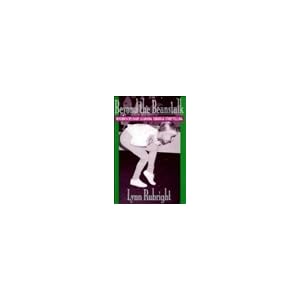
  • Lynn Rubright's excellent book, Beyond the Beanstalk: Interdisciplinary Learning Through Storytelling, (published byHeinemann, 1996) will be discussed in the final part of this four part series of blogs.
  • Jo Radner, who teaches oral history workshops in the northeast, adds: My favorite intergenerational storytelling program is Judy Klevins' Swapping Stories.  She trains groups of students and elders separately in interviewing and public speaking, then puts them together in pairs -- one elder, one student.  They interview each other, swap stories, and then perform each other's stories to an audience.  So it's not just students collecting stories from elders.  As I often put it, old people are a foreign country to the young -- but the young are also a foreign country to the old.  They need to tell each other their stories to make the connections.  (Note by LoiS: Their approach sounds very similar to some of the ideas in Lynn Rubright's book mentioned above and in Part 4.)
  • Renee Englot offers a three-part look at the interview: Framing Questions, Tips for Shaping and Conducting the Interview, and finally After the Interview.  Each is a complete document, so her contributions will be a separate post, Staying Alive with Oral Histories - Part 3. 
  • Here in the Ann Arbor area, storyteller and former media specialist, Judy Schmidt, added both a basic "Ten Tips for Taping" and other recommendations in Part 2 of Staying Alive with Oral Histories.  
  • It's almost guaranteed my research will include Jackie Baldwin's Story-Lovers site.  She's done an award winning job of compiling information from the Storytell list.  For this topic go to the Oral Histories section of the "S.O.S." there.  (While you're there, be sure to check her home page and scroll down to her lovely stationery, cards, prints, and so much more.)
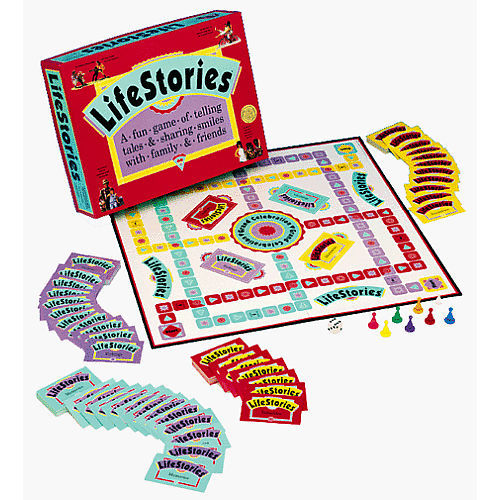
  • Something I first heard about years ago on the Storytell list was this playful way to bring back memories, the game, Life Stories.  It's available and thoroughly reviewed on Amazon (in the Toys and Games section).
    If you can't do an oral history project, I suggest you at least create an interview document for people to use in self-recording.  That's not as "magical" as what pops up in a live interview, but at least it's not dependent on grant funding. 

     LoiS(econd interview with someone wasn't nearly as lively as the time the tape recorder didn't work! -- shades of those Ten Tips for Taping)  

    This is the end of Part 1 - Staying Alive with Oral Histories.  See Parts 2 and 3 with guest authors, Judy Schmidt and Renee Englot and then the bibliography in Part 4 of Staying Alive with Oral Histories featuring Lynn Rubright.