HUZZAH! It's the penultimate weekend (yeah, the next to the last) at the Michigan Renaissance Festival.
While it's not storytelling, I'm active with community theatre groups within half an hour from my home and two of them,
Lakeland Players and
Pontiac Theatre IV, annually take a weekend as a fundraiser and work the RenFest. It's this weekend and I'll become a Wine Wench at the wine tasting booth this Sunday afternoon, so I'd love to see you there.
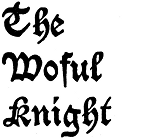
That made me think of a medieval author, Marie de France. She wrote in French, which means I need to use translations. Unfortunately I don't know of any recent translator who allowed their translation of her many tales to lapse into Public Domain by not renewing the copyright. She wrote a most appropriate story about jousting. The only version I could find was in a 1910 edition by Isabel Butler. Butler titled it Tales from the Old French and I'll confess I stressed the word "Old" in the title as I really think Butler went out of her way to make her translation have an "antique" style. I imagine she was also challenged by the originals being written in verse. The intricate title page and initial letters opening each story are not credited to any illustrator which seems a shame. Butler has a bit more to say about Marie de France, but the story deserves to be told first. (Butler mentions a werewolf tale by Marie I plan to post next month in a modern retold Public Domain version.)
This story is a "lay" from a section of "lais" Butler groups together. If you're wondering about that, it's an older use of the word meaning a ballad, melody or song. Similarly "Woful" should be translated as it sounds: woeful. The only other explanations you might want are place names and their residents. "Bretaigne" is the French word for the northwestern region of Brittany. The Hainaulters (sometimes spelled without the "l") are from the north eastern part of France now on the French-Belgian border.
Gladly would I call to remembrance a lay whereof I have heard men
speak; I will tell you its name and its story, and show you the city
whence it sprang. Some call it The Woful Knight, but many there are
who name it The Four Sorrows.
At Nantes in Bretaigne dwelt a lady who was rich in beauty and
wisdom and all seemliness. And in that land was no knight of prowess
who, and if he did but see her, straightway loved her not and
besought her. She could in no wise love them all, yet none did she
wish to renounce. And better it is to love and woo all the ladies of
the land than to rob one fool of his motley, for he will speedily
fall to fighting over it, whereas a lady doth pleasure to all in fair
friendliness. And though it be not her will to hearken to them, yet
ought she not to give them ill words, but rather hold them dear and
honour them, and render them service and thanks. Now the lady of whom
I would tell you was so besought in love by reason of her beauty and
worth that many a one had a hand therein.
In Bretaigne, in those days, lived four barons; their names I
cannot tell you, but though they were young of age, yet were they
comely, brave, and valiant knights, generous, courteous, and
free-handed; of gentle birth were they in that land, and held in high
honour. These four loved the lady, and strove in well doing for her
sake; and each did his uttermost to win her and her love. Each sought
her by himself, and set thereto all his intent; and there was not one
but thought to succeed above all the rest.
Now the lady was of right great discretion, and much bethought her
to inquire and discover which it were best to love; for all alike
were of such great worship that she knew not how to choose the best
among them. And in that she was not minded to lose three for one, she
made fair semblance to each, and gave them tokens, and sent them
messengers; of the four not one knew how it stood with other, and
none could she bring herself to reject. So each one hoped by entreaty
and loyal service to speed better than the rest. And wheresoever
knights come together, each wished to be the first in well doing, if
that he might, to thereby please his lady. All alike called her their
love, each one wore her favour, whether ring or sleeve or pennon, and
each cried her name in the tourney.
And she on her part loved them all, and bore them all in hand,
until it fell that after an Easter time, a tournament was cried
before the city of Nantes. To learn the worth of the four lovers,
many a man came from other lands,—Frenchmen and Normans, Flemings
and Angevins, and men of Brabant, and of Boulogne, and likewise those
from near at hand; all alike came thither with good will, and long
time sojourned there. And on the evening of the tourney they joined
battle full sharply.
The four lovers had armed themselves and
issued out of the city: and though their knights followed after, on
them fell the burden. Those from abroad knew [20] them by their
pennons and shields, and against them they sent four knights, two
Flemings and two Hainaulters, ready dight for the onset; not one but
was keen to join battle. And the four lovers on their part, when they
saw the knights come against them, were of no mind to give back. At
full speed, with lowered lance, each man chooseth his fellow, and
they come together so stoutly that the four out-landers are brought
to ground. No care had the four comrades for the horses, rather they
let them run free, and they took their stand above the fallen
knights, who anon are rescued by their fellows. Great was the press
in that rescue, and many a blow was struck with sword.
The lady, meantime, was on a tower, whence she might well behold
her men and their followers; she seeth her lovers bear themselves
right bravely, and which among them deserveth best she knoweth not.
So the tourney was begun, and the ranks increased and thickened;
and many a time that day before the gate was the battle renewed. The
four lovers did right valiantly, that they won praise above all the
rest, till evening fell and it was time to dispart. Then far from
their men, too recklessly they set their lives in jeopardy; dearly
they paid for it, for there three were slain, and the fourth hurt and
so wounded in thigh and body that the lance came out at his back.
Right through were they smitten, and all four fell to ground. They
who had slain them threw down their shields upon the field;
unwittingly had they done it, and right heavy were they therefor. So
the noise arose and the cry; never was sorrow heard like unto that.
They of the city hasted thither, for no whit did they fear those
outlanders. Two thousand were there that for sorrow for the four
knights unlaced their ventails, and tore their hair and their beards.
All alike shared that grief.
Then each of those four was laid upon a shield, and carried into
the city to the lady who had loved them, and so soon as she heard the
adventure, she fell down on the hard ground in a swoon. When she
recovered her wit, she made sore lament for each by name. "Alas,"
saith she, "what shall I do? Never more shall I know gladness.
These four knights I loved, and each by himself I desired, for of
great worship were they, and they loved me more than aught else that
liveth. By reason of their beauty and prowess, their valour and
generosity, I led them to set their thoughts on love of me, and I
would not lose all three by taking one. Now I know not which I should
pity most; yet can I not feign or disemble herein. One I see wounded
and three slain; nothing have I in the world to comfort me. Now will
I let bury the dead; and if the wounded knight may be healed, gladly
will I do what I may herein, and fetch him good doctors of physic."
So she made him be carried into her own chambers. Then she directed
that the others be made ready; richly and nobly she appareled them
with great love. And to a rich abbey, wherein they were buried, she
made great gifts and offerings. Now may God grant them sweet mercy.
Meantime she had summoned wise leeches, and had set them in charge
of the knight, who lay wounded in her own chamber until he began to
mend. Often she went to see him, and sweetly she comforted him; but
much she regretted the other three, and made great lament for them.
And one summer day after meat, when she was talking with the
knight, she remembered her of her great sorrow, and bent low her
head. So she fell deep in thought, and he, beginning to watch her,
perceived her thoughtfulness. Courteously he addressed her: "Lady,
you are in distress. What is in your thoughts? Tell me, and let be
your sorrow. Surely you should take comfort." "Friend,"
saith she, "I fell a-thinking, and remembered me of your
comrades. Never will any lady of my lineage, however fair and worthy
and wise she may be, love another such four, or in one day lose them
all, as I lost all,—save you alone, who were wounded and in sore
jeopardy of death. And in that I have so loved ye four, I would that
my griefs were held in remembrance, wherefore of you I will make a
lay, and call it The Four Sorrows." When he had heard her,
quickly the knight made answer: "Dame, make the new lay, but
call it The Woful Knight. And I will show you why it should be so
named: the other three long since died, and spent all their worldly
life in the great torment they endured by reason of the love they
bore you. But I, who have escaped with life, all uncounselled and all
woful, often see her whom I love most in the world come and go, and
speak to me morning and evening, yet may I have neither kiss nor
embrace, nor any joy of her, save that of speech only. A hundred such
sorrows you make me endure; rather had I suffer death. For this
reason shall the lay be named for me; The Woful Knight shall it be
called, and whosoever termeth it The Four Sorrows will change its
true name." "By my faith," saith she, "this
pleaseth me well; now let us call it The Woful Knight."
Thus was the lay begun, and thereafter ended and spread abroad;
but of those that carried it through the land some called it The Four
Sorrows. Each of the names suiteth the lay well, for the matter
demandeth both; but commonly it is called The Woful Knight. Here it
endeth and goeth no farther; more there is not so far as I have heard
or known, and no more will I tell you.
***
In her Epilogue, Butler gives some background on Marie de France I think is worth knowing:
The lais, like the romances to which they are close akin,
belong to the courtly literature of the time and found their audience
in hall and castle. Denis Pyramus, a contemporary, in writing of
Marie de France, tells us her lays were "beloved and held right
dear by counts and barons and knights," and that "ladies
likewise took great joy and delight in them." Like the romances
which they helped to foster and which superseded them, the lays tell
of love and adventure, of enchantment and strange happenings. In
them side by side with the knights and squires and ladies move fays
and giants and werewolves. Their material is that of folklore and
fairy-tale. A knight hunting in the lande adventureuse meets a
maiden in the forest who leads him to a castle with green walls and
shining towers. There he spends three days, and when he would return
home again, learns that three hundred years have gone by, that the
king, his uncle is dead and his cities have fallen, and there lingers
but a legend of the king's nephew who went out to hunt the white boar
and was lost in the forest. Often in such lays the old fairy-tale
simplicity, its matter-of-fact narration of the marvellous survives;
and yet in their somewhat spare brevity they have a grace and charm
that lets one feel the beauty, the wonder, or the tragedy of the
story.
But the interest in the lays is not always that of the land of
faery; sometimes it is human enough, as in The Two Lovers where,
despite the old-time test and the magic potion, our delight is all in
the maid and the damoiseau "who hath in him no measure."
Sometimes, as in Eliduc, we find old, rude material—here a
primitive Celtic tale of a man with two wives ill cloaked by its
additions of mediæval Christianity—retold with a strange
gentleness and sweetness, and turned at moments into a story of
emotion and scruple.
Both types occur in the lays of Marie de France,—the best that
have come down to us. Besides her lays she versified a collection of
fables, Isopet, and translated from the Latin The Purgatory
of Saint Patrick,—one of those other-world journeys that
preceded the Divine Comedy. Yet apart from her works we have no
record of her life. She herself in the prologue of her fables, tells
her name: "I am called Marie, and I am of France"; but that
is all, and it is only the internal evidence of her writings, their
Anglo-Norman dialect, and a few chance hints and phrases that have
made scholars decide that she was a Norman, or from that part of the
Isle de France which borders upon Normandy, that she lived and wrote
in England in the second half of the twelfth century, and that the
unnamed king to whom she dedicated the lays was Henry II.
Marie makes no claim to originality of theme; in her prologues she
tells us she is but rhyming anew the stories "whereof the
Bretons have made lays."
It's almost October, such a spooky month for storytelling and I plan to open with Marie de France's werewolf tale made her own by another author, Barbara Leonie Picard.
******************
This
is part of a series of postings of stories under the category,
"Keeping the Public in Public Domain." The idea
behind Public Domain was to preserve our cultural heritage after the
authors and their immediate heirs were compensated. I feel
strongly current copyright law delays this intent on works of the
20th century. My
own library of folklore includes so many books within the Public
Domain I decided to share stories from them. I hope you enjoy
discovering new stories.

At
the same time, my own involvement in storytelling regularly creates
projects requiring research as part of my sharing stories with an
audience. Whenever that research needs to be shown here, the publishing
of Public Domain stories will not occur that week. This is a return to
my regular posting of a research project here. (Don't worry, this
isn't dry research, my research is always geared towards future
storytelling to an audience.) Response has convinced me that "Keeping
the Public in Public Domain" should continue along with my other
postings as often as I can manage it.
Other
Public Domain story resources I recommend-
There
are many online resources for Public Domain stories, maybe none for
folklore is as ambitious as fellow storyteller, Yoel Perez's
database, Yashpeh,
the International Folktales Collection. I have long
recommended it and continue to do so. He has loaded
Stith Thompson's Motif Index into his server as a database so
you can search the whole 6 volumes for whatever word or expression
you like by pressing one key. http://folkmasa.org/motiv/motif.htm
- You may have noticed I'm no
longer certain Dr. Perez has the largest database, although his
offering the Motif Index certainly qualifies for those of us seeking
specific types of stories. There's another site, FairyTalez
claiming to be the largest, with "over 2000 fairy tales,
folktales, and fables" and they are "fully optimized for
phones, tablets, and PCs", free and presented without ads.
Between those two sites, there
is much for story-lovers, but as they say in infomercials, "Wait,
there's more!"
The
email list for storytellers, Storytell,
discussed Online Story Sources and came up with these additional
suggestions:
-
Story-Lovers - http://www.story-lovers.com/ is now only accessible
through the Wayback Machine, described below, but the late Jackie Baldwin's
wonderful site lives on there, fully searchable manually (the Google
search doesn't work), at https://archive.org/ . It's not easy, but go to Story-lovers.com snapshot for October 22 2016 and you can click on SOS: Searching Out Stories to scroll down through the many story topics and click on the story topic that interests you.
You're
going to find many of the links on these sites have gone down, BUT
go to the Internet Archive
Wayback Machine to find some of these old links. Tim's
site, for example, is so huge probably updating it would be a
full-time job. In the case of Story-Lovers, it's great that
Jackie Baldwin set it up to stay online as long as it did after she
could no longer maintain it. Possibly searches maintained it.
Unfortunately Storytell list member, Papa Joe is on both Tim
Sheppard's site and Story-Lovers, but he no longer maintains his old
Papa Joe's Traveling Storytelling Show website and his Library
(something you want to see!) is now only on the Wayback Machine. It
took some patience working back through claims of snapshots but finally
in December of 2006 it appears!
Somebody
as of this writing whose stories can still be found by his website
is the late Chuck Larkin - http://chucklarkin.com/stories.html.
I prefer to list these sites by their complete address so they can
be found by the Wayback Machine, a.k.a. Archive.org, when that
becomes the only way to find them.
You
can see why I recommend these to you. Have fun
discovering even more stories!


