Today, June 29, is the birthday of Antoine de Saint-Exupery (1900), best known for the novella, The Little Prince. I won't give it here for two reasons, its length and the fact it was published in 1943 here in the United States and its copyright was indeed renewed in 1971. You may notice links for both the author and the novella. If your French is good enough and you really are interested, there's yet another website, https://www.antoinedesaintexupery.com/ . My own French is courtesy of ballet and Google Translate has its limits. The link for the novella I gave is to "The Little Prince, official website" in English. (The author's site in French gives that same site in French.) Wikipedia notes the story's translation into "more than 250 languages and dialects and among the top four selling books in the world;[98] made as both movies and TV films in a number of languages, and adapted to numerous other media in many languages."

Scroll down to the links at the bottom of the site for the annual magazine. There is yet another article on the park in Alsace (now at 1.5 million visitors and I imagine many more after the Olympics). The text is bilingual, expecting both English and French readers.
With World War II's Nazi occupation of France the story was only published posthumously in France. Saint-Exupery died in a plane crash on an Allied reconnaissance mission. Two years earlier this, his only book for children, was created when " the wife of one of his publishers helped persuade Saint-Exupéry to produce a children's book,[48] hoping to calm his nerves and also compete with the new series of Mary Poppins stories by P.L. Travers."
 |
| Illustrator: Dmitrii Isidorovich Mitrokhin |
I first met the witch when Caldecott award-winning illustrator, Blair Lent, published the story from Ransome given in the anthology as "Baba Yaga and the Little Girl with the Kind Heart." Lent simply titled his book Baba Yaga. In searching for information for this story, I discovered that he published the book in 1966 using the pen name of Ernest Small as the author when he actually did the adaptation.
There are many stories throughout Slavic folklore and Wikipedia's article on Baba Yaga claims she has two opposite roles. I have only every found stories of the witch, but they say she may also be "a nice old woman, who helps out the hero.[1] "
-- that footnote is in Russian and now I want to see if I can find any evidence of that personality!
Back to the little Russian prince, I believe the "witch baby", who grows like a corn seed becoming fully grown in six weeks with iron teeth is the start of Baba Yaga. She certainly pursues the prince in the fashion of the infamous Russian witch.
PRINCE IVAN, THE WITCH BABY, AND THE LITTLE SISTER OF THE SUN.
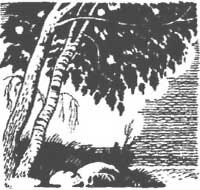
Once upon a time, very long ago, there was a little Prince Ivan who was dumb. Never a word had he spoken from the day that he was born—not so much as a "Yes" or a "No," or a "Please" or a "Thank you." A great sorrow he was to his father because he could not speak. Indeed, neither his father nor his mother could bear the sight of him, for they thought, "A poor sort of Tzar will a dumb boy make!" They even prayed, and said, "If only we could have another child, whatever it is like, it could be no worse than this tongue-tied brat who cannot say a word." And for that wish they were punished, as you shall hear. And they took no sort of care of the little Prince Ivan, and he spent all his time in the stables, listening to the tales of an old groom.
He was a wise man was the old groom, and he knew the past and the future, and what was happening under the earth. Maybe he had learnt his wisdom from the horses. Anyway, he knew more than other folk, and there came a day when he said to Prince Ivan,—
"Little Prince," says he, "to-day you have a sister, and a bad one at that. She has come because of your father's prayers and your mother's wishes. A witch she is, and she will grow like a seed of corn. In six weeks she'll be a grown witch, and with her iron teeth she will eat up your father, and eat up your mother, and eat up you too, if she gets the chance. There's no saving the old people; but if you are quick, and do what I tell you, you may escape, and keep your soul in your body. And I love you, my little dumb Prince, and do not wish to think of your little body between her iron teeth. You must go to your father and ask him for the best horse he has, and then gallop like the wind, and away to the end of the world."
The little Prince ran off and found his father. There was his father, and there was his mother, and a little baby girl was in his mother's arms, screaming like a little fury.
"Well, she's not dumb," said his father, as if he were well pleased.
"Father," says the little Prince, "may I have the fastest horse in the stable?" And those were the first words that ever left his mouth.
"What!" says his father, "have you got a voice at last? Yes, take whatever horse you want. And see, you have a little sister; a fine little girl she is too. She has teeth already. It's a pity they are black, but time will put that right, and it's better to have black teeth than to be born dumb."
Little Prince Ivan shook in his shoes when he heard of the black teeth of his little sister, for he knew that they were iron. He thanked his father and ran off to the stable. The old groom saddled the finest horse there was. Such a horse you never saw. Black it was, and its saddle and bridle were trimmed with shining silver. And little Prince Ivan climbed up and sat on the great black horse, and waved his hand to the old groom, and galloped away, on and on over the wide world.
"It's a big place, this world," thought the little Prince. "I wonder when I shall come to the end of it." You see, he had never been outside the palace grounds. And he had only ridden a little Finnish pony. And now he sat high up, perched on the back of the great black horse, who galloped with hoofs that thundered beneath him, and leapt over rivers and streams and hillocks, and anything else that came in his way.
On and on galloped the little Prince on the great black horse. There were no houses anywhere to be seen. It was a long time since they had passed any people, and little Prince Ivan began to feel very lonely, and to wonder if indeed he had come to the end of the world, and could bring his journey to an end.
Suddenly, on a wide, sandy plain, he saw two old, old women sitting in the road.
They were bent double over their work, sewing and sewing, and now one and now the other broke a needle, and took a new one out of a box between them, and threaded the needle with thread from another box, and went on sewing and sewing. Their old noses nearly touched their knees as they bent over their work.
Little Prince Ivan pulled up the great black horse in a cloud of dust, and spoke to the old women.
"Grandmothers," said he, "is this the end of the world? Let me stay here and live with you, and be safe from my baby sister, who is a witch and has iron teeth. Please let me stay with you, and I'll be very little trouble, and thread your needles for you when you break them."
"Prince Ivan, my dear," said one of the old women, "this is not the end of the world, and little good would it be to you to stay with us. For as soon as we have broken all our needles and used up all our thread we shall die, and then where would you be? Your sister with the iron teeth would have you in a minute."
The little Prince cried bitterly, for he was very little and all alone. He rode on further over the wide world, the black horse galloping and galloping, and throwing the dust from his thundering hoofs.
He came into a forest of great oaks, the biggest oak trees in the whole world. And in that forest was a dreadful noise—the crashing of trees falling, the breaking of branches, and the whistling of things hurled through the air. The Prince rode on, and there before him was the huge giant, Tree-rooter, hauling the great oaks out of the ground and flinging them aside like weeds.
"I should be safe with him," thought little Prince Ivan, "and this, surely, must be the end of the world."
He rode close up under the giant, and stopped the black horse, and shouted up into the air.
"Please, great giant," says he, "is this the end of the world? And may I live with you and be safe from my sister, who is a witch, and grows like a seed of corn, and has iron teeth?"
"Prince Ivan, my dear," says Tree-rooter, "this is not the end of the world, and little good would it be to you to stay with me. For as soon as I have rooted up all these trees I shall die, and then where would you be? Your sister would have you in a minute. And already there are not many big trees left."
And the giant set to work again, pulling up the great trees and throwing them aside. The sky was full of flying trees.
Little Prince Ivan cried bitterly, for he was very little and was all alone. He rode on further over the wide world, the black horse galloping and galloping under the tall trees, and throwing clods of earth from his thundering hoofs.
He came among the mountains. And there was a roaring and a crashing in the mountains as if the earth was falling to pieces. One after another whole mountains were lifted up into the sky and flung down to earth, so that they broke and scattered into dust. And the big black horse galloped through the mountains, and little Prince Ivan sat bravely on his back. And there, close before him, was the huge giant Mountain-tosser, picking up the mountains like pebbles and hurling them to little pieces and dust upon the ground.
"This must be the end of the world," thought the little Prince; "and at any rate I should be safe with him."
"Please, great giant," says he, "is this the end of the world? And may I live with you and be safe from my sister, who is a witch, and has iron teeth, and grows like a seed of corn?"
"Prince Ivan, my dear," says Mountain-tosser, resting for a moment and dusting the rocks off his great hands, "this is not the end of the world, and little good would it be to you to stay with me. For as soon as I have picked up all these mountains and thrown them down again I shall die, and then where would you be? Your sister would have you in a minute. And there are not very many mountains left."
And the giant set to work again, lifting up the great mountains and hurling them away. The sky was full of flying mountains.
Little Prince Ivan wept bitterly, for he was very little and was all alone. He rode on further over the wide world, the black horse galloping and galloping along the mountain paths, and throwing the stones from his thundering hoofs.
At last he came to the end of the world, and there, hanging in the sky above him, was the castle of the little sister of the Sun. Beautiful it was, made of cloud, and hanging in the sky, as if it were built of red roses.
"I should be safe up there," thought little Prince Ivan, and just then the Sun's little sister opened the window and beckoned to him.
Prince Ivan patted the big black horse and whispered to it, and it leapt up high into the air and through the window, into the very courtyard of the castle.
"Stay here and play with me," said the little sister of the Sun; and Prince Ivan tumbled off the big black horse into her arms, and laughed because he was so happy.
Merry and pretty was the Sun's little sister, and she was very kind to little Prince Ivan. They played games together, and when she was tired she let him do whatever he liked and run about her castle. This way and that he ran about the battlements of rosy cloud, hanging in the sky over the end of the world.
But one day he climbed up and up to the topmost turret of the castle. From there he could see the whole world. And far, far away, beyond the mountains, beyond the forests, beyond the wide plains, he saw his father's palace where he had been born. The roof of the palace was gone, and the walls were broken and crumbling. And little Prince Ivan came slowly down from the turret, and his eyes were red with weeping.
"My dear," says the Sun's little sister, "why are your eyes so red?"
"It is the wind up there," says little Prince Ivan.
And the Sun's little sister put her head out of the window of the castle of cloud and whispered to the winds not to blow so hard.
But next day little Prince Ivan went up again to that topmost turret, and looked far away over the wide world to the ruined palace. "She has eaten them all with her iron teeth," he said to himself. And his eyes were red when he came down.
"My dear," says the Sun's little sister, "your eyes are red again."
"It is the wind," says little Prince Ivan.
And the Sun's little sister put her head out of the window and scolded the wind.
But the third day again little Prince Ivan climbed up the stairs of cloud to that topmost turret, and looked far away to the broken palace where his father and mother had lived. And he came down from the turret with the tears running down his face.
"Why, you are crying, my dear!" says the Sun's little sister. "Tell me what it is all about."
So little Prince Ivan told the little sister of the Sun how his sister was a witch, and how he wept to think of his father and mother, and how he had seen the ruins of his father's palace far away, and how he could not stay with her happily until he knew how it was with his parents.
"Perhaps it is not yet too late to save them from her iron teeth, though the old groom said that she would certainly eat them, and that it was the will of God. But let me ride back on my big black horse."
"Do not leave me, my dear," says the Sun's little sister. "I am lonely here by myself."
"I will ride back on my big black horse, and then I will come to you again."
"What must be, must," says the Sun's little sister; "though she is more likely to eat you than you are to save them. You shall go. But you must take with you a magic comb, a magic brush, and two apples of youth. These apples would make young once more the oldest things on earth."
Then she kissed little Prince Ivan, and he climbed up on his big black horse, and leapt out of the window of the castle down on the end of the world, and galloped off on his way back over the wide world.
He came to Mountain-tosser, the giant. There was only one mountain left, and the giant was just picking it up. Sadly he was picking it up, for he knew that when he had thrown it away his work would be done and he would have to die.
"Well, little Prince Ivan," says Mountain-tosser, "this is the end;" and he heaves up the mountain. But before he could toss it away the little Prince threw his magic brush on the plain, and the brush swelled and burst, and there were range upon range of high mountains, touching the sky itself.
"Why," says Mountain-tosser, "I have enough mountains now to last me for another thousand years. Thank you kindly, little Prince."
And he set to work again, heaving up mountains and tossing them down, while little Prince Ivan galloped on across the wide world.
He came to Tree-rooter, the giant. There were only two of the great oaks left, and the giant had one in each hand.
"Ah me, little Prince Ivan," says Tree-rooter, "my life is come to its end; for I have only to pluck up these two trees and throw them down, and then I shall die."
"Pluck them up," says little Prince Ivan. "Here are plenty more for you." And he threw down his comb. There was a noise of spreading branches, of swishing leaves, of opening buds, all together, and there before them was a forest of great oaks stretching farther than the giant could see, tall though he was.
"Why," says Tree-rooter, "here are enough trees to last me for another thousand years. Thank you kindly, little Prince."
And he set to work again, pulling up the big trees, laughing joyfully and hurling them over his head, while little Prince Ivan galloped on across the wide world.
He came to the two old women. They were crying their eyes out.
"There is only one needle left!" says the first.
"There is only one bit of thread in the box!" sobs the second.
"And then we shall die!" they say both together, mumbling with their old mouths.
"Before you use the needle and thread, just eat these apples," says little Prince Ivan, and he gives them the two apples of youth.
The two old women took the apples in their old shaking fingers and ate them, bent double, mumbling with their old lips. They had hardly finished their last mouthfuls when they sat up straight, smiled with sweet red lips, and looked at the little Prince with shining eyes. They had become young girls again, and their gray hair was black as the raven.
"Thank you kindly, little Prince," say the two young girls. "You must take with you the handkerchief we have been sewing all these years. Throw it to the ground, and it will turn into a lake of water. Perhaps some day it will be useful to you."
"Thank you," says the little Prince, and off he gallops, on and on over the wide world.
He came at last to his father's palace. The roof was gone, and there were holes in the walls. He left his horse at the edge of the garden, and crept up to the ruined palace and peeped through a hole. Inside, in the great hall, was sitting a huge baby girl, filling the whole hall. There was no room for her to move. She had knocked off the roof with a shake of her head. And she sat there in the ruined hall, sucking her thumb.
And while Prince Ivan was watching through the hole he heard her mutter to herself,—
"Eaten the father, eaten the mother, And now to eat the little brother"
And she began shrinking, getting smaller and smaller every minute.
Little Prince Ivan had only just time to get away from the hole in the wall when a pretty little baby girl came running out of the ruined palace.
"You must be my little brother Ivan," she called out to him, and came up to him smiling. But as she smiled the little Prince saw that her teeth were black; and as she shut her mouth he heard them clink together like pokers.
"Come in," says she, and she took little Prince Ivan with her to a room in the palace, all broken down and cobwebbed. There was a dulcimer lying in the dust on the floor.
"Well, little brother," says the witch baby, "you play on the dulcimer and amuse yourself while I get supper ready. But don't stop playing, or I shall feel lonely." And she ran off and left him.
Little Prince Ivan sat down and played tunes on the dulcimer—sad enough tunes. You would not play dance music if you thought you were going to be eaten by a witch.
But while he was playing a little gray mouse came out of a crack in the floor. Some people think that this was the wise old groom, who had turned into a little gray mouse to save Ivan from the witch baby.
"Ivan, Ivan," says the little gray mouse, "run while you may. Your father and mother were eaten long ago, and well they deserved it. But be quick, or you will be eaten too. Your pretty little sister is putting an edge on her teeth!"
Little Prince Ivan thanked the mouse, and ran out from the ruined palace, and climbed up on the back of his big black horse, with its saddle and bridle trimmed with silver. Away he galloped over the wide world. The witch baby stopped her work and listened. She heard the music of the dulcimer, so she made sure he was still there. She went on sharpening her teeth with a file, and growing bigger and bigger every minute. And all the time the music of the dulcimer sounded among the ruins.
As soon as her teeth were quite sharp she rushed off to eat little Prince Ivan. She tore aside the walls of the room. There was nobody there—only a little gray mouse running and jumping this way and that on the strings of the dulcimer.
When it saw the witch baby the little mouse ran across the floor and into the crack and away, so that she never caught it. How the witch baby gnashed her teeth! Poker and tongs, poker and tongs—what a noise they made! She swelled up, bigger and bigger, till she was a baby as high as the palace. And then she jumped up so that the palace fell to pieces about her. Then off she ran after little Prince Ivan.
Little Prince Ivan, on the big black horse, heard a noise behind him. He looked back, and there was the huge witch, towering over the trees. She was dressed like a little baby, and her eyes flashed and her teeth clanged as she shut her mouth. She was running with long strides, faster even than the black horse could gallop—and he was the best horse in all the world.
Little Prince Ivan threw down the handkerchief that had been sewn by the two old women who had eaten the apples of youth. It turned into a deep, broad lake, so that the witch baby had to swim—and swimming is slower than running. It took her a long time to get across, and all that time Prince Ivan was galloping on, never stopping for a moment.
The witch baby crossed the lake and came thundering after him. Close behind she was, and would have caught him; but the giant Tree-rooter saw the little Prince galloping on the big black horse, and the witch baby tearing after him. He pulled up the great oaks in armfuls, and threw them down just in front of the witch baby. He made a huge pile of the big trees, and the witch baby had to stop and gnaw her way through them with her iron teeth.
It took her a long time to gnaw through the trees, and the black horse galloped and galloped ahead. But presently Prince Ivan heard a noise behind him. He looked back, and there was the witch baby, thirty feet high, racing after him, clanging with her teeth. Close behind she was, and the little Prince sat firm on the big black horse, and galloped and galloped. But she would have caught him if the giant Mountain-tosser had not seen the little Prince on the big black horse, and the great witch baby running after him. The giant tore up the biggest mountain in the world and flung it down in front of her, and another on the top of that. She had to bite her way through them, while the little Prince galloped and galloped.
At last little Prince Ivan saw the cloud castle of the little sister of the Sun, hanging over the end of the world and gleaming in the sky as if it were made of roses. He shouted with hope, and the black horse shook his head proudly and galloped on. The witch baby thundered after him. Nearer she came and nearer.
"Ah, little one," screams the witch baby, "you shan't get away this time!"
The Sun's little sister was looking from a window of the castle in the sky, and she saw the witch baby stretching out to grab little Prince Ivan. She flung the window open, and just in time the big black horse leapt up, and through the window and into the courtyard, with little Prince Ivan safe on its back.
How the witch baby gnashed her iron teeth!
"Give him up!" she screams.
"I will not," says the Sun's little sister.
"See you here," says the witch baby, and she makes herself smaller and smaller and smaller, till she was just like a real little girl. "Let us be weighed in the great scales, and if I am heavier than Prince Ivan, I can take him; and if he is heavier than I am, I'll say no more about it."
The Sun's little sister laughed at the witch baby and teased her, and she hung the great scales out of the cloud castle so that they swung above the end of the world.
Little Prince Ivan got into one scale, and down it went.
"Now," says the witch baby, "we shall see."
And she made herself bigger and bigger and bigger, till she was as big as she had been when she sat and sucked her thumb in the hall of the ruined palace. "I am the heavier," she shouted, and gnashed her iron teeth. Then she jumped into the other scale.
She was so heavy that the scale with the little Prince in it shot up into the air. It shot up so fast that little Prince Ivan flew up into the sky, up and up and up, and came down on the topmost turret of the cloud castle of the little sister of the Sun.
The Sun's little sister laughed, and closed the window, and went up to the turret to meet the little Prince. But the witch baby turned back the way she had come, and went off, gnashing her iron teeth until they broke. And ever since then little Prince Ivan and the little sister of the Sun play together in the castle of cloud that hangs over the end of the world. They borrow the stars to play at ball, and put them back at night whenever they remember.
"So when there are no stars?" asked Maroosia.
"It means that Prince Ivan and the Sun's little sister have gone to sleep over their games and forgotten to put their toys away."
***
That second to the last sentence is from the book's frame of "Old Peter" telling the story. I like the reply and incorporate it into my own telling saying "When there are no stars at night, it means..."
Now about Baba Yaga. . . when the time rolls around for a witch story, instead of a prince, she's fascinated children for a long time. I think I'll make a reminder to myself for some Storytelling + Research in October. Think I'll find that " nice old woman, who helps out the hero[1] "? Well if I do, I won't tell it in October.
**********************
This is part of a series of postings of stories under the category, "Keeping the Public in Public Domain." The idea behind Public Domain was to preserve our cultural heritage after the authors and their immediate heirs were compensated. I feel strongly current copyright law delays this intent on works of the 20th century. My own library of folklore includes so many books within the Public Domain I decided to share stories from them. I hope you enjoy discovering new stories.

At the same time, my own involvement in storytelling regularly creates projects requiring research as part of my sharing stories with an audience. Whenever that research needs to be shown here, the publishing of Public Domain stories will not occur that week. This is a return to my regular posting of a research project here. (Don't worry, this isn't dry research, my research is always geared towards future storytelling to an audience.) Response has convinced me that "Keeping the Public in Public Domain" should continue along with my other postings as often as I can manage it.
Other Public Domain story resources I recommend-
There are many online resources for Public Domain stories, maybe none for folklore is as ambitious as fellow storyteller, Yoel Perez's database, Yashpeh, the International Folktales Collection. I have long recommended it and continue to do so. He has loaded Stith Thompson's Motif Index into his server as a database so you can search the whole 6 volumes for whatever word or expression you like by pressing one key. http://folkmasa.org/motiv/motif.htm
You may have noticed I'm no longer certain Dr. Perez has the largest database, although his offering the Motif Index certainly qualifies for those of us seeking specific types of stories. There's another site, FairyTalez claiming to be the largest, with "over 2000 fairy tales, folktales, and fables" and they are "fully optimized for phones, tablets, and PCs", free and presented without ads.
Between those two sites, there is much for story-lovers, but as they say in infomercials, "Wait, there's more!"
The email list for storytellers, Storytell, discussed Online Story Sources and came up with these additional suggestions:
- David K. Brown - http://people.ucalgary.ca/~dkbrown/stories.html
- Karen Chace - http://karenchace.blogspot.com/search?q=public+domain
- Richard Martin - http://www.tellatale.eu/tales_page.html
- Spirit of Trees - http://spiritoftrees.org/featured-folktales
- Story-Lovers - http://www.story-lovers.com/ is now only accessible through the Wayback Machine, described below, but the late Jackie Baldwin's wonderful site lives on there, fully searchable manually (the Google search doesn't work), at https://archive.org/ . It's not easy, but go to Story-lovers.com snapshot for December 22 2016 and you can click on SOS: Searching Out Stories to scroll down through the many story topics and click on the story topic that interests you.
- Tim Sheppard - http://www.timsheppard.co.uk/story/storylinks.html
- World of Tales - http://www.worldoftales.com/
- Zalka Csenge Virag - http://multicoloreddiary.blogspot.com
doesn't give the actual stories, but her recommendations, working her
way through each country on a continent, give excellent ideas for
finding new books and stories to love and tell.
You're
going to find many of the links on these sites have gone down, BUT
go to the Internet Archive
Wayback Machine to find some of these old links. Tim's
site, for example, is so huge probably updating it would be a
full-time job. In the case of Story-Lovers, it's great that
Jackie Baldwin set it up to stay online as long as it did after she
could no longer maintain it. Possibly searches maintained it.
Unfortunately Storytell list member, Papa Joe is on both Tim
Sheppard's site and Story-Lovers, but he no longer maintains his old
Papa Joe's Traveling Storytelling Show website and his Library
(something you want to see!) is now only on the Wayback Machine. It
took some patience working back through claims of snapshots but finally
in December of 2006 it appears!
Somebody as of this writing whose stories can still be found by his website is the late Chuck Larkin - http://chucklarkin.com/stories.html. I prefer to list these sites by their complete address so they can be found by the Wayback Machine, a.k.a. Archive.org, when that becomes the only way to find them.
You can see why I recommend these to you.
Have fun discovering even more stories