Tell me if you have a topic you'd like to see. (Contact: LoiS-sez@LoiS-sez.com .)
Please also let others know about this site.
Showing posts with label Oleda Joure Christides. Show all posts

Friday, July 12, 2024

"Hello Girls" are overdue to receive the Congressional Gold Medal

Once again this weekend I will portray Oleda Joure Christides, who was a member of the U.S.Army Signal Corps, commonly known as the "Hello Girls."  I believe strongly their long overdue recognition with a Congressional Gold Medal is needed.  It took them 60 years finally to receive their Veterans Status recognition by the Army.  (Oleda was among the few still alive to receive it.)

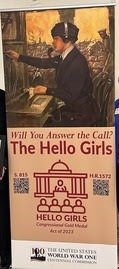
That is not the only overdue recognition to these telephone operators of World War I.  In 2009, the WASPs received the Congressional Gold Medal. This is the highest medal bestowed by civilians in the United States.  This past year the women working within the United States for World War II, the"Rosies", received the Congressional Gold Medal. Today, the United States World War I Commission is working to honor the Hello Girls with the same award, and we need YOUR help to bring them the recognition they deserve!  

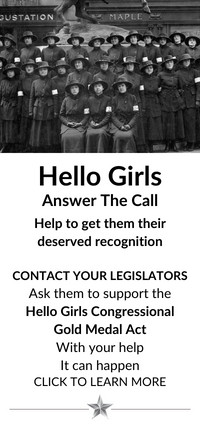
I have reproduced here a flier I will have at my program.  Please read it.  At the bottom I add the information for you to contact your Representative  at https://www.worldwar1centennial.org/honor/valor-medals-image/hello-girls.html

Hello Girls Congressional Medal Legislation Gaining Big Momentum in Senate and House

Great news from the campaign of the World War I Centennial Commission and other organizations, as well as many individuals like you, to encourage the 118th Congress to pass legislation honoring the World War I "Hello Girls" U.S. Army Signal Corps telephone operators, America's First Women Soldiers, with a Congressional Gold Medal. As of the publication of the WWI newsletter, the Senate measure, has gathered 65 of the 67 cosponsors it needs to be brought to a vote and passed in the Senate. H.R.1572, the House measure, has 152 cosponsors, some 70% of the votes needed to pass in the House.This outstanding progress has happened due to all the many organizations and people who have reached out to Senators and Representatives and asked them to cosponsor this important legislation. If you are one of those people, thank you! If you haven't joined the campaign yet, now is a great time to answer the call, and help get this legislation across the finish line.

The Hello Girls made a huge difference in the outcome of WWI. The ability of the bilingual female operators to pass critical tactical information calmly and seamlessly between two allied armies that spoke different languages was a fundamental breakthrough in tactical communications on the Western Front. The service of the Hello Girls helped bring the fighting to an end in the Allies’ favor as much as a year earlier than it might have taken without them, according to General John Pershing, commander of the American Expeditionary Forces. When their nation called in 1918, the Hello Girls answered – will YOU answer their call for recognition in 2024?

Hello Girls Sidebar Ad v2

https://www.worldwar1centennial.org/honor/valor-medals-image/hello-girls.html

That's where my flier ends.  The link also lets you find your representative.  The website also gives the following advice:

You can read the legislation submitted in the House (H.R.1572 - To award a Congressional Gold Medal to the female telephone operators of the Army Signal Corps, known as the "Hello Girls".)

  • On your Representative's web site, navigate to the "Contact form.
  • Fill out the Representative's contact form, then copy and paste the state-specific message in the tab into the "Message" field of the form.
  • We encourage you to customize your note before sending!  Make it a personal message from you.
  • Check "yes, I'd like a response" from your Representative.
  • Click "Send"!
  • If you receive a reply from your Representative, or would otherwise like to contact our team with information, please forward any and all correspondence to hellogirls@worldwar1centennial.org.


Friday, March 1, 2024

The Hello Girls deserve a Congressional Gold Medal

LoiS at Iosco County Historical Museum

I don't normally completely publish an entire article from another source, but today's article from the February WWI  Dispatch not only focuses on the Hello Girls, but what we can do for recognition of their service in World War I.  The Doughboy Foundation spotlights that "War to end all wars", which is too easily forgotten after World War II.  They rightly say it was "The War That Changed the World."  

Starting this month I return to telling the story of Oleda Joure Christides from Marysville, Michigan.  Her family graciously helped me as I put together her story and those of the other bi-lingual phone operators who were America's first women soldiers.  Michigan also had one of two "Hello Girl" deaths.  It took slightly over 60 years for them finally to gain their veterans status as the Army tried to claim they were contractors.

Their descendants are rightfully calling for a Congressional Gold Medal for these brave women.  The article below from the February WW1 Dispatch gives much more detailed information below.  

Dennis SkupinskiOther information in the newsletter includes the death of  Dennis Skupinski, the Michigan State Commission Chair WWI and amateur historian.

Dennis helped me personally as one of his many ways as Commission Chair (and as dedicated "amateur historian") he was recognized as "ceaselessly promoting the Michigan and Michiganders contributions to the Great War."  I am honored to continue the focus on this work that meant so much to him and Oleda.

 Before I give the Dispatch article, I also want to recommend a well-researched work of fiction about the first "Switchboard Soldiers", including Grace Banker, their Chief Operator.  Her diary was one of many sources New York Times bestselling author Jennifer Chiaverini used in creating her well-written novel, Switchboard Soldiers.  My view of Hello Girl preparation and life is from the sixth of seven units sent abroad.  Chiaverini's book looks instead to the start of their work and, by including Banker as one of her three characters, the very top organizational view.  These women of the U.S. Army Signal Corps "broke down gender barriers in the military and battled a pandemic as they helped lead the Allies to victory."

Now my call to action:

Women’s History Month: Ideal Time To Ask Your Senators and Representative To Support Congressional Gold Medal For The Hello Girls

Hello Girls pop-up image

Women's History Month starts on Friday, March 1, a month dedicated to "commemorating and encouraging the study, observance and celebration of the vital role of women in American history." This makes it the ideal time for all Americans to reach out to their two Senators and Representative to request their immediate support for current legislation in each House to award a Congressional Gold Medal to the U.S. Army Signal Corps telephone operators of World War I, known as the "Hello Girls." America's First Women Soldiers earned this honor through their outstanding service in World War I

Women's History Month at Women's Military Memorial vertical

The Hello Girls will be at the top of the agenda on Sunday, March 3 at the Military Women’s Memorial in Arlington, VA, as they kick off “March With Me” – a celebration of Women’s History Month at the only memorial to tell the stories of all women who have served our nation. The award-winning  Hello Girls documentary will be screened in the memorial's Vaught Center at 1:00 pm Sunday (get there early!). Filmmaker James Theres will be on hand to discuss the movie after the showing, and to talk about the essential role that the Hello Girls played in bringing the fighting to a close in World War I.. Joining him will be several descendants and family members of Hello Girls, who will share their knowledge and memories of their family heroines, and take questions from the audience. If you are anywhere in the National Capital Region, request your tickets now to attend this event, which also features “Honoring Her Voice,” a special musical performance by The U.S. Army Band “Pershing’s Own” chamber players, and an Open House at the Memorial.. 

Four of the descendants and family members of Hello Girls have joined forces to pen an eloquent editorial about why America's First Women Soldiers deserve the recognition of a Congressional Gold Medal. The short answer is that it's "A distinction they have earned," but the four authors go into excellent detail on how the "adventurous, even intrepid pioneers of their time" answered their nation's call in 1918.The women of the Hello Girls risked their lives in service, and two died in France. Click here to read the entire editorial, which is seeking placement in publications across the nation to support the Congressional Gold Medal legislation

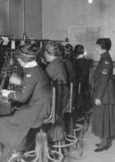
Hello girls at switchboard

You can join these family members in advocating for passage of the Hello Girls Congressional Gold Medal legislation in 2024, and do it right from your computer! Click here for our toolbox that makes the process of reaching out to your Representative and Senators very straightforward. You can also reach out by phone to the local and district offices of your Senators and Representative, and tell them that you want them to answer the call, and cosponsor the Hello Girls Congressional Gold Medal legislation in the 118th Congress.

Hello Girls with helmet

The Hello Girls made critical battlefield tactical communications work effectively for U.S. and French military forces on the front lines of World War I, saving the lives of many American by helping bring the long war to a quicker end. However, when the Hello Girls returned home after WWI ended, they were denied veterans status and benefits until 1977. The Hello Girls earned and deserve the recognition of a Congressional Gold Medal, and the World War I Centennial Commission asks you to helpmake that happen in the 118th Congress!

When their nation called in 1918, the Hello Girls answered -- will YOU answer their call for recognition in 2024?

Friday, February 24, 2023

Love, the "War to End All Wars", and a century later

Painting of Oleda in Chaumont by her daughter, Michelle Christides

A week from today I will once again present the story of Oleda Joure Christides, a World War I "Hello Girl."  It will be at 11 a.m. at the Carnegie Branch of the Jackson District Library.  The last time I was able to do this program was in November of 2019 before the pandemic.  In preparing, I was feeling far removed from the story of this woman, a story developed from various sources including her two daughters.  One of the daughters, Helen, has since died and I miss her so much.  I had hoped to contact some of the family last November when Oleda was inducted into the Michigan Military and Veterans Hall of Honor.  Unfortunately I was too sick that week to attend.  Oleda's other daughter, Michelle, was also unable to attend, but sent a prerecorded video.  Michelle has done much to share the story of her mother and these brave women who went "Over There" and then spent 60 years fighting for their promised veteran's status.  The Doughboy Foundation long ago published her article, "The History of a Hello Girl."

That same Doughboy Foundation publishes a newsletter, which this month includes a Valentine's Day story about another aspect of the experience of these Signal Corps bilingual telephone operators. . . finding love.  It's a reprint of the California American Legion's story, "A Love. A War. A Citizen" and that, too, was something Oleda observed among many of her fellow Hello Girls.  I recommend  "A Love. A War. A Citizen" highly and found it helpful in getting me back into the world of Oleda and her colleagues.  There were 6 Hello Girls from Michigan, including Norma Finch Carman, who was from Hillsdale County, but worked in Detroit for the Michigan State Telephone Company.  She returned to her job, but in less than a year married Ellis Joel Carman at the Episcopal rectory in Hillsdale.  Joel had been a captain in the American Expeditionary Force in France.  In my program I mention another, Melina Adam, who was repeatedly reassigned because she fell in love with Signal Corps soldier, Jack Converse.  They didn't wait to come home and were married in Paris shortly after the Armistice.  The California American Legion story does an excellent job of showing the world of the AEF and these brave women.

I don't portray famous people of the past, preferring to present "History as seen by the 'average' person."  As the Michigan Military and Veterans Hall of Honor shows, that can include important history too easily overlooked.  (The history of the Hello Girls was pushed aside for 60 years, but I'm pleased to play my part in keeping it alive.)

Friday, November 11, 2022

Oleda and the Michigan Military & Veterans Hall of Honor

This past Friday was Veterans Day, a day to honor the bravest of our citizens: the many people who have served in the military to defend our freedom. Veterans Day honors all military members, regardless of the war or conflict, or if they survived or perished.  The coming Friday a special Michigan event will occur.

The Michigan Military and Veterans Hall of Honor creates a Hall of Honor for Michigan citizens who have distinguished themselves through military service and/or public service as a veteran of the Armed Forces of the United States. 


The "Hall of Honor" is currently only online, with an annual Hall of Honor Day celebrating the newest additions and learning more about why they were chosen.  This year Oleda Joure Christides, a World War I "Hello Girl" from Marine City, will be honored. 

Online, beyond their website, the Hall of Honor also has a Facebook page, where they have been posting about this year's ten inductees.  This is what they posted about Oleda:

Oleda was born in 1897, in Marine City, and served as a telephone operator in the U.S. Signal Corps' famed "Telephone Girls" Brigade in World War I.
When the U.S. entered the war in 1917, American Expeditionary Forces (AEF) Commander General John Pershing recognized that expert telephone communications and technology support between command units and the front lines would be crucial to victory.
Upon demobilization in 1919, Joure-Christides returned to Marine City and resumed her civilian career as a telephone operator, married, and raised a family. Despite assurances to the contrary, the Army issued Telephone Girls Brigade "Service Termination Letters" instead of a military discharge, denying them veteran status and any benefits. After decades of fighting; in 1978, Joure-Christides was awarded her full official discharge at home with her husband, Chris, by her side.
Oleda passed away in Marine City in 1984.
Hear her incredible story and many others at the #MMVHOH Military & Veterans 2022 Hall of Honor Inductee Ceremony on Friday, Nov. 18th at 12:30 PM!
Event information: https://bit.ly/3sQZ9pj

This will be another opportunity for me to meet with many of Oleda's family.  Whenever my historical programs are about a real individual, I try to work with their family.  Sadly Oleda's daughter, Helen, who was a great help, has passed away, but I hear her son will be there.  I also worked a bit with Oleda's other daughter, Michelle, who has done a great deal to spread the word about these Signal Corps Operators, both their work in World War I as the first female combatants and their 60 year battle that finally succeeded in recognition by the army.  Oleda was fortunate enough to be among the 50 operators still living who finally received their veterans status and honorable discharge in 1978.  

Oleda with Brigadier-General Arthur Wolfe
Oleda died in 1984.  The brief summary of their work and eventual recognition is at Wikipedia

As I understand it, Michelle will be unable to attend the Hall of Honor ceremony, but has prepared a brief video for the occasion.

The Hall of Honor's purpose is twofold, both to honor and to educate.  Those education goals are:

To educate Michigan citizens, and particularly young people, about the military and civic service of state veterans in order to inspire a sense of pride, patriotism, and civic virtue.

To promote through scholarships, grants, and other means, the research and teaching of Michigan’s military heritage and the importance of military service to citizenship throughout the state.

Sometimes storytelling offers an opportunity to touch history and the people who lived it.


Friday, November 4, 2022

For Veterans Day and Beyond, More about World War I

This coming November 11 is Veterans Day. Historically and in some parts of the world it is called Armistice Day or Remembrance Day.  When you say something is at "the eleventh hour" it refers to the ending of World War I on the eleventh month at the eleventh day at the eleventh hour the war's end was signed.  While the war clearly was not "the war to end all wars", this day honors all who have served in the military.

I do a program on a Michigan woman, Oleda Joure Christides, who was in the last team of the bilingual phone operators, commonly called "Hello Girls", for WWI.  Because some men were "buried at sea" due to what was commonly called the Spanish Influenza on her trip to work at Pershing's headquarters, I did a lot of research also on the Great Influenza Epidemic of 1918.  Even with all my research, Victoria Thompson in her book, City of Scoundrels, did indeed give a few "I didn't know that" moments. She graciously gave me permission to share her comments at the end of the book which are relevant to both World War I and the Influenza epidemic.  


I'm hoping to bring the program about Oleda Joure Christides, http://www.lois-sez.com/historical-programs.html, back during Women's History Month. In November Oleda will be honored on November 18 in Lansing by the Michigan Military and Veterans Hall of Fame.  It's by invitation only and I look forward to meeting additional members of Oleda's family.  It's great to have her service honored.


I also very much appreciate Victoria Thompson's permission to reprint her Author's Note in City of Scoundrels. Not only do I want to give full credit to her and would send you to her website at http://www.victoriathompson.com/, but definitely have enjoyed her
Counterfeit Lady series, about a woman raised to be a con woman.  This is a fairly new series of, so far, five books, including the first book, City of Lies, where "Counterfeit Lady",Elizabeth, takes shelter hiding with Suffragists in jail.  When Thompson mentions President Wilson "was notoriously thin-skinned and could not tolerate any criticism" I think about this photo after the War's end when women in the U.S. asked for the same rights granted Germans.

Even before the Counterfeit Lady series my husband and I are longtime fans of Thompson's Gaslight Mysteries set in New York city at the Turn of the 20th Century.  There are 24 so far and all are titled "Murder on (or in) ... " giving the name of a New York street or neighborhood.  I recommend them highly. They move you like a time machine into a well-researched bit of the past.  Added to those settings there are characters who always make you want to see what happens next.  I could say even more, but think it's time to let you discover them for yourself.  May Ms.Thompson keep on writing!

In the meantime, when you see veterans offering poppies for donations, think of all the poppies "In Flanders Fields."


Saturday, April 27, 2019

The 19th Amendment

Today, April 27, I'm once again telling the story of World War I's "Hello Girls" as if I was Marine City's Oleda Joure Christides.  The story is as much a story of women's history as it is that of World War I because it took 60 years for those women to finally gain their veteran's status promised to them when they initially took their oaths as soldiers.

When the Victory Parade was held in New York, the Navy recognized its Yeomanettes and let them march, but the Army refused, claiming the bilingual telephone operators were "contract employees", thus lacking veteran's status.  The Army insisted only males had been in the Army.

Part of the delay in recognition, beyond the Army's refusal to recognize the women after the war ended, included the many things taking priority in the United States.  Returning soldiers also sought their promised compensation which led to Bonus Marches or the Bonus Army during the Great Depression.

Why does this involve the League of Women Voters?

One of those matters, definitely a major issue in women's history, was giving women the vote.  This was more than just an issue in the United States.  Wikipedia's article on Women's Suffrage shows the changes internationally.  I was stunned when only recently I learned about Great Britain, "From 1918–1928, women could vote at 30 with property qualifications or as graduates of UK universities, while men could vote at 21 with no qualification. From 1928 women had equal suffrage with men."  In both the U.S. and around the world the movement, which had been growing since the 19th century, was strengthened by the role women took in World War I.

I'm particularly fond of the historic photo addressed to President Woodrow Wilson as "Kaiser Wilson" talking about how his post-war concerns for Germany's self-government (which did give all Germans the vote in 1918) ignored the twenty million women in the U.S. without the vote.

I have two books of newspaper front pages showing major events.  Neither Great Pages of Michigan History from the Detroit Free Press nor The New York Times Page One; Major Events 1900-1998 as Presented in The New York Times show the passage of the Nineteenth Amendment to the U.S. Constitution in 1920.  Somehow a constitutional amendment would seem like front page news.  Certainly the eighteenth amendment banning alcohol and the later 21st amendment repealing it received plenty of attention. 

On a personal level, many years ago I remember an elderly woman telling of the disparaging looks and comments made when, as a young woman, she proudly marched up to vote when it first became possible. 

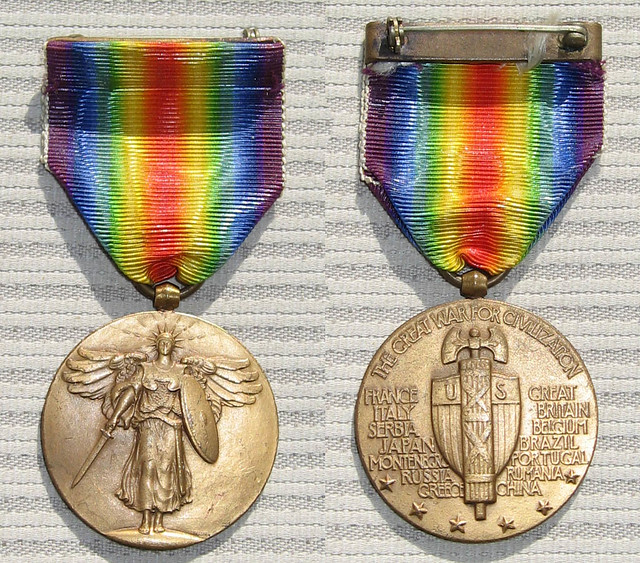
Fortunately local newspapers recorded when Brigadier General Arthur Wolfe was finally sent to Marine City in 1978 to present Oleda with her long-promised official honorable discharge papers and Victory Medal.  At the time she was one of only 15 alive who served abroad.
It may not have made front page news, but like the 19th amendment, we need to recognize these important events in women's history and the contribution of women who went before us. 


Friday, August 10, 2018

The Hello Girls documentary

Marine City this weekend remembers its own Oleda Joure Christides and her fellow Hello Girls of World War I with the Jim Theres documentary.  The showings are at the intimate Mariner Theater to benefit the Marine City Pride and Heritage Museum with the Friday premier and Saturday showing both sold out, so a Sunday at 4 p.m. showing has been added.

I'm not sure if he is wanting to sell it online, so I will only give links to some of the official trailers.  The daughters of Oleda have both been a help when I was preparing my program.  This https://vimeo.com/239579320 includes Oleda's older daughter, Helen Richard, as well as the author of the book The Hello Girls, Elizabeth Cobbs, who also produced the film.  In addition I enjoyed seeing my storytelling colleague, Ellouise Schoettler, who began guiding people in the Washington  to the story of the Hello Girls before I ever heard of them.  Another trailer, https://vimeo.com/254241813, has younger daughter, Michelle Christides, sitting on a bench as she was interviewed outside General Pershing's headquarters at Chaumont.  Added to that, here is the only known audio interview of a Hello Girl, yes, Oleda, https://vimeo.com/282223541 .

By the way, the film ends with several women at the Women's Memorial at Arlington Cemetery reading the World War I poem by Frances A. Johnson called "To the Telephone Girl"
World War I Poster Collection (MSS WW1Posters), Oregon State University Special Collections and Archives Research Center, Corvallis, Oregon.
From the cratered Hells of No-Man's Land
To the switchboard where you sit,
There are none who serve so loyally,
We know that you do your "bit."
For the world's bound round with a copper wire
With you on the outer end,
Each flashing light that you plug in the night
A message of hope you send.

You sit all alone at a magic loom
And weave from out of the air
The words of faith, of home, of love,
That go to our boys "out there."
For the war's not won with bursting shells,
Shrapnel or cannon alone,
You're doing your part with all your heart,
Little girl of the telephone.

***

The poem and poster show a bit of the way the Hello Girls were recognized at the time by the general public.  In the film, Helen includes a bit of the Christmas gift of a booklet of thank yous from the officers and men they served.

The story of our country's first female soldiers and their 60 year fight for veteran's recognition will be celebrated in Marine City.  This month I also have had several requests for my reenactment.  I especially appreciate the support from Helen, who has seen it, as well as from so many others here in Michigan.  After the centennial celebrating ends, I hope to keep alive the story of Oleda and the other Hello Girls.  See you next week in East Tawas!

Saturday, May 26, 2018

Flanders Fields, Poppies, and Pollinators for Memorial Day

For the U.S. this weekend we have Memorial Day to recognize all our armed forces who died serving our country.

For Canadian neighbors and the rest of the British Commonwealth it's Remembrance Day, but they wait until November 11, the day of the Armistice ending World War I on the eleventh day of the eleventh month at the eleventh hour.  (That timing also creates the saying, when something is done at the last minute, that it was done "at the eleventh hour.")

There is some confusion here in the U.S. as November 11 is our Veterans Day, honoring all who have served in our military.  Memorial Day was strictly intended to remember those who gave their lives in the military, not our current military, nor its veterans.

For both the U.S., the British Commonwealth, and even many non-Commonwealth nations, poppies are a visual symbol pointing back to a poem, "In Flanders Fields", by Canadian doctor, Lieutenant Colonel John McCrae, in the spring of 1915, shortly after attending the funeral of a friend in Ypres and seeing poppies growing in battle-scarred fields where the soldiers had been buried.

When I do my World War I program I use a black and white photo (although it started with the hint of
the red that so impressed Dr. McCrae) because that's the photo a veteran, like Oleda Joure Christides, would have.  She also knew about the poem:
In Flanders fields the poppies blow
Between the crosses, row on row,
That mark our place; and in the sky
The larks, still bravely singing, fly
Scarce heard amid the guns below.

We are the Dead.
Short days ago
We lived, felt dawn, saw sunset glow,
Loved and were loved, and now we lie
In Flanders fields.

Take up our quarrel with the foe:
To you from failing hands we throw
The torch; be yours to hold it high.
If ye break faith with us who die
We shall not sleep, though poppies grow
In Flanders fields.

After the First World War, the poppy was adopted as a symbol of Remembrance and their bright red color reminds people of all the blood shed.  I was told at the time of the poem it was one of the only things able to bloom in the cemetery there.  The flower is a perfect example of why wildflowers should never be called weeds.  Wikipedia, in an article about it under its scientific name of Papaver rhoeas says, "Due to the extent of ground disturbance in warfare during World War I, corn poppies bloomed in between the trench lines and no man's lands on the Western front."  I was even told lime was used for those graves, so that further eliminated most things from growing there.  In that same article about the flower, Wikipedia states, "Before the advent of herbicides, P. rhoeas sometimes was abundant in agricultural fields."

The picture at the opening of today's article shows the cemetery has changed from the days of preliminary crosses and wildflowers finding their way onto the grounds where so much blood was shed.  The flowers and tombstones look too cultivated to be what was seen in the early Twentieth Century.  I am encouraged that the European Union has banned the use of neonicotinoid pesticides because they have proven it has killed bees, butterflies and, more recently, declining bird populations also are being linked to the pesticides.  Pollinators like these are crucial to our own survival because they are needed for our agriculture and food production.  Here's a link to a petition to our own Environmental Protection Agency asking that they, too, ban this war on our own pollinators. The  underlining of the word "Protection" is my own, since that is supposed to be what the agency does.

Both Memorial Day and flowers remind me of that song about "Where Have All the Flowers Gone" and how it ends with the repeated phrase "When will they ever learn?"  Personally I wish Memorial Day, wonderful as it always is to have a three day holiday, had stayed on May 30 because moving it to the last Monday in May has changed it to what people now call "the unofficial start of summer."  It was meant to be more than that.

Speaking of summer starting unoffically, here in Michigan's version of the Great Lakes' version of Lake Woebegone we barely gave a nod to springtime before summer arrived with 90 degrees!

As for World War I itself, I keep remembering the commonly used statement "Those who don't remember history are doomed to repeat it."  My program with me portraying Oleda tries to honor her, our veterans, and Women's History.  I sincerely hope it continues after November 11, 2018 as its message is not just about that "eleventh hour" or even Flanders Field.

Saturday, March 18, 2017

Hello Girls - WWI/ Women's History, part 3

So much appears in Bell Telephone News volume 9 that it needs more than one article.  It opens with this cover showing both the "Hello Girls" and a male soldier for the August 1919 number
That's issue Number 1.  By the appearance of this issue Victory did indeed crown the American Expeditionary Forces and the Bell Telephone News was filled with news of returns from "Over There."

While the A.E.F. officially was established July 5, 1917, and last week's "Storytelling + Research" showed the first 33 of the "Hello Girls" arriving in Paris in March of 1918, the Timeline of World War I shows how quickly their entry made a difference.  While their motto of "War to end all wars" wasn't fulfilled, World War I was certainly stalemated until the A.E.F. arrived.  General Pershing kept them separate and refused to let the U.S. simply fill gaps in the allied armies.  As a result the cry of "La guerre est finie!" ("The war is over!") erupted on the 11th hour of the 11th day of the 11th month of 1918. 

Oleda Joure Christides, whom I portray in telling about the "Hello Girls", was in the final unit sent to France.  She was barely 20 years old and so she was among the few, 50, still alive when in 1977 Congress recognized their service as true members of the U.S. Army.  There were even fewer by the time the army sent the official recognition of an honorable discharge and long overdue Victory Medal.  Those who died before receiving it were not given even that. 

Here's what appeared in the next issue of Bell Telephone News about Oleda and her friend and supervisor, Louise Gordon.
Bell Telephone News, Volume 9, Number 2, November 1919
Maj. Gen. Squier
They were close enough that when a fellow operator had to accompany Oleda on leave visiting her brother, Wallace, Louise was chosen.  It also mentions returning with another Michigander and head of the Signal Corps, Major General George Owen Squier.  His engineering and inventions included multiplexing, which he invented in 1910 and gave American communications an advantage over the Germans lacking it.


One "Hello Girl" who did not return, Cora Bartlett, was the subject of an earlier article here on July 11, 2015.   I strongly recommend clicking that hotlink.  Because the photos there were removed (I believe by the Hillsdale Historical Society, to whom I gave information about her) this photo combines two segments of "In the Camera's Eye" that formed the center of each issue.  Cora's portrait spanned both pages and doesn't align completely.
Portrait in Bell Telephone News, Volume 9, Number 3; Funeral Volume 9, Number 5

Hillsdale County area provided three operators, Ms. Gordon from Litchfield, who worked in Detroit, Cora Bartlett, and Norma Finch, who fell in love with and soon married Captain Ellis Joel Carman shortly after her return. 
Bell Telephone News, Volume 9, Number 7, page 6 - February 1920


Later in that same issue on page 11 it's interesting to read of the need for new employees.
Bell Telephone News, Vol. 9, No. 7, p. 11 (February 1920)
Prowling old issues of Bell Telephone News isn't always easy.  Information sometimes appears in small bits of chatter with little chronological timing.  On page 6 of Volume 9, Number 5, (December 1919)  this comment was placed under the Jackson District. 
   "Hillsdale is not Paris, but Miss Norma Z. Finch and Miss Elizabeth Shovar are quite content at the former exchange and have no desire to return to the French metropolis.

   "When the call came from the Signal Corps for operators, Miss Finch of Hillsdale and Miss Shovar of Detroit responded.  They became 'buddies' in France.  They were 'buddies' through the grueling days of the last advance on Paris when they knew that in case of evacuation, the Signal Corps would be among the last to leave.  During the long months after the armistice the exchanges were still operated in Paris.  Thousands had returned home and the operators wanted to go home, but they stayed until the A. E. F. was sufficiently demobilized to discontinue the service.

   "Miss Finch and Miss Shovar are glad to be home.  They appreciate everything about the town as nobody can who has not had their experience."

Here's an earlier article from the previous month in November 1919 about the return of Ms. Finch and Ms Shovar with two other Detroit operators.
Bell Telephone News Vol. 9, No. 4 (November 1919)

Those same operators and Ms. Gordon joined with Oleda Joure to meet in a stateside memorial service for Cora Bartlett after her burial was in France. 

These articles were part of the return to the United States, but the war had changed the world and more would be needed than just "Girls -- a lot of 'em."

Saturday, February 25, 2017

Past Is Present Is Future

DRAT!  Did an Edit and forgot to click Publish again.  Have been going in too many directions at one time, this just tells about the storytelling ones.

Sometimes this newspaper masthead seems so appropriate.  Times Past, Present, and Future.
For the Times Past, lately I've been busy with both my two very real historical personas, Liberetta Lerich Green and Oleda Joure Christides.  Liberetta grew up on an Underground Railroad Station in nearby Shelby Township, she followed the progress of her brothers in Michigan's "Fighting Fifth" Infantry in the Civil War, and then raised her own family of six interesting children.  Oleda, from Marine City was a "Hello Girl", one of the bilingual phone operators in World War I.  In my "spare time" I've enjoyed being part of the musical, The Mystery of Edwin Drood, which is set in 1895 with a Music Hall troupe and involves some improvisation with the audience, including letting them select murderer, detective, and final lovers.


The Times Present has been more aggravating.  Among the most difficult is my transitioning to a new personal computer and trying to retrieve all my backup.  I had to accept the lifespan of my old computer had either ended or deserved to go.  Now I'm trying to figure out how to get everything I had up and again running, hopefully without having to buy even more!

I'm also looking forward to removing the cast from my wrist and arm on March third.

The Times Future has incorporated all of this and even more.  Back on January 26 I did a Liberetta program for Oxford Public Library.  In the process, I was videotaped by Oxford Community Television and was favorably impressed.  In the meantime I did yet another videotaping with Shelby TV, while offering Liberetta's story at the Shelby Township Library.  This was arranged before I knew what would happen in Oxford.  My hope was to document and archive the history of this family for the township, especially the Shelby Township Historical Committee and the Lerich and Green descendants.  The support from the Historical Committee over the years has been the start of so much of my research, beginning with her own oral history, The Beacon Tree, which can be found on the Historical Committee's website.  As a result the Shelby program will be expanded beyond the library program.

Oxford Community Television, however, decided Women's History Month in March would welcome the story of the "Hello Girls" and Oleda.  I definitely agree.  These women fought for 60 years to gain finally recognition as veterans.  They were addressed as "soldier"; warned repeatedly of being subject to Court Martial; their mail, leave, and medical care all came from the military (although, unlike the soldiers also in the army, they were not given typhoid shots, so Hillsdale operator, Cora Bartlett is buried "Over There" because she died of typhoid); one of their switchboards was partially destroyed by German fire earning their supervisor, Grace Banker, the Distinguished Service medal and the operators with her certificates.  Yet when they returned they were denied veterans status.  It wasn't until the 1970s those few still alive received their honorable discharges and promised Victory Medals.
I look forward to offering the video OCTV taped this past week.  Next month is March, Women's History Month, and I plan to publish each week articles and photos from Bell Telephone News from the time before and after their service, showing the operators of Michigan and Illinois.

Saturday, December 31, 2016

Out with 2016 and in with 2017!


Now is the perfect time to look back and see how the year went and what might need to be done differently in the coming year.

The folks at Clipart Library have some great images for looking back at 2016.  I've chosen them for this post, but they have other topics worth checking.

For my part I want to stick to Storytelling here (although I promise I'm also looking at other parts of my life, too!)

  • There have been weekly posts here, including 31 segments of the popular Keeping the Public in Public Domain stories, although I've also sometimes told other stories, too.  I've noticed it has become popular reading for our U.S. service members.  I'm happy to give them something to read during those times when some entertainment is needed.
  • I love the research and time travel of Historical Storytelling Programs - my program as Liberetta Lerich Green and the topic of abolition, the Underground Railroad, and the Civil War has been popular for many years, but this year I particularly remember the small town of Mecosta packed the hall and were very enthusiastic.  
  • Another of my historical programs, this one about World War I had preview programs and a debut.  I'm excited to tell about the "Hello Girls" as Marine City bilingual telephone operator, Oleda Joure Christides.  This is as much a story of Women's History as it is for the coming centennial of the U.S. in this often overlooked war which moved our country into playing a role on the international scene.
  • I'd heard about the Jesuits for years, but this past year let me tell to them as both Liberetta and Oleda.  There was nothing retired about the intellect and good wit of these "Jebbies" and I hope to have even more opportunities to bring my storytelling to them.
  • Other adult programs included a two hour spooky storytelling around a campfire.  It let me try out some of the Lafcadio Hearn stories I've posted here.  After two hours I found myself realizing how many spooky stories I know, but didn't get to tell!
  • An aunt died in 2015 and I had the opportunity to do memorial presentations both in Las Vegas and at the ancestral burial plot in Bloomington, Illinois.
  • Yes, I enjoy telling for adults, but worked for a great many years with children, so there was plenty of that, too.  Some of my favorite programs were return engagements, including the many schools for the Jackson Storyfest.  Jackson is a truly diverse county, with urban, suburban, and rural communities.  Definitely urban is Detroit and it was wonderful to have a Detroit Public Librarian bring me back.  She had a library with no air conditioning but fans on a meltingly hot summer day, yet those families stayed right with me and my puppet sidekick!
Now is the time for thinking ahead to 2017 with new projects and room for self-improvement.
  • Publicizing programs is a never ending job, especially as I look at my Hello Girls program, both because of its limitations for the time of the historical centennial celebration, but I see it as so much more because their 70 year battle for recognition makes it a perfect example of Women's History, although it's already been enjoyed by men, too.
  • That program left me unhappy with its debut on audio-visual problems in a room with too much light for our equipment.  Help came from Dennis Skupinski, who has the YouTube channel, WW1 Centenary Michigan, which urges you to Give the First World War a Second Look.  His flash drive of WWI scenes and music lets program sites have an option for larger rooms.
  • I also need to contact libraries in small towns for an unusual project that can come to them at very low cost to the library.
  • Summer Reading Programs in libraries value literacy, but variety performers like puppeteers and magicians draw larger audiences.  This is why this blog has had several (13 so far) articles on puppets, including puppet sidekicks.  This year Priscilla Gorilla will once again accompany me.  It also permits audience participation.  
  • American Sign Language is the third most used language in the U.S. and students say they learn even more from my storytelling in voice and sign.  I need to promote more my introductory programs in it.  The program is very flexible and can be for children or adults, from a one-time program or a series.
  • I am the Michigan state liaison for the National Storytelling Network, but always find myself feeling as if I should do more to spread the word and also work with our state's members.
  • One of the things I love about my work is its variety and creativity and how I never know what's next.
  • Of course, I plan to continue offering stories in my Keeping the Public in Public Domain segments.  With 52 weeks to the year, this past year's 31 segments seems just about right to me.

With all of this I plan to keep my storytelling always moving from Good Enough to Better and even Best.


Saturday, June 18, 2016

Pershing's "Switchboard Soldiers", Oleda Joure Christides, and Women's Suffrage


Until recently, like Don C. Warrington, I thought General John Pershing might have been called "Black Jack" because it was his favorite card game.  Not at all.  On Warrington's site I learned like me, Pershing was originally from Missouri with a strong background in working with African-Americans.  When he went into the military this was just his start as the general was noted for his long-time command of the so-called "Buffalo Soldiers", an African-American soldiers regiment begun in the Civil War.  When the U.S. entered World War I, his ideas weren't always accepted.  President Wilson rejected Pershing's request and put all black units under the French.  Since the U.S. had been reluctant to enter the war, Pershing was more successful refusing to be part of the Allied army, instead calling our army the American Expeditionary Force (the AEF).  The war was in a stalemate after three years, the French army had mutinied and the Russian revolution had begun.  Pershing's ideas did more than separate the U.S. army, he created the first women soldiers by requesting bi-lingual phone operators "Over There" who became known as "Hello Girls."

As followers of this site know, I'm working on telling the story of those Hello Girls.  This week was the second of my preview programs testing it with some very different audiences.  I present the story of the women Pershing called "Switchboard Soldiers" through the eyes of Oleda Joure Christides, one of the few women who finally received veteran's status, a process that took roughly 60 years.  It also didn't include most of them because by the late 1970s, out of the 223 serving abroad, only 18 of those serving in France were alive and even then were told they had just become "veterans" and it was not retroactive!

The early 20th century saw the battle for Women's Suffrage come to fulfillment almost everywhere.  (Saudi Arabia waited until the end of 2015 to allow women to vote in municipal elections.)  Here in the U.S. President Wilson initially opposed it, but the war eventually convinced him to support the 19th amendment. I'm rather fond of this August 14, 1917 banner from before the war.

I remember vividly a woman in the now defunct storytelling group, the Mount Clemens Raconteurs, tell of her experience at the voting booth when she was among those first women voters.  It was not something most men of her day were ready to accept!

I don't know if Oleda, who was a teenager needing special permission to go overseas with the other women taking oaths with the Army Signal Corps, ever talked about voting, but she certainly was aware of the decades long struggle to be recognized as more than the "civilian contractor" the Army tried to call her and her fellow soldiers.  Soldier is how they were addressed and Pershing was the one who coined the term "Switchboard Soldiers." The more popular name of "Hello Girls" came from the men relieve to hear "Hello" or "Number Please" instead of coping with the French operators.  Beyond that, their chief operator, Grace Banker, received a Distinguished Service medal when her mobile unit came under fire, and also women could prove they were threatened with court martial.  Both their service and the delay for recognition were definitely a part of the struggle involved in Women's History.

I've promised to produce some of my resources here used in preparation for my program.  Be sure to go to the other articles here under the label, Hello Girls, also found on my ever-growing sidebar of links.  It's the librarian in me that tries to produce as many ways to find information as possible.

I presume online readers are good at online searching.  I've given many links in those Hello Girls articles, especially pointing people to a site created by Oleda's daughter, Michelle Christides, but also want to send you to some articles she wrote for the children's historical magazine, Cobblestone.  If you have access to the Gale Virtual Reference Library database (available here in Michigan through the wonderful Michigan eLibrary) you may access the articles online.  Because they were written in 2006, don't be surprised if you own library has "weeded" them out.  Future researchers may find libraries with space and money constraints don't have old issues, then if a journal can't be afforded in the future you may not find it easily.  Sorry, but I think there's a value in warehousing print, as my own overflowing personal library shows.

Be aware, my focus is oral literature and I don't have a dissertation or other need to follow an official stylesheet in the following bibliography, so if that is your goal it may need rearranging, but still should help you find the material.  I also eagerly await the book Michelle Christides is working to produce.  She has the complete list of the Signal Corps operators and has sought information from their descendants to create their definitive history.  (There were seven units and Oleda was in the sixth, the last to go overseas.)

Because my own work focuses on Marine City telephone operator trainer -- the highest supervisory position open to women at the time -- and musician, Oleda Joure Christides, I am abandoning alphabetical order and starting with C first as her daughter and others in Marine City and beyond have been so helpful and Oleda is my primary focal point.
  • Christides, Michelle - Answering the call - Cobblestone, March 2006 page 20+ (My apologies that this and the next article only give the starting page...they were found using the Gale database which doesn't give the final page number.)
  • Christides, Michelle - A 60 year battle - Cobblestone, March 2006page 39+. (LSK: Because these two articles were written for children, they do an excellent job of pointing out changes in telephones and military terminology adults may overlook.)
  • Michelle also has some additional online articles beyond her own site at the Doughboy Center -- a fascinating WWI site, but huge, if you want to prowl it go to http://www.worldwar1.com/dbc/dbc2.htm and prowl each of the 3 icons.  For Oleda's story, it's even beyond that as it's within the "2d Army" section under "Biographies & First Hand Accounts" which is labeled "Under redesign but active."  It includes diaries, letters, and biographies, including four women, among them Marion G. Crandell of the YMCA, who was the first American woman killed in action.
  • Another article by Michelle is a condensed excerpt at the fascinating site by Captain Barb in her Military Women Veterans which looks at American women and their service starting with the American Revolution.
Banker Paddock, Grace - I Was a "Hello Girl" in The World Wars remembered : personal recollections of heroes, hello girls, flying aces, prisoners, survivors, and those on the homefront, prepared by the staff of Yankee Magazine, 1979. pp. 110-115 (As the head over all the operators, in the very first unit, and the only one decorated for her service, her view of the Signal Corps women is a key part of their story.)

Monahan, Evelyn - A few good women : America's military women from World War I to the wars in Iraq and Afghanistan, Knopf, 2010.

Raines, Rebecca Robbins - Getting the message through : a branch history of the U.S. Signal Corps, Center of Military History, United States Army, 1996.

Schneider, Dorothy and Carl J. - Into the breach : American women overseas in World War I, Viking, 1991.

Wyman, Thomas Sage - A telephone switchboard operator with the A.E.F. in France - Army History, Fall 1977/Winter 1998 pp. 1-9.  (Wyman is talking from the viewpoint of his mother, Dorothy Sage Wyman, who, like Oleda, lived long enough to receive her honorable discharge papers.)

The story of these fascinating and determined women is finally being discovered.