Tell me if you have a topic you'd like to see. (Contact: LoiS-sez@LoiS-sez.com .)
Please also let others know about this site.
Showing posts with label oral history. Show all posts

Friday, May 24, 2024

Bailey - The Soldier Who Lived in the Drum - Keeping the Public in Public Domain

According to Wikipedia, this weekend's Memorial Day holiday evolved in the years after the United States' Civil War.  Starting with the common practice of cemetery gravesite decorating, Confederate graves seem to be its origin, rapidly spreading to Union graves, then followed by the two World Wars.  Beyond flags and flowers, the day frequently includes parades, speeches, the Indianapolis race, and it was eventually moved from May 30 to the final Monday in May, creating a three day holiday considered the unofficial start of summer.

Original caption: "You bet I'm goin' to be a soldier, too, like my Uncle David, when I grow up."

"On Decoration Day" by John T. McCutcheon, Public domain between 1900 -1905, via Wikimedia Commons.  

I remember my mother calling Memorial Day by its older name of Decoration Day.  Such traditions exist in other countries.  I present a program about World War I from the viewpoint of a Michigan woman, Oleda Joure Christides, who was a bilingual phone operator at General Pershing's headquarters in World War I France.  

I think it's important to people all over the world to remember those who fought and died protecting their homeland and its values, whether an official day or not.  The stories of those battles deserve to be remembered.  It may be a time of community togetherness, but it should be more than just partying and sports.  The men and women who gave their lives or returned with the visible and invisible scars of war deserve this.  

My own family includes an uncle who survived the landing on D-Day in World War II.  As his older sister, my mother saw the difficulties he experienced readjusting to civilian life.  I'm not sure how much he shared with his wife and children.  Surely that was up to him.  For my own part I ought to see how much, if at all, "Unca Bill" told them.  The men and women of those years are fast disappearing.  History needs to save as much of their story as they are willing to tell.  It's called oral history and if you don't feel ready to ask about these experiences, go to your local library catalog and put in the subject of "oral history"  for a few suggestions.

While war is always something we hope will not return, it is worthwhile to know about the past and be prepared to defend ourselves and what we value.  I found an interesting tale aimed at children from that storyteller extraordinaire, Carolyn Sherwin Bailey.  It was originally printed in Stories for Sunday Telling and while she says the stores have all been used in a Sunday School setting, the headings show their general usefulness: Sunday Fairy Stories; Stories of Play (source of today's story); Holiday Stories (not including Memorial nor Decoration Day); and Stories of Everyday.  


(Orff Percussion Instrument Children's Toy Two-sided Snare Drum available at Walmart)

Obviously this story opening the "Stories of Play" is not limited to Memorial Day.  Similarly remembering our veterans should not be limited to any single day.

If you would like to see how schools in the early Twentieth Century celebrated Decoration Day, pages 346-350 of Common School Education and Teachers World, Volume 3 gives a look back.  Until time machines are perfected, Public Domain works are our best way to travel to the past.

Saturday, December 24, 2016

Lindsay and Poulsson - The Caroler - Keeping the Public in Public Domain

Once when the berries were red on the holly-trees and the Christmas geese were fattening in the pen, a certain Squire of the North Country bent his mind to hospitable plans.
"The Christmas pie," quoth he, "will taste the better if its plums are shared with guests.  A full house, a heaping board, and a roaring fire at Christmas-tide, say I; and a long life to Father Christmas!"
So he bade his Lady write by post ("and let the post be quick," said he) to summon friends from far and near to keep high holiday with him and his.
Thus it befell that when the Christmas time had come a goodly company of Joyous Guests gathered around the Squire's hearth . . .
Illustrated by W.M.Berger
That's the opening lines of Maud Lindsay and Emily Poulsson's book Joyous Guests.  The introductory section tells about the guests and concludes with:
And for twelve merry nights with songs and tales and games the Christmas festival was kept.

After that there's a section for each of the Christmastides twelve nights, complete with those "songs and tales and games."  What a great way to celebrate the season!  Even if you can't have a "full house, a heaping board, and a roaring fire", it's wonderful to step back into an era where it was possible.  This story is from the final Twelfth Night, a date made famous by Shakespeare, but not usually celebrated in the U.S.  It's other name is Candlemas.  I included a link for those curious about it, but when February 2 rolls around, know it was actually an ancient festival marking the midpoint in winter!  What a beautiful hopeful time.

Today's story also brings hope and maybe why it was the final story.  It tells of music always possible, even without instruments . . . the voice.  For Christmas we often sing carols a capella.  I love caroling, complete with memories dating back to childhood, so I give you today's story told to those Joyous Guests.  Carols should be for Christmas day and before, so it seems better to tell this now, rather than in February.

Of course I always enjoy sharing a bit beyond the story if I can find it and today I can, so look for it after the story, also a bit of a storytelling suggestion.


End papers from The Joyous Guests

I grew up in St. Louis, Missouri and especially in University City's "Loop" area for my father's store.  My second half of elementary school was also there, complete with caroling in a very Jewish neighborhood with friends having menorahs in 2 and 3 story flats.  Earlier this month in an Advent program I had an opportunity to share a bit of my own remembrances (offiffiffic'ally that's called oral history and a darned good thing to share some of those memories at this time).  Today's story would pair well with telling your own memories.

For those with menorahs and seeking Hanukkah stories, there's an online resource from fellow storyteller, Rachmiel Tobeson.  Here's one story for each night with his "The Chanukah Gift of Stories."  This is typical of his generosity I've grown to appreciate on Professional Storyteller, the worldwide network of storytellers where I'm the assistant administrator.  For all storytellers looking to find a way to fight prejudice at a time when peace is wanted more than ever, you also couldn't do better than The Christmas Menorahs; How a Town Fought Hate. Don't let the picture book format stop you as Janice Cohn's research about what happened in Billings, Montana in 1993 could easily have been a magazine article.  For a look behind the scenes and further resources from Cohn go to this blog article, "Christmas Menorahs: The Power of Courage and Goodness."


Thinking back to my St. Louis roots, I knew the city's importance to the Kindergarten movement.  The idea of Kindergarten started in the late 18th century in Germany, so it was at first conducted in German when it started in the U.S. by the mid-19th century.  St. Louis had a large German population and in 1873 had the first U.S. publicly funded Kindergarten with Susan Blow translating the German games and songs of Friedrich Frobel.  He was a founder of the idea and named the movement, "Kindergarten."

Maud McKnight Lindsay
Why mention all this?  Because today's authors were each active in the early days of U.S. kindergartens.  Maud Lindsay followed St. Louis and broke with her own Alabama social class by founding the first free kindergarten in the state -- it's still in existence.  The Lindsay link is a page on the Alabama Women's Hall of Fame, but the online Encyclopedia of Alabama article shows what a step away from her established position it was for the daughter of a college professor and later state governor.
Maud Lindsay Free Kindergarten
Poulsson ca. 1860-65
Lindsay's childhood friendship with Helen Keller is mentioned in each case and I wonder if that's how she met Emilie Poulsson?  I've known Poulsson's fingerplays a long time and wasn't surprised to find her activity in early childhood, but had no idea she was blind.  I recommend any readers with young children, or working with them, look up both Poulsson's fingerplay work and Lindsay's stories.  The authors may come from another age, but they understood the interests and abilities of young children.  Today's story shows this work with preschoolers was not the limit of their ability.

LibriVox recognized this in their production of a dozen stories under the title of The Story-Teller, yet another book of Lindsay's, but not mentioned in the two Alabama articles.  The bibliographies for both Poulsson and Lindsay have omissions, for example, Joyous Guests mentions them working together on an earlier book, Joyous Travelers.
Librivox's The Story-Teller described it this way for their audio book:
Are you a story teller? Almost all of us are, you know. Well, these 12 stories were written by Maud Lindsay to be told by someone who can weave the magic thread of speech into a performance that will hold the children spellbound. And we don't need to be perfect, just willing to tell a story; that is really all children ask, someone willing to tell a story.

Find a few more in print by going to Project Gutenberg for Maud Lindsay and Emilie Poulsson, although even then there is more they wrote that doesn't appear there.  I would recommend inter-library loans if you want to find more.

Let's close with this verse from Poulsson's Rhyme Time for Children
"Books are keys to wisdom's treasure;
Books are gates to lands of pleasure;
Books are paths that upward lead;
Books are friends. Come, let us read."
*******************
The merriest of Christmases to you or a very happy Hanukkah!
Here's my closing for days when I have a story in Keeping the Public in Public Domain
***************** 

This is part of a series of postings of stories under the category, "Keeping the Public in Public Domain."  The idea behind Public Domain was to preserve our cultural heritage after the authors and their immediate heirs were compensated.  I feel strongly current copyright law delays this intent on works of the 20th century.  My own library of folklore includes so many books within the Public Domain I decided to share stories from them.  I hope you enjoy discovering new stories.  


At the same time, my own involvement in storytelling regularly creates projects requiring research as part of my sharing stories with an audience.  Whenever that research needs to be shown here, the publishing of Public Domain stories will not occur that week.  This is a return to my regular posting of a research project here.  (Don't worry, this isn't dry research, my research is always geared towards future storytelling to an audience.)  Response has convinced me that "Keeping the Public in Public Domain" should continue along with my other postings as often as I can manage it. 

Other Public Domain story resources I recommend -
  • There are many online resources for Public Domain stories, maybe none for folklore is as ambitious as fellow storyteller, Yoel Perez's database, Yashpeh, the International Folktales Collection.  I have long recommended it and continue to do so.  He has loaded Stith Thompson's Motif Index into his server as a database so you can search the whole 6 volumes for whatever word or expression you like by pressing one key. http://folkmasa.org/motiv/motif.htm
  • You may have noticed I'm no longer certain Dr. Perez has the largest database, although his offering the Motif Index certainly qualifies for those of us seeking specific types of stories.  There's another site, FairyTalez claiming to be the largest, with "over 2000 fairy tales, folktales, and fables" and they are "fully optimized for phones, tablets, and PCs", free and presented without ads.
Between those two sites, there is much for story-lovers, but as they say in infomercials, "Wait, there's more!"
You can see why I recommend these to you. Have fun discovering even more stories!


Tuesday, February 26, 2013

Yes, YOUR History Is Important


Last month I revealed my love for "History as seen by the 'average' person."  I told about some of the historical programs I do from that viewpoint. One of those historical programs I just did was followed by the announcement that next month the group would be looking at and writing their oral histories.

BRAVO!

They got it right.

(Warning: This month's article is "text-y."  To help you scan the ideas I've resorted to   
  • bold type
  • or underlining
  • or bulleting
Links continue to be in color.  Usually I've inserted related graphics in my blog, but that seems irrelevant here.  Hope its being "text-y" doesn't make you testy.)


For too long history was viewed as something only about famous people or huge looks at historical events.  The only problem is that's not really "where the rubber meets the road."  That common saying provides a perfect example of what I mean. 

I live in Michigan, a state that for roughly a century has been intertwined in the auto industry.  People like Henry Ford and union leaders like Walter Reuther are important.  The Industrial Age and the role of the automobile are important, too.  BUT, but, but... (Sounds like a motor, doesn't it?)  There's so much more to help us realize what the auto industry means in our own personal lives.

I mentioned Walter Reuther as an example, but his wife, May, had a more personal view of the attempts on his life and also died with him in the same plane crash.  She and members of the Ford family don't really qualify as "the 'average' person", but it gets us a bit closer to taking our eyes off the famous names of history and inside a "huge historical event."

Here in Michigan the auto industry touches everyone directly or indirectly so much that there's yet another common saying here that starts "When General Motors sneezes..."  How that sentence is finished apparently has included everyone from "the nation" to "Madison Avenue" to "Detroit", but I've heard it most often as "Michigan gets a cold."  Because of our state's huge dependence on all three of the major U.S. based auto companies, we keep hearing about the need for diversification, but we're still far from it.

George Santayana said, "Those who don't remember history are doomed to repeat it" -- another common saying.  Bring it to the homes of any Michigan family who has worked for the auto industry and you start to see the importance of "History as seen by the 'average' person."  
  • Will there be differences between the family who had a salaried employee and a family who had an assembly line worker?  Yes, but there will also be some amazingly similar concerns and benefits.  
  • Will there be differences between someone who lived through the boom days in a town like Pontiac and someone living there today?  Definitely.  They are almost totally different worlds.  
  • What about the families who lived through the two weeks of the Flint Sit-Down Strike of 1936-37?  There are major differences of point of view.  I'm not going to give links -- there are so many! --, but if you Google "Flint Auto Riot" you can find a good introduction to the topic.  
  • While you're at it, check to see how long a family was involved in the auto industry and if there has been a moving away or staying with it for younger family members as they choose their own careers.  
  • General Motors used to be nicknamed Generous Motors.  Try saying "Generous Motors" as a conversation and historical memory sparker.
Whatever your family's background:
  • Ask your oldest family members what they remember about specific times and events.  
  • From older times we have journals and letters.  
  • If possible, make a video of them talking about it so the person's voice and manner also are preserved.  Thank heavens video might preserve something lost in a world of email, tweets, and texting.  
  • Of course the trick is to preserve such audiovisual history in a world that goes from 16mm to VCR to DVD to . . .  I just hope "the Cloud" and places like YouTube continue to be accessible because current history is being preserved in a way dependent on technology.

Other place-related memories:
I've been using Michigan's auto industry as an example of "History as seen by the 'average' person", but in places like Pennsylvania it might be steel, for Miami it might be tourism, while for rural areas it might be farming or ranching.  Look at what is special in an area.  I'm currently working with playwright, Jacqueline Salter, towards her premiere of "Business with Friends."  I look forward to directing her play that started as a one-act called "Blacklisted" within a trio of plays about the entertainment industry"Business with Friends" actually is more than just the way Hollywood was affected by the House Un-American Activities Committee.  As the play's subtitle says: It's Not Personal, It's Just BusinessSouthern California in the 20th century was the quick, mainly white, fox that jumped from silent films to talkies to color to becoming ruled by business to . . .

Of all things, a blog called Writers Who Kill also looked at the way to present history.  The writer of that blog about mystery and crime fiction lives in Washington, D.C.  It's a town loaded with historical sites and museums, but she found it was necessary to look at specific incidents and people to bring history alive.  She found that history as dates and memorization and encyclopedic facts were a turn-off, whether in taking a young relative to see the city or in writing fiction.  (The comments on that specific blog post are also revealing about how Teaching to the Test works against developing historical interest and what has worked.)

Speaking of what works with children, the Magic Treehouse series is mentioned.  I could add the American Girl books and some of the other series it inspired like Dear America.  What those books have in common is putting the reader into the thick of history as it happened with a young character having some differences due to where they were in history, but still having so much in common with the reader.  As a bit of my own history, I remember a review when the American Girl books first appeared.  It criticized the books as static and uninteresting like the dolls.  Prior to that series, you could hardly pay young readers to take a book of historical fiction off the shelf!  I wonder what that reviewer would do if given a chance to get in a time machine and buy into the company producing American Girl products?

For my own part I'm going to close with a repeat of my favorite book for inspiring a look back at both your own and others view of oral history.  Donald Davis's book, Telling Your Own Stories, is fun and an easy way to start.  You can also click Oral History on my sidebar for other posts on this topic.  For additional topics to use in exploring Oral History, go to my website for Story Starter Suggestions.

Yes, YOUR History Is Important.


Thursday, January 17, 2013

History as seen by the "average" person

Storytelling is both my passion and my profession, but there are subgroups within storytelling.  Sean Buvala, acting as my coach, asked me, "If money was no problem, what type of storytelling would you most like to do?"  HISTORY! I said, but not history as viewed by somebody famous...history as seen by the "average" person.

Books, television, and often movies, when looking at history focus on either someone famous or on many people without seeing life as it appeared to the "average" person.  This type of program takes similar research, so it doesn't come quickly.  That makes it hard for historical societies and museums, schools, and libraries to produce their own programs.  Added to that, coming in the persona of an individual from back in time does something movies, television, books, and even the authors of those books can't do, present a living, talking person who can react to the audience and its interests.

Liberetta Lerich Green was a very real woman who grew up here in Michigan on an Underground Railroad Station and later helped her parents in their abolition efforts.  She was here on the homefront when her brothers fought with the "Fighting Fifth" Infantry.  (I must mention here my separate blog, Michigan's "Fighting Fifth" Civil War Infantry.  Local newspaper articles on that regiment appear at the pace they appeared 150 years ago, just as the families and friends of that regiment tried to follow what was happening to the boys they loved.)  I also have copies of letters her brothers sent home and a few by her parents trying to see if their sons and others they knew might be in a military hospital needing help. Liberetta's parents, Sarah and Peter Lerich, came here as pioneers before statehood.  Teachers and elders taught Liberetta about pioneer life and even the War of 1812.  Additionally Liberetta was a Macomb County farmer's wife and later widow, and she raised three boys and three girls, including one, Loa, who was a pioneering educator. As Liberetta I've had the joy of telling about her family's contributions and what life was like for them and what she learned from others.

Beyond Liberetta there have been what I call "generic" characters.  The Michigan Arts and Humanities Touring Program posted a video of my One-Room Schoolteacher.  I also have a character I call The Hired Girl, a position common to many women of all ages.  ("Girl" is how she might be called back then.)  It was a way for women to work beyond their own homes.  The Hired Girl can let me also include folktales she might have heard in addition to talking about her work.  The Hired Girl is able to explain how a Victorian Christmas was celebrated, too.  My researching One-Room Schools and their Teachers as well as Victorian Christmas led to posts here.  (Check the sidebar to find the many posts here that have come from Liberetta and these various historical programs.) While still working as a librarian in Mount Clemens, which has a history going back to the Bath House Era, I even took the Hired Girl and worked as a "Rubber", a person involved in the baths and massages of these long ago spas.

Just for fun, I also have a program that, like Liberetta telling about the War of 1812, was developed for the Lorenzo Cultural Center's series of historical programs.  Why do I say "just for fun"?  It looks at my own childhood growing up and "Skipping Through the Halls of Fifties Memories", both the things I noticed and things going on all around me that I was too young to notice until grown-ups told me about them later.  It's a great way to get an audience recalling their own childhoods for oral history programs.

Where in time will I go next?  I don't know.  Right now I'm beginning work on the story of a Polish woman's emigration to the U.S. 

I'm in the state's Touring Directory, so my programs qualify for state grants.  It's hard to guess what might be requested next, but it will be fun using my Storytelling + Research skills to bring to new audiences "History as seen by the 'average' person."  

Sunday, December 25, 2011

Staying Alive with Oral History - Part 4

Of course there must be books recommended by this librarian-storyteller.  


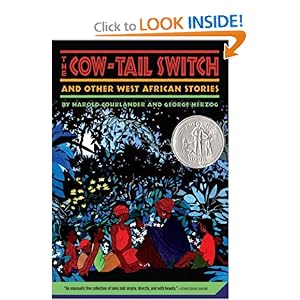
The 1947 Newbery honor medal winning The Cow-Tail Switch by Harold Courlander and George Herzog was republished by Square Fish. I treasure several stories in this collection of west African tales and it still deserves a place in folktale collections.  The cover story specifically fits this series as it illustrates staying alive because someone is remembered.  I'll not say more, hoping you read it or hear me tell it some time.


published by Heinemann in 1996
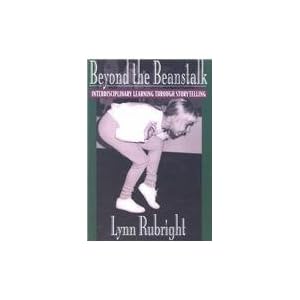
Finally I've discovered Lynn Rubright's excellent book after fellow storyteller, FranStallings, recommended it on the Storytell list.  I'd heard of the book before and wonder why I hadn't read it.  The oral history chapter describes a project with upper elementary students and seniors living in their area.  The project helped the kids discover an exciting part of their area's history.  Additional cross-generational projects in the book also are documented for sharing the arts and folklore as excellent opportunities for elders to bond with children and preserve their experiences. 

published by August House in 1993
In Lynn's bibliography I found my absolute favorite book for Oral History, Telling Your Own Stories, by storyteller, Donald Davis.  I had only the time while my mother was in the hospital to use it with her, but I'm so glad I did and only wished I had discovered it earlier.  The memory prompts in it also work for writers of fiction or to remember stories from your own life.  


Here's the rest of Lynn's bibliography in her Appendix A: Then and Now
Alessi, Jean, and Jan Miller. 1987. Once upon a Memory: Your Family Tales and Treasures. White Hall, VA: Better Publications, Inc.
Daniel, Lois. 1985. How to Write Your Own Life Story: A Step by Step Guide for the Non-Professional Writer. Chicago: Chicago Review Press.
Gould, June. 1989. The Writer in All of Us: Improving Your Writing Through Childhood Memories. New York: E.P. Dutton
Rosenbluth, Vera. 1990. Keeping Family Stories Alive: A Creative Guide to Tapping Your Family and Love. Point Roberts, WA: Hartley & Marks, Inc.
Rylant, Cynthia. 1982. When I Was Young in the Mountains. New York: E. P. Dutton.  (LoiS's comment here: This is a well-done picture book to interest children in the memories of "Then and Now.")
Weitzman, David. 1975. The Brown Paper School Presents My Backyard History Book.  Boston: Little, Brown and Company.  (LoiS again: This is from a creative non-fiction series for children past picture books with ideas for finding history all around.)
Welty, Eudora. 1984. One Writer's Beginnings. Cambridge, MA: Harvard University Press.
Zeitlin, Steven J., Amy J. Kotkin, and Holly Cutting Baker. 1982. Celebration of American Family Folklore: Tales and Traditions from the Smithsonian Collection. New York: Pantheon Books.
Zimmerman, William. 1982. How to Tape Instant Oral Biographies. New York: Guarionex Press, Ltd.


There are certainly other books, but Lynn gives an excellent start.

Thank you, Lynn, Renee, Judy, and all my storyteller friends. I hope this helps you and others you may interview Stay Alive with Oral History.

Saturday, December 24, 2011

Staying Alive with Oral History - Part 3


This continues the ideas of my fellow storytellers on the topic of Staying Alive with Oral History

Two storytellers had articles deserving of publishing on this topic.  Part 2 was by Judy Schmidt, of the Ann Arbor Storytellers' Guild.  This is Part 3 with Canadian storyteller, Renee Englott, from Edmonton in Alberta.  Part 4 will be the bibliography including Lynn Rubright's book.

Renee breaks the interview process into three parts: Framing Questions; Tips for Shaping and Conducting an Interview; and After the Interview.


Framing Questions

1. A mix of open and closed question will work best. Too many open ended questions will result in an interview without direction.

Examples of open and closed format for the same questions:
Closed
·        Was religion important to your family?
·        Did you serve as a soldier during WWII?

Open:
·        Tell me about religious observances in your family…
     ·        What did you do during WWII?
 
2. Examples of questions that elicit  1. DESCRIPTIVE, 2 NARRATIVE or 3 REFLECTIVE response:

·        1. Describe how the ice was prepared each year….

·        2. What did Mr. X do next?

·        3. Why do you think it was done that way?
 
3. Sometimes it is a good idea to start out with an open-ended question on a given topic to give the interviewee a chance to decide what to talk about. Then you can ask more specific or closed questions to elicit further information:

Example:
·        What was it like to go to King Edward School?
·        What games did you play?
·        Who was your grade 3 teacher?

4. Be as objective as possible in asking questions to avoid suggesting a required or preferred response:
WHO, WHAT, HOW? WHERE? WHY? WHEN? are all objective questions.

5. Ask neutral rather than leading questions:

Leading
·        You must have been pleased on election night?
·        You disapproved of dancing after midnight then?
·        Is it true that Mr X was a difficult employer?
·        Where most of these barns built during the 1920s?

Neutral
·        Tell me how you felt on election night?
·        How did you feel about dancing after midnight?
·        How did Mr. X treat his employees?
·        When were most of these barns built?
 
6. Negative versus Positive Connotation in word choice – particularly important around sensitive issues. 


Tips for Shaping and conducting an interview 


1.      Chat easily as you set up your equipment efficiently.

2.      Discourage third parties; identify everyone who will be participating if more than one interviewee is unavoidable.

3.      Run a test as you talk to check everything is working and volume is set correctly etc. indicate that the interview is now ready to begin. Leave lead time if using a cassette tape.

4.      Formally start the interview with an introduction: it should state who the interviewer is, (if the interview is on behalf of an organization say so), who the interviewee is, where it is taking place, date giving year. You might consider indicating something of why the interviewee is being interviewed. E.g. “ Mrs. Fornelli was the president of the X Community League for 25 years and the organizer of the X festival in 1965.”

5.      Start out with easy open ended questions. Tell me a little about growing up in X, your family – whatever you think will get the interviewee relaxed and focussed. Sometimes this proves too open ended and it is preferable to start with “Where and when were you born?” This is something that everyone has no hesitation with and it often works to get someone settled into answering questions.

6.      Then move to more general questions to lead you to the focus of the interview.

7.      Ask one question at a time.

8.      Remember that although you may have a definite line of inquiry the questions should be conservational in tone rather than an interrogation!

9.      Refer to your question sheet as you go but reframe your questions and adjust the questions as you go. Avoid asking a question on the list when it has already been answered without being asked, for example.

10.  Clarify chronology occasionally especially if it seems a bit murky – also shows you are paying attention.

11.  Keep note pad close at hand- jot down names, places that you will need to check spelling of later; make a quick note of Q you want to come back to or anything that that occurs to you that you want to ask at an opportune moment later.

12.   Be judicious in deciding when the interviewee is rambling or going off topic, sometimes you need to be patient. The interviewee may bring themselves back.  They may, along the way, raise another whole issue for investigation as they talk. Too abrupt an attempt to bring them back to topic may also diminish rapport.

13.  Try to find a natural break in the conversation before asking the next question.

14.  Make sure you have clear explanations of technical processes – ask someone to repeat if necessary.

15.  Stay present and relaxed. Pay close attention to what is being said; this will produce the best and most relevant questions.

16.  Use photos and documents including news clippings as possible as prompts. Be sure to identify everything verbally on tape. i.e. “clipping from the Edmonton Journal 25 April, 1965 or “Photo number A taken of your mother in January 1945.” Slip this info as an interjection as smoothly as you can. If there is a lot of this material you might explain before the interview begins that you will be doing “this so anyone listen later will know what we are discussing.”

17.  Pause the tape when asked to do so. But try to avoid off tape discussions in the middle of an interview it is distracting breaks the focus and flow and can be hard to restart the tape easily and can lead to mistakes.

18.  Avoid asking questions that make a statement/judgement or conclusion about what the interviewee has said.

19.  Avoid comments on what is being said. Let the interview express feelings; whatever discomfort /urge to share you experience keep it to yourself! Avoid supplying the interviewee with what you think his or her feelings must have been.

20.  Use body language to express surprise, agreement, understanding. Nod, smile, raise an eyebrow, do a silent laugh. The less that is heard from the interviewer on tape the most useful the interview is for later use.

21.  If someone becomes emotional, pause the tape and give them time to regroup before continuing... reset the conversation … “we were talking about…..”  Or conversely, set a new topic, “I’d like to move on and ask you about …..”

22.  Try to keep more sensitive questions towards the end of the interview when trust and rapport has been established.

23.   Be prepared to change subject and clarify information as necessary – (see tip sheet on this).

24.  Keep an eye on the time – if using cassette tapes be aware of 45 minute length of tape. Try to find a natural break in conversation to turn the tape over. Err on the side of too son rather than too late to avoid a sentence being cut off in mid stream. It is better to turn it over your self than have the recorder do it automatically.

25.  One and half hours is generally enough. Make it clear that the interview is about to end. Before we finish up for today I have a couple of last questions….

26.  Make sure to thank the interviewee on tape.

27.  Ask the interviewee to sign the release form which you mentioned before the interview began.

28.  Return to your note pad for any questions/ spellings that are outstanding.

29.  Have tea and let the interviewee know you will be in contact if you have questions or to review the transcript if that is what you are planning to do.

After the interview….Follow up and paper work!

1.      Make sure you take steps to preserve your interview.  For cassette tapes, push out tab on the corners. For digital, download into your computer immediately. In both cases make a copy and use this for working with, playing back, editing as relevant, and keep the master copy as the archival copy.
2.      Label the cassette/file – name of interviewer, interviewee, date, indicate 1/1 or of 1/2 tapes/files, and give it a number of some sequential sort. Museums use accession numbers that include the year. Eg. 2010 1.1 . The first tape in the first interview of 2010. Therefore 2010 4:2 – would be the second tape of the fourth interview.
3.      Undertake some sort of guide to the interview for quick reference. This might be a subject reference, summary or transcript. Transcripts are very time consuming about 10 hours per one hour recording but give you a verbatim coverage of the tape. An index is exactly that names of places, people subject topics. A detailed summary gives you a little more -some idea of the flow of the conversation. See separate sheet for an example.
4.      If you borrowed photos make copies and return them to the interviewee. If you are working in a museum or representing a public organization or group, you need to use a loan form to note you borrowed and returned the item.
5.      Keep a paper file on your interview labelling with its (Accession) number. You should keep the release form in here, along with a bio or interviewee, some info on the interviewer, any relevant notes on the interview that might remind you or help anyone later to understand the dynamics of the interview. All pieces of paper should have the interview number on them.
6.      Keep your tapes safe/files safe. See sheet on care and handling.


  This series will now conclude with Part 4's bibliography. 

Friday, December 23, 2011

Staying Alive with Oral History - Part 2


This continues the ideas of my fellow storytellers on the topic of Staying Alive with Oral History

Two storytellers who had articles deserving of publishing on this topic are Judy Schmidt, of the Ann Arbor Storytellers' Guild and Canadian storyteller, Renee Englott, from Edmonton in Alberta.  Renee's the author of Part 3 of this series.  We close with a look at Lynn Rubright's book and other suggested books.

When the topic of Oral Histories was recently discussed, Judy commented:
Published by Libraries Unlimited, 2006
Another resource,  although not only with seniors, is described in The Storytelling Classroom; Applications Across the Curriculum by Sherry Norfolk, Jane Stenson and Diane Williams.  It's the section by Madison, Wisconsin, teacher and storyteller, Mark Wagler, entitled "Teaching the World We Live In: Collecting and Telling Ethnographic Stories."  Mark has done ethnographic projects with "students from primary grades through graduate school."  The one described in The Storytelling Classroom focuses on 4th and 5th graders studying neighborhood cultures along Park Street in Madison.  

Judy continues her suggestions, saying: In terms of equipment - lately I've used a little device by Belkin called a Tune-Talk that can be attached to an I-Pod and will turn it into a recorder. The recording can then be dumped into I-Tunes.
Judy also shared her basic Ten Tips for Taping:
  • TEN TIPS FOR TAPING - Oral History/Family Storytelling
    1. Make sure your recording device is working - before the interview - so that the
    recording process itself wonʼt be a distraction.
    2. If possible, try to tape without a lot of other family members around. One-on-one
    usually works best. Find a quiet, comfortable place where both you and your
    subject can sit without straining voices or posture.
    3. Prepare for your interview by writing out questions in advance -- BUT
    4. Donʼt get too attached to your prepared questions. If your subjectʼs stories are
    flowing in a totally different direction, let them go in that direction.
    5. As you begin taping, record on the tape the following information: the names of the
    interviewer and the person being interviewed, the date, time and place. You
    may also want to record the nature of the relationship. (Example: This is George
    Jones and Iʼm interviewing my father, Ralph Jones, on May 15, 2007 at 10:00
    oʼ clock in the morning in our home at 3345 Morningside, in Ann Arbor, Michigan.)
    6. Listen attentively and appreciatively. This kind of concentrated listening is hard work,
    but well worth the effort. If you are actively listening, you will find that your
    curiosity is stimulated and you will have lots of questions.
    7. If the person youʼre interviewing is “on a roll” and does not need prompting, just let
    her or him go. Donʼt interrupt.
    8. Plan on taping for no more than one hour at a time because the process is tiring.
    However, in case your subject wants to continue, be sure to have enough tape to
    make that possible. If the person wants to pause or stop taping, abide by that
    request.
    9. Donʼt forget your manners. Be sure to thank your subject for taking time with you
    and
    sharing his or her stories. A written thank you note will will be especially
    appreciated.
    10. Label the tape carefully and punch out the tabs on the back edge so that no one
    can record over your interview by accident.
    Donʼt wait for the perfect time to tape your family stories. MAKE IT HAPPEN!
    -- Judith Schmidt , February, 2007
Excellent advice as we never know when that opportunity will go away.

Don't go away, plan on going next to Part 3, of Staying Alive with Oral History and guest author, Renee Englott.