Tell me if you have a topic you'd like to see. (Contact: LoiS-sez@LoiS-sez.com .)
Please also let others know about this site.

Tuesday, January 31, 2012

Another look at "The Underground Railroad Didn't Run on Tracks (UGRR)"

That was about a post from last year, on the Underground Railroad.  Click on that hotlink to see that earlier post.  (Did you also notice the site's address now is http://www.StorytellingResearchLois.com -- but the old address also works.)

This topic is large and definitely worth reviewing further, this time with a focus on Michigan's role in the Underground Railroad -- often abbreviated UGRR.  Michigan split up the former Department of History, Arts and Libraries, with the historical work moved to the Department of Natural Resources.  The Historical Center archives the historical materials moved from the former department.  Find online from 2000 to 2004 a newspaper, "Michigan Time Traveler", for children with accompanying teacher guides.  There are two issues specifically about the UGRR.
Adam Crosswhite
  • The Underground Railroad and Teacher's Guide. - This highlights Cass County's Ramptown and the Crosswhite Family rescue by the citizens of Marshall, MI.  Here is more about the "Crosswhite Affair" including a lesson plan on it.  Similarly both the UGRR and the Crosswhites are covered in this issue for children of "The Mitten", published by "Michigan History" magazine.
  • The Blackburns Escape and Teacher's Guide - Thorton (not Thornton) and Lucie Blackburn escaped slavery to settle in Detroit, but when they were spotted here in Michigan they were captured, tried, and scheduled to return to Kentucky.  African Americans helped them escape to Windsor where Canada rejected demands for their return. 
There's also a section called Freedom Trail Lessons  and just as with the two previous Teacher's Guides, there are uses beyond the classroom.

In Vandalia, MI they're uncovering proof of Young's Prairie, an early to mid-1800s Quaker offer of farmland and safety to runaways.


To learn of the very real incidents of free African Americans being sold into slavery, go to either the 1893, volume 22, of the Michigan Pioneer and Historical Collections or to the online text and search using your own computer's search feature (not the one offered on the site) for Malinda Paris.  The memorial of her by the people of St. Clair tells of a family repeatedly sold into slavery even though they were legally free.
Laura Smith Haviland
Elizabeth Margaret Chandler
Early leaders of the Abolition movement here in Michigan were Quakers Laura Smith Haviland, along with friend and neighbor, Elizabeth Margaret Chandler.  They were seen as "radical abolitionists" by the majority of Quakers in the late 1830s, so they joined with the northern Methodists who were also devoted to anti-slavery efforts. 


(Liberetta Lerich Green, whom I portray, grew up in such a Methodist family.)

**** UPDATE
I've just discovered, after "finishing" this post a wonderful C-Span video of Kimberley Davis-Tranumn talking about "Aunt Laura" and the active role Lenawee County played in the UGRR.  Go to  C-Span Video Library for her well-researched and inspirational video.

Friend to the Havilands and the Lerichs was well-known UGRR conductor and speaker,
Sojourner Truth, who settled in Battle Creek, MI.  As noted in my earlier post, that is also the home of the Sojourner Truth Institute as well as this statue honoring her.  Much has been written about her including this issue for children of "The Mitten", published by "Michigan History" magazine.  Battle Creek was a good spot for her as it was another Michigan location prominent in abolition and the UGRR thanks to Erastus Hussey's political efforts and publishing the abolitionist "Michigan Liberty Press."

Tour online a site in Schoolcraft, MI estimated to have sheltered 1,000 to 1,500 by yet more Quakers, Dr. Nathan Thomas and his wife Pamela Brown Thomas
Detroit Historical Museum's "Doorway to Freedom" current exhibit shows sites associated with the UGRR in Detroit including the Finney House barn (in use from 1833) where Liberetta overheard her father and Reverend Charles C. Foote discussing runaways there in danger of discovery.  Peter Lerich promptly told his wife he was leaving for a "load of plaster" in Detroit after he found Liberetta listening.

In Detroit George DeBaptiste and the Second Baptist Church of Detroit provided sanctuary and transportation to Canada.  DeBaptiste also helped organize the 1st Michigan Colored Volunteer Infantry Regiment, later known officially as the 102nd Regiment United States Colored Troops.  It's interesting to show the role of disease in the civil war, with 6 killed in action, 5 more of wounds, but 129 died of disease. After the war he returned to successful business life and continued advocacy for black rights including the 15th amendment which gave African Americans the right to vote.

It's always hard to bring such a large topic to a close.  A fellow librarian once said about me, "You can take the librarian out of the library, but you can't take the library out of the librarian."  As a result I want to recommend a book to help you find much more than I have space to mention here.  Carol E. Mull's The Underground Railroad in Michigan has been described as "the first comprehensive exploration of abolitionism and the network of escape from slavery in the state."  Ms. Mull is a founding member and current chair of the Michigan Freedom Trail Commission.


****UPDATE

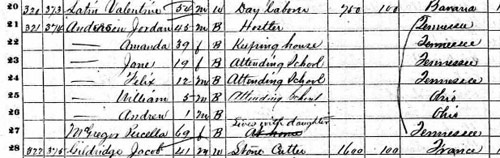
I can't resist this interesting UPDATE.  I just read "To my old master" , a fascinating and, yes, funny letter by Jordan Anderson.  It responds to a letter by Colonel P.H. Anderson of Big Spring, Tennessee, to his former slave, requesting he come back to work on the colonel's farm.  While Jordan Anderson took his family to Dayton, Ohio, and this month's post looks specifically at the Underground Railroad in Michigan, it is a delightful way to look at the later life of many who came from similar backgrounds to benefit from the Underground Railroad and emancipation.

Sunday, December 25, 2011

Staying Alive with Oral History - Part 4

Of course there must be books recommended by this librarian-storyteller.  


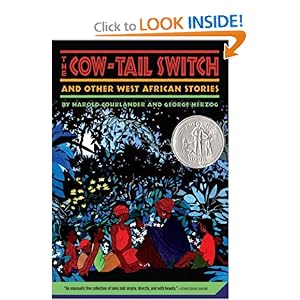
The 1947 Newbery honor medal winning The Cow-Tail Switch by Harold Courlander and George Herzog was republished by Square Fish. I treasure several stories in this collection of west African tales and it still deserves a place in folktale collections.  The cover story specifically fits this series as it illustrates staying alive because someone is remembered.  I'll not say more, hoping you read it or hear me tell it some time.


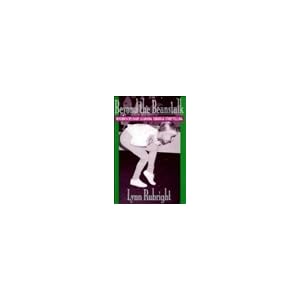
published by Heinemann in 1996
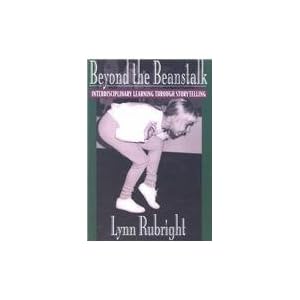
Finally I've discovered Lynn Rubright's excellent book after fellow storyteller, FranStallings, recommended it on the Storytell list.  I'd heard of the book before and wonder why I hadn't read it.  The oral history chapter describes a project with upper elementary students and seniors living in their area.  The project helped the kids discover an exciting part of their area's history.  Additional cross-generational projects in the book also are documented for sharing the arts and folklore as excellent opportunities for elders to bond with children and preserve their experiences. 

published by August House in 1993
In Lynn's bibliography I found my absolute favorite book for Oral History, Telling Your Own Stories, by storyteller, Donald Davis.  I had only the time while my mother was in the hospital to use it with her, but I'm so glad I did and only wished I had discovered it earlier.  The memory prompts in it also work for writers of fiction or to remember stories from your own life.  


Here's the rest of Lynn's bibliography in her Appendix A: Then and Now
Alessi, Jean, and Jan Miller. 1987. Once upon a Memory: Your Family Tales and Treasures. White Hall, VA: Better Publications, Inc.
Daniel, Lois. 1985. How to Write Your Own Life Story: A Step by Step Guide for the Non-Professional Writer. Chicago: Chicago Review Press.
Gould, June. 1989. The Writer in All of Us: Improving Your Writing Through Childhood Memories. New York: E.P. Dutton
Rosenbluth, Vera. 1990. Keeping Family Stories Alive: A Creative Guide to Tapping Your Family and Love. Point Roberts, WA: Hartley & Marks, Inc.
Rylant, Cynthia. 1982. When I Was Young in the Mountains. New York: E. P. Dutton.  (LoiS's comment here: This is a well-done picture book to interest children in the memories of "Then and Now.")
Weitzman, David. 1975. The Brown Paper School Presents My Backyard History Book.  Boston: Little, Brown and Company.  (LoiS again: This is from a creative non-fiction series for children past picture books with ideas for finding history all around.)
Welty, Eudora. 1984. One Writer's Beginnings. Cambridge, MA: Harvard University Press.
Zeitlin, Steven J., Amy J. Kotkin, and Holly Cutting Baker. 1982. Celebration of American Family Folklore: Tales and Traditions from the Smithsonian Collection. New York: Pantheon Books.
Zimmerman, William. 1982. How to Tape Instant Oral Biographies. New York: Guarionex Press, Ltd.


There are certainly other books, but Lynn gives an excellent start.

Thank you, Lynn, Renee, Judy, and all my storyteller friends. I hope this helps you and others you may interview Stay Alive with Oral History.

Saturday, December 24, 2011

Staying Alive with Oral History - Part 3


This continues the ideas of my fellow storytellers on the topic of Staying Alive with Oral History

Two storytellers had articles deserving of publishing on this topic.  Part 2 was by Judy Schmidt, of the Ann Arbor Storytellers' Guild.  This is Part 3 with Canadian storyteller, Renee Englott, from Edmonton in Alberta.  Part 4 will be the bibliography including Lynn Rubright's book.

Renee breaks the interview process into three parts: Framing Questions; Tips for Shaping and Conducting an Interview; and After the Interview.


Framing Questions

1. A mix of open and closed question will work best. Too many open ended questions will result in an interview without direction.

Examples of open and closed format for the same questions:
Closed
·        Was religion important to your family?
·        Did you serve as a soldier during WWII?

Open:
·        Tell me about religious observances in your family…
     ·        What did you do during WWII?
 
2. Examples of questions that elicit  1. DESCRIPTIVE, 2 NARRATIVE or 3 REFLECTIVE response:

·        1. Describe how the ice was prepared each year….

·        2. What did Mr. X do next?

·        3. Why do you think it was done that way?
 
3. Sometimes it is a good idea to start out with an open-ended question on a given topic to give the interviewee a chance to decide what to talk about. Then you can ask more specific or closed questions to elicit further information:

Example:
·        What was it like to go to King Edward School?
·        What games did you play?
·        Who was your grade 3 teacher?

4. Be as objective as possible in asking questions to avoid suggesting a required or preferred response:
WHO, WHAT, HOW? WHERE? WHY? WHEN? are all objective questions.

5. Ask neutral rather than leading questions:

Leading
·        You must have been pleased on election night?
·        You disapproved of dancing after midnight then?
·        Is it true that Mr X was a difficult employer?
·        Where most of these barns built during the 1920s?

Neutral
·        Tell me how you felt on election night?
·        How did you feel about dancing after midnight?
·        How did Mr. X treat his employees?
·        When were most of these barns built?
 
6. Negative versus Positive Connotation in word choice – particularly important around sensitive issues. 


Tips for Shaping and conducting an interview 


1.      Chat easily as you set up your equipment efficiently.

2.      Discourage third parties; identify everyone who will be participating if more than one interviewee is unavoidable.

3.      Run a test as you talk to check everything is working and volume is set correctly etc. indicate that the interview is now ready to begin. Leave lead time if using a cassette tape.

4.      Formally start the interview with an introduction: it should state who the interviewer is, (if the interview is on behalf of an organization say so), who the interviewee is, where it is taking place, date giving year. You might consider indicating something of why the interviewee is being interviewed. E.g. “ Mrs. Fornelli was the president of the X Community League for 25 years and the organizer of the X festival in 1965.”

5.      Start out with easy open ended questions. Tell me a little about growing up in X, your family – whatever you think will get the interviewee relaxed and focussed. Sometimes this proves too open ended and it is preferable to start with “Where and when were you born?” This is something that everyone has no hesitation with and it often works to get someone settled into answering questions.

6.      Then move to more general questions to lead you to the focus of the interview.

7.      Ask one question at a time.

8.      Remember that although you may have a definite line of inquiry the questions should be conservational in tone rather than an interrogation!

9.      Refer to your question sheet as you go but reframe your questions and adjust the questions as you go. Avoid asking a question on the list when it has already been answered without being asked, for example.

10.  Clarify chronology occasionally especially if it seems a bit murky – also shows you are paying attention.

11.  Keep note pad close at hand- jot down names, places that you will need to check spelling of later; make a quick note of Q you want to come back to or anything that that occurs to you that you want to ask at an opportune moment later.

12.   Be judicious in deciding when the interviewee is rambling or going off topic, sometimes you need to be patient. The interviewee may bring themselves back.  They may, along the way, raise another whole issue for investigation as they talk. Too abrupt an attempt to bring them back to topic may also diminish rapport.

13.  Try to find a natural break in the conversation before asking the next question.

14.  Make sure you have clear explanations of technical processes – ask someone to repeat if necessary.

15.  Stay present and relaxed. Pay close attention to what is being said; this will produce the best and most relevant questions.

16.  Use photos and documents including news clippings as possible as prompts. Be sure to identify everything verbally on tape. i.e. “clipping from the Edmonton Journal 25 April, 1965 or “Photo number A taken of your mother in January 1945.” Slip this info as an interjection as smoothly as you can. If there is a lot of this material you might explain before the interview begins that you will be doing “this so anyone listen later will know what we are discussing.”

17.  Pause the tape when asked to do so. But try to avoid off tape discussions in the middle of an interview it is distracting breaks the focus and flow and can be hard to restart the tape easily and can lead to mistakes.

18.  Avoid asking questions that make a statement/judgement or conclusion about what the interviewee has said.

19.  Avoid comments on what is being said. Let the interview express feelings; whatever discomfort /urge to share you experience keep it to yourself! Avoid supplying the interviewee with what you think his or her feelings must have been.

20.  Use body language to express surprise, agreement, understanding. Nod, smile, raise an eyebrow, do a silent laugh. The less that is heard from the interviewer on tape the most useful the interview is for later use.

21.  If someone becomes emotional, pause the tape and give them time to regroup before continuing... reset the conversation … “we were talking about…..”  Or conversely, set a new topic, “I’d like to move on and ask you about …..”

22.  Try to keep more sensitive questions towards the end of the interview when trust and rapport has been established.

23.   Be prepared to change subject and clarify information as necessary – (see tip sheet on this).

24.  Keep an eye on the time – if using cassette tapes be aware of 45 minute length of tape. Try to find a natural break in conversation to turn the tape over. Err on the side of too son rather than too late to avoid a sentence being cut off in mid stream. It is better to turn it over your self than have the recorder do it automatically.

25.  One and half hours is generally enough. Make it clear that the interview is about to end. Before we finish up for today I have a couple of last questions….

26.  Make sure to thank the interviewee on tape.

27.  Ask the interviewee to sign the release form which you mentioned before the interview began.

28.  Return to your note pad for any questions/ spellings that are outstanding.

29.  Have tea and let the interviewee know you will be in contact if you have questions or to review the transcript if that is what you are planning to do.

After the interview….Follow up and paper work!

1.      Make sure you take steps to preserve your interview.  For cassette tapes, push out tab on the corners. For digital, download into your computer immediately. In both cases make a copy and use this for working with, playing back, editing as relevant, and keep the master copy as the archival copy.
2.      Label the cassette/file – name of interviewer, interviewee, date, indicate 1/1 or of 1/2 tapes/files, and give it a number of some sequential sort. Museums use accession numbers that include the year. Eg. 2010 1.1 . The first tape in the first interview of 2010. Therefore 2010 4:2 – would be the second tape of the fourth interview.
3.      Undertake some sort of guide to the interview for quick reference. This might be a subject reference, summary or transcript. Transcripts are very time consuming about 10 hours per one hour recording but give you a verbatim coverage of the tape. An index is exactly that names of places, people subject topics. A detailed summary gives you a little more -some idea of the flow of the conversation. See separate sheet for an example.
4.      If you borrowed photos make copies and return them to the interviewee. If you are working in a museum or representing a public organization or group, you need to use a loan form to note you borrowed and returned the item.
5.      Keep a paper file on your interview labelling with its (Accession) number. You should keep the release form in here, along with a bio or interviewee, some info on the interviewer, any relevant notes on the interview that might remind you or help anyone later to understand the dynamics of the interview. All pieces of paper should have the interview number on them.
6.      Keep your tapes safe/files safe. See sheet on care and handling.


  This series will now conclude with Part 4's bibliography. 

Friday, December 23, 2011

Staying Alive with Oral History - Part 2


This continues the ideas of my fellow storytellers on the topic of Staying Alive with Oral History

Two storytellers who had articles deserving of publishing on this topic are Judy Schmidt, of the Ann Arbor Storytellers' Guild and Canadian storyteller, Renee Englott, from Edmonton in Alberta.  Renee's the author of Part 3 of this series.  We close with a look at Lynn Rubright's book and other suggested books.

When the topic of Oral Histories was recently discussed, Judy commented:
Published by Libraries Unlimited, 2006
Another resource,  although not only with seniors, is described in The Storytelling Classroom; Applications Across the Curriculum by Sherry Norfolk, Jane Stenson and Diane Williams.  It's the section by Madison, Wisconsin, teacher and storyteller, Mark Wagler, entitled "Teaching the World We Live In: Collecting and Telling Ethnographic Stories."  Mark has done ethnographic projects with "students from primary grades through graduate school."  The one described in The Storytelling Classroom focuses on 4th and 5th graders studying neighborhood cultures along Park Street in Madison.  

Judy continues her suggestions, saying: In terms of equipment - lately I've used a little device by Belkin called a Tune-Talk that can be attached to an I-Pod and will turn it into a recorder. The recording can then be dumped into I-Tunes.
Judy also shared her basic Ten Tips for Taping:
  • TEN TIPS FOR TAPING - Oral History/Family Storytelling
    1. Make sure your recording device is working - before the interview - so that the
    recording process itself wonʼt be a distraction.
    2. If possible, try to tape without a lot of other family members around. One-on-one
    usually works best. Find a quiet, comfortable place where both you and your
    subject can sit without straining voices or posture.
    3. Prepare for your interview by writing out questions in advance -- BUT
    4. Donʼt get too attached to your prepared questions. If your subjectʼs stories are
    flowing in a totally different direction, let them go in that direction.
    5. As you begin taping, record on the tape the following information: the names of the
    interviewer and the person being interviewed, the date, time and place. You
    may also want to record the nature of the relationship. (Example: This is George
    Jones and Iʼm interviewing my father, Ralph Jones, on May 15, 2007 at 10:00
    oʼ clock in the morning in our home at 3345 Morningside, in Ann Arbor, Michigan.)
    6. Listen attentively and appreciatively. This kind of concentrated listening is hard work,
    but well worth the effort. If you are actively listening, you will find that your
    curiosity is stimulated and you will have lots of questions.
    7. If the person youʼre interviewing is “on a roll” and does not need prompting, just let
    her or him go. Donʼt interrupt.
    8. Plan on taping for no more than one hour at a time because the process is tiring.
    However, in case your subject wants to continue, be sure to have enough tape to
    make that possible. If the person wants to pause or stop taping, abide by that
    request.
    9. Donʼt forget your manners. Be sure to thank your subject for taking time with you
    and
    sharing his or her stories. A written thank you note will will be especially
    appreciated.
    10. Label the tape carefully and punch out the tabs on the back edge so that no one
    can record over your interview by accident.
    Donʼt wait for the perfect time to tape your family stories. MAKE IT HAPPEN!
    -- Judith Schmidt , February, 2007
Excellent advice as we never know when that opportunity will go away.

Don't go away, plan on going next to Part 3, of Staying Alive with Oral History and guest author, Renee Englott. 

Thursday, December 8, 2011

Staying Alive with Oral Histories - Part 1

We all hope our lives make a difference.  I've been privileged to do oral histories and at other times help young people do it, too.  Additionally my reenactment of Liberetta Lerich Green started with her oral history telling about growing up on a Michigan Underground Railroad Station and her family's Civil War experiences.  The title story in Harold Courlander's The Cow-Tail Switch and Other West African Stories shows the value of remembering people's lives. 

Never overlook the value of putting something in a format available to future readers or listeners.  Whether they are the descendants of the person interviewed or not, the interview becomes precious beyond any time or expense involved.  Two easily overlooked groups who can especially value doing this are people with no children and those diagnosed with Alzheimer's disease in the early stages. It's their way to stay alive!

I'm always indebted to my fellow storytellers for their ideas.  Great storytelling resources come from a very active international email list, Storytell, and the online network, Professional Storyteller ,  (where I'm an assistant administrator to nearly 1900 members from around the world). I hope these suggestions from my storytelling friends help you do an oral history project.  The ideas were so plentiful this topic will have three more parts.
  • Lynn Rubright's excellent book, Beyond the Beanstalk: Interdisciplinary Learning Through Storytelling, (published byHeinemann, 1996) will be discussed in the final part of this four part series of blogs.
  • Jo Radner, who teaches oral history workshops in the northeast, adds: My favorite intergenerational storytelling program is Judy Klevins' Swapping Stories.  She trains groups of students and elders separately in interviewing and public speaking, then puts them together in pairs -- one elder, one student.  They interview each other, swap stories, and then perform each other's stories to an audience.  So it's not just students collecting stories from elders.  As I often put it, old people are a foreign country to the young -- but the young are also a foreign country to the old.  They need to tell each other their stories to make the connections.  (Note by LoiS: Their approach sounds very similar to some of the ideas in Lynn Rubright's book mentioned above and in Part 4.)
  • Renee Englot offers a three-part look at the interview: Framing Questions, Tips for Shaping and Conducting the Interview, and finally After the Interview.  Each is a complete document, so her contributions will be a separate post, Staying Alive with Oral Histories - Part 3. 
  • Here in the Ann Arbor area, storyteller and former media specialist, Judy Schmidt, added both a basic "Ten Tips for Taping" and other recommendations in Part 2 of Staying Alive with Oral Histories.  
  • It's almost guaranteed my research will include Jackie Baldwin's Story-Lovers site.  She's done an award winning job of compiling information from the Storytell list.  For this topic go to the Oral Histories section of the "S.O.S." there.  (While you're there, be sure to check her home page and scroll down to her lovely stationery, cards, prints, and so much more.)
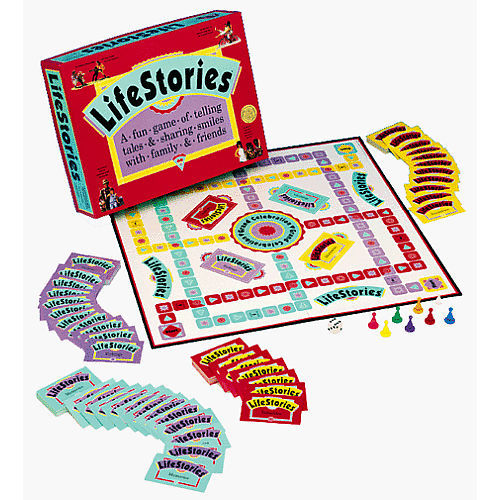
  • Something I first heard about years ago on the Storytell list was this playful way to bring back memories, the game, Life Stories.  It's available and thoroughly reviewed on Amazon (in the Toys and Games section).
    If you can't do an oral history project, I suggest you at least create an interview document for people to use in self-recording.  That's not as "magical" as what pops up in a live interview, but at least it's not dependent on grant funding. 

     LoiS(econd interview with someone wasn't nearly as lively as the time the tape recorder didn't work! -- shades of those Ten Tips for Taping)  

    This is the end of Part 1 - Staying Alive with Oral Histories.  See Parts 2 and 3 with guest authors, Judy Schmidt and Renee Englot and then the bibliography in Part 4 of Staying Alive with Oral Histories featuring Lynn Rubright.

    Thursday, November 3, 2011

    Nocturnal Animals "Own the Night"

    The Collaborative Summer Library theme for the 2012 reading program is "Own the Night" and nocturnal animals are a natural connection for both libraries and naturalists.  This summer I will tell tales of nocturnal animals found here in Michigan, but these stories come from all around the world.

    Why?

    My mission in storytelling is to increase understanding through stories from around the world and back through time. 

    To help you discover and understand how nocturnal animals Own the Night! here are some online resources.  (There are different nocturnal creatures in different parts of the world and, while my stories come from all over, I chose sites tending to focus on our own area.  This helps your young readers and listeners better understand the nocturnal animals already around them.)

    Google gives these as "Top references for nocturnal animals"  OwlBatRaccoonSkunkOpossumCatHedgehogBadger, and Firefly, but don't stop there! Other possible creatures include mouse, fox, wolf, coyote, moth, tree frog, cockroach, and I'd certainly add the Unofficial Michigan State Bird, the Mosquito!

    FACTS


    • List of nocturnal animals -- This international listing upfront declares it's incomplete, but you can click on any animal for a Wikipedia article. 
    • Nocturnality -- Yet another Wikipedia article, this one shows why nocturnal creatures benefit from this adaptation.
    • Homeschool Share on nocturnal animals -- This is both an overview and has a special featuring of owls and bats.
    • Nocturnal Habits of Nighttime Animals -- Specific to Michigan, this looks at flying squirrels, whippoorwills, tree frogs, and great horned owls.  So that's why those crows I saw made such a fuss!
    STORIES
    • Franklin and His Night Friend -- Picture book favorite character, Franklin, makes friends with a bat.
    • Nocturnal Animals poems -- These are not stories, but poems, especially about owls and bats.  (Thank heavens for the Wayback Machine's archiving the internet!)
    • Story-Lovers S.O.S. -- Searching Out Stories lists books, online stories, and much more.  Drop down to section 2 "Animals, Birds, Amphibians, Fish and Insects" and search by specific nocturnal animal.
    CRAFTS
    MUSIC
    GAMES
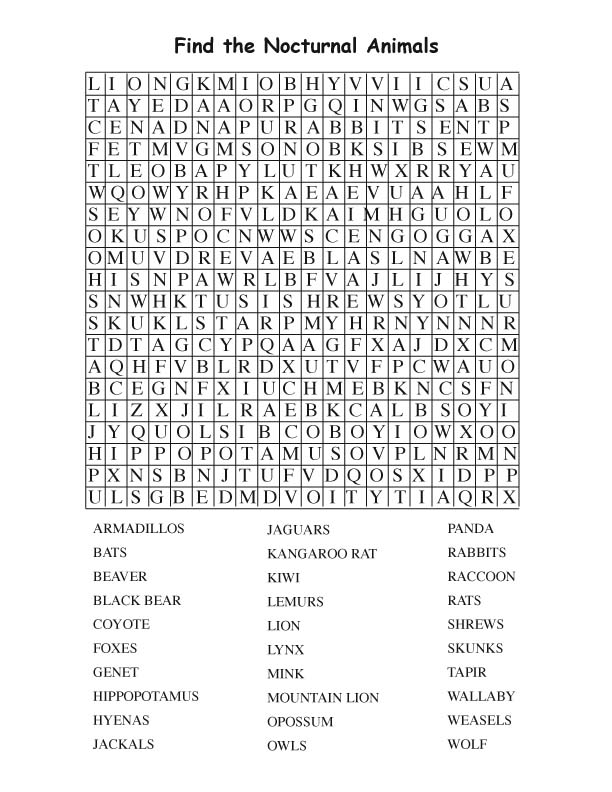
      image
    • Amsel, Sheri. “Word Searches and Crossword Puzzles.” Nocturnal Animal Word Search (Older Readers). Exploring Nature Educational Resource. © 2005 - 2011. November 2, 2011.

    CURRICULUM IDEAS
    Teachers aren't the only ones who can use these ideas.  Scan for good ideas to use also in libraries and nature centers.


    "EVERYTHING UNDER THE MOON!"


    Isn't it wonderful when you can recycle your programs?  Children's programs for preschoolers used 4 years ago can return and be used again with a whole new audience of preschoolers.  In 2008 Who's Awake at Night? was the theme for the Michigan Reads program.  The Michigan Reads pdf provides recommendations for books, crafts, music, games, fingerplays, and coloring sheets to help you plan your Summer Reading program to Own the Night..

    Wednesday, October 19, 2011

    Civil War Music

    There's an excellent group, the Fifth Michigan Regiment Band performing the songs of the era, but what if you want to know or use some songs yourself?  First of all music from Civil War days are safely in Public Domain, so you are free to perform them without fear of royalties.  Using a recorded version, however, would be something you should work out permission with the artist performing it, although schools, libraries, and other nonprofit educational settings may be covered by Fair Use.

    A popular composer of the times was Stephen Foster.  As Wikipedia notes, he was:  the pre-eminent songwriter in the United States of the 19th century. His songs — such as "Oh! Susanna", "Camptown Races", "Old Folks at Home" ("Swanee River"), "Hard Times Come Again No More", "My Old Kentucky Home", "Old Black Joe", "Jeanie with the Light Brown Hair", and "Beautiful Dreamer" — remain popular over 150 years after their composition. 

    If you want to set a mood of the Civil War days, this composer who died at the start of 1864 is an easy choice, especially if you include minstrel shows set in the pre-war South, but are not looking for patriotic war songs.  Actual songs about the Civil War, however, are definitely not a part of his work.

    In contrast to the blackface minstrel shows, a whole group of gospel songs seemed innocent, but were often coded to give messages about the Underground Railroad.  Several sites discuss this:
    •  Negrospirituals.com/
    •  Owen Sound's Black History - Songs of Freedom (gives 5 songs, but many would eliminate Follow the Drinking Gourd and say it is about the Underground Railroad, but came after slavery ended)
    • Spiritual (music) even cautions that the whole idea of coded messages lacks primary support material.  That lack of primary support material isn't surprising, but the case of Follow the Drinking Gourd and the popularity of the Fisk Jubilee Singers after the War means this is an area, at least, where you should check carefully to be sure of the dates of any song.

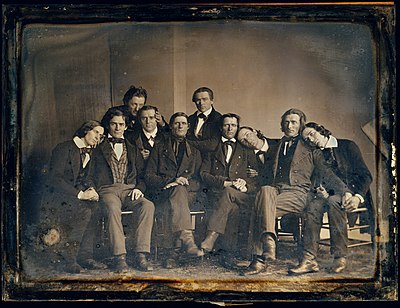
    A photograph of the Hutchinson brothers. Jesse, Jr., (third from the left) is standing with a hand on a brother's head.  Thanks to George Fullerton of Goffstown, New Hampshire, for this image of the Hutchinson family.

    There are online articles about the Hutchinson Family Singers and at Wikipedia.org. (Be sure to read the Discussion following the Wikipedia article for added information.) They started 20 years before the war with such controversial topics as abolition, temperance, and women's rights, even traveling with Frederick Douglass through England in 1845 and performed in prisons and almshouses.  The abolition of slavery led them to write many songs and support the election of Abraham Lincoln.  A perfect example of this is their use of the well-known folksong "Old Rosin the Beau."  Jesse Hutchinson wrote to it the lyrics for the abolition song,"Roll on the Liberty Ball", and later the subsequent Civil War song, "Lincoln and Liberty, Too", putting a developmental spin on how the war came about.  Find the words at Roll on the Liberty Ball. and Lincoln and Liberty, Too .

    Altogether there were 13 Hutchinson Family Singers and by 1859 they split into two groups each called the Hutchinson Family Singers.  They popularized "The Battle Cry of Freedom",  (the Confederates took that song and wrote their own lyrics, too), "Tenting on the Old Camp Ground" and other songs.  "The Battle Cry of Freedom" has many citations on YouTube and Google as does "Tenting on the Old Camp Ground"

    Isaac and William Lerich
    There's more to the Hutchinson Family story, but I've found the two songs I use give shape to a story not as tidy as fiction. As noted in other posts at my website, http://www.LoiS-sez.com/Historical.html, music ties together lives and events as dramatic as fiction, but less easily organized.  "Roll on the Liberty Ball" is used for my Underground Railroad program about the Lerich family, based upon oral history.  For the Civil War I use "Lincoln and Liberty, Too" plus excerpts from letters by or sometimes about the two sons, Will and Isaac,  who joined the "Fighting Fifth" Infantry of Michigan during the War of Rebellion, as it was called here in the North at that time.


    Other songs can be found in the Fifth Michigan Regiment Band's bibliography.

    Here are some sources I found useful, many are also on the Fifth Michigan Regiment Band's bibliography.  
    * Crawford, Richard, The Civil War Songbook, Dover Publications, Inc., New York, 1977.

    * Currie, Stephen, Music in the Civil War, Betterway Books, Cincinnati, 1992.

    * Glass, Paul, Singing Soldiers, Da Capo Press, Inc., New York, 1968.

    * Hill, Lois, Poems and Songs of the Civil War, Fairfax Press, New York, 1990.

    * Jackson, Richard, Stephen Foster Song Book, Dover Publications, Inc., New York, 1974.

    * Krythe, Maymie R., Sampler of American Songs, Harper & Row Publishers, New York, 1969.

    * McNeil, Keith and Rusty, Civil War Songbook; with Historical Commentary, WEM Records, Riverside, CA, 1999.

    * Raph, Theodore, American Song Treasury, The, Dover Publications, Inc., Mineola, NY, 1964.

    * Silber, Irwin, Songs of the Civil War, Dover Publications, Inc., New York, 1995.

    * Silverman, Jerry, Ballads & Songs of the Civil War, Mel Bay Publications, Inc., Pacific, MO, 1993.
    If you are looking for stories behind a dozen songs, Silverman also wrote Songs and Stories of the Civil War, Twenty-First Century Books, Brookfield, CT, 2002.

    I omit recordings as they are more difficult to guarantee availability, format, and the ability to interlibrary loan.  These books give the music in print to permit performance.

    LoiS(inging "For Lincoln and Liberty, Too")