Tell me if you have a topic you'd like to see. (Contact: LoiS-sez@LoiS-sez.com .)
Please also let others know about this site.

Wednesday, January 15, 2014

The Sky's the Limit !?!

This summer many states including Michigan will take part in the multi-state Summer Reading Program with the theme: Fizz, Boom, Read!

I have told stories about astronomy for years and decided my focus in the science-oriented theme should be

The Sky's the Limit with Star and Sky Stories That Fizz, Boom, and Sizzle


Whether you are a librarian, teacher, naturalist, storyteller, or general reader, I decided to do a search for "Kid-friendly" resources with an emphasis on both fun and learning about space.

Comets may fizzle and be less than we hope to see
Here are resources you may see for yourself.  Because children cover a wide age span, some will be the wrong age for your child or group, but that doesn't mean they fizzle out altogether.  Just like Halley's Comet, they exist and what may be discovered depends on who you are.

As a Michigan resident and storyteller, I support the Michigan eLibrary now in its ninth year, offering resources for all ages, including Kids.  If you are a Michigan library card holder, don't forget to check Resources for Kids & Parents and try the Kids InfoBits and the eLibrary or the eLibrary Elementary for Space and Astronomy.  Information is purchased by the state library and so it is only available for Michigan residents with library cards.

The following resources are open to all on the internet.

You may have made or seen a project showing the size and placement of the planets.  Expand that knowledge in this Smithsonian game and video about the size of the universe.  Naturalists, Teachers, Librarians, or Storytellers interested in an activity to experience that size and placement of the planets can take children on a trip with the Magic School Bus as it gets Lost in Space trying to find Ms. Frizzle.

You may notice the illustration has only eight planets shown.  Poor Pluto was demoted to a Dwarf Planet, meaning books and other resources from 2006 and earlier need revision.  See what astronomers decided and how it affects more than just the former ninth planet. 

Another way to experience space is an animated online quiz that lets you try Moon Olympics showing how gravity there would change sports activities like weight lifting, diving, skateboarding and others.

Two websites offer an excellent service for presenting information about astronomy in attractive and understandable ways.  
  • EarthSky has the latest science news and photos.  Click on Tonight for the latest sky information, including brightest stars, moon phases, meteor shower guides, constellations, and more.  As I write this, the micro-moon, or the smallest full moon of the year is today, January 15, and tomorrow on the 16th.  Next year it will be March 5.  The largest full moon for 2014 will be August 10, when the moon comes the closest to earth.  That's also near the end of Summer Reading program!
  • Similarly the Old Farmer’s Almanac has an Astronomy section which lets you see rising and setting times for the sun and moon; Sky Watch for special astronomical events; eclipse, tide, and meteor shower calendars; videos; a blog and much more, including something I really love – moon folklore.
Last, but definitely not least, NASA offers information for kids from kindergarten on up, including a great activities and games section for grades K-4 and 5-8, with phone apps and social networking for high school and beyond.  There’s also a NASA Kids Club starting even as early as preschool with adult help and for older kids to have fun while learning.

Sunday, January 12, 2014

"Crockett" - Two Stories - Keeping the Public in Public Domain

Who the heck was Davy Crockett if we can't accept Hollywood's version?

As usual we can find a Wikipedia article on Davy Crockett, but it doesn't capture the reason the man was popular in his own time, nor what value may exist in learning more about a man who, as Wikipedia put it: David "Davy" Crockett (August 17, 1786 – March 6, 1836) was a 19th-century American folk hero, frontiersman, soldier and politician.

He was mainly self-taught or at least had little time in school.  His military experience gave him the title of Colonel, but his actual fighting experience was far from outstanding.  As a politician he didn't always win elections, although certainly not for lack of effort.  His championing of frontier life for all and his ability to tell a wild anecdote about himself, however, was where he hacked out a place for himself more durable than any log cabin.

Politicians today could easily admire his ability to create an image, but they might do better to appreciate how Crockett's dedication to causes made him fight with the same kind of fierceness attributed to him fighting wild animals.

That sort of image-building and fighting spirit comes out strongly on the first page of his autobiography, A Narrative of the Life of David Crockett, Written by Himself (even though Kentucky congressman, Thomas Chilton, did the writing to get it recorded).  On the title page he says: I leave this rule for when I'm dead,  Be always sure you're right -- THEN GO AHEAD!  That is signed, THE AUTHOR.  The unnamed book Crockett protested in the preface is The Life and Adventures of Colonel David Crockett of West Tennessee.  Yet Michael A. Lofaro, in his introduction to today's book, The Tall Tales of Davy Crockett; The Second Nashville Series of Crockett Almanacs 1839-1841, says "Although Crockett pleaded ignorance as to the identity of the author of this book, it was surely he who provided the bulk of the biographical data to his friend, Clarke."   As Famous Literary Hoaxes (Part Two) points out Crockett always used his anecdotal reputation, but the myths got out of hand, sometimes damaging his career or at least profiting others unscrupulously.

I struggled with that same quandry looking at The Tall Tales of Davy Crockett; The Second Nashville Series of Crockett Almanacs 1839-184l.  Did I have the right to republish the tales?  Yes, they date back to the 19th century, but I strongly recommend Lofaro's work.  When the University of Tennessee Press published it in 1987 he was the Associate Professor of English at the University of Tennessee (now professor) and I highly recommend his analysis of these almanacs.  He's a recognized expert on both Crockett and Daniel Boone.  Looking at the almanacs themselves, I wondered if they deserved republishing.  Some language is far from politically correct, but it does reflect the views of the day.  That same language attempts to reproduce the backwoods way Crockett talked.  It also claims to be published by Crockett's fictitious English friend, Ben Harding, and clearly came after Crockett's death at the Alamo.  The almanacs claim to be either among the memoirs left behind or possibly by him as a captive in Mexican salt mines.  Those claims also could be called a tall tale, but the almanacs, beyond the required astronomical facts, were obviously overdone for sheer entertainment.

Obviously I, too, find value in the tales.  

Why? 

They are part of the foundation of American tall tales.  Professor Lofaro also has a more recent work I'm eager to read: Davy Crockett's Riproarious Shemale and Sentimental Sisters: Women's Tall Tales from the Crocket Almanacs (1835-1856) published by Stackpole Books in 2001.  I saw a hint of it in the Second Nashville Series.

The almanacs have interesting full-page illustrations that don't look like Hollywood costuming of Crockett.
From the cover of  The Crockett Almanac 1841
Crockett's youngest child recalled the legendary coonskin cap was worn as Davy went off to the Alamo to safeguard his beloved frontier for settlers.  Just as Crockett often dressed differently than we expect, the raccoon tail in the illustrations looks like it's attached to what might have been his militia uniform hat.  The paperback binding made it difficult to show that hat, other illustrations, some of the typical almanac astronomical data, and the way the stories were sometimes segmented.  This page from the 1839 almanac gives two stories, including a bit about his wife, all on one page.  It also mentions one of his dogs, Grizzle.   

The dialect doesn't read easily, but the almanacs give an interesting opportunity to hear language accepted as coming from the frontier population.  Having just gone through a week of sub-zero temperatures, I love the opening of it being "so cold I was afeared to open my mouth, lest I should freeze my tongue."  The spelling reminds me of 19th century correspondence.  Noah Webster's dictionaries eventually were recognized as a standard for literate spelling, but the creator of the Crockett Almanacs wanted to give the impression of originating with a self-taught backwoodsman.  Certainly David Crockett, the congressman, was all of that and also an innovator in stretching his adventures into tall tales.  Storytellers can thank him for his role in creating this type of storytelling literature.

Undated engraving by Asher Brown Durand of David Crockett
While mulling over the decision to print or not print this bit from the almanacs, I've also been working on this year's multi-state Summer Reading Program.  My focus will be The Sky's the Limit with Star and Sky Stories That Fizz, Boom and Sizzle.  (Yes, that's a long title, but the multi-state theme is "Fizz, Boom, Read!")  I've told various astronomy stories for years, but I wanted to be sure and include comets.  Not an easy topic to find in folklore until I found . . . in Irwin Shapiro's Tall Tales of America, "Davy Crockett, The Yaller Blossom o' the Forest."  

At this time when we're still ending the Christmas season by talking of the Wise Men following a star, this bit of storytelling history, too, seemed like a sign that deserves pursuing!

*****************
This is part of a series of postings of stories under the category, "Keeping the Public in Public Domain."  The idea behind Public Domain was to preserve our cultural heritage after the authors and their immediate heirs were compensated.  I feel strongly current copyright law delays this intent on works of the 20th century.  I hope you enjoy discovering new stories. 

At the same time, I've returned to involvement in projects requiring research as part of my sharing stories with an audience.  Whenever that research needs to be shown here, the publishing of Public Domain stories will not occur that week.  This is a return to my normal monthly posting of a research project here.  Response has convinced me that "Keeping the Public in Public Domain" should continue along with my monthly postings as often as I can manage it. 


Sunday, January 5, 2014

Crane - "Catherine and Her Fate" - Keeping the Public in Public Domain


Imagine being given the choice: When would you rather enjoy your life, in youth or in old age?  That’s the choice in today’s story.  


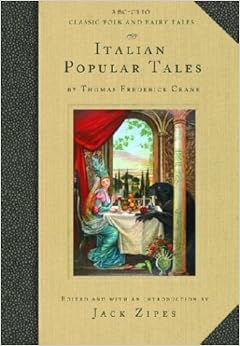
Blogger has been difficult to get on lately and then a bit "wonky" even then.  Since public domain stories have automatically entered old age, today I started right away with the story in hopes of good fortune.  Now I can give "The rest of the story" about Thomas Frederick Crane who created this look into Italian Popular Tales. 

One of the founders of the Journal of American Folklore, Thomas Frederick Crane, was one of those multi-talented folks who was a lawyer, then became the librarian for the newly founded Cornell University before teaching French, Italian, Spanish, and medieval literature there, next becoming dean of the Arts College and later acting president for Cornell. 


His Italian Popular Tales was an introduction to English speaking readers of folktales, including many stories in the long-published children’s magazine, St. Nicholas Magazine.  Online, stories from the book without the detailed notes, commentary and indexing can be found at SurLaLune Fairy Tales.   For a more complete online experience,Project Gutenberg gives the entire volume with its 36 fairy tales, 6 “stories of Oriental origin” (Crane loved pointing to the way stories no matter how unique, are linked to many others from around the world), 23 “legends and ghost stories” (an odd combination of tales about saints and other Biblical figures with ghost stories), 14 “nursery tales” – always a designation of stories for young children, 19 jests or amusing stories, plus the previously mentioned notes, commentary and indexing.   

If you go to the SurLaLune site you will see that two reissues have been published, each with editing and introduction by Jack Zipes.


With so much to choose from I found myself drawn to today’s tale because the character was named Catherine.  Metro Detroit area Italian-American storyteller, Loretta Vitek, tells an Italian story of “Catherine the Wise.”  I’ve grown to love it and wondered if this was another version of it.  It wasn’t, but Crane's Catherine certainly made her own choices.   


By the way a great version of that Catherine’s story is in Italo Calvino’s excellent Italian Folktales, published in 1956, but first translated into English in 1980.  Calvino also gives good notes, but, as you might expect, all sources are in Italian.


Until the next post, “Buona fortuna” and if you can’t have that may you make “Buone scelte” (good choices.)
*****************
This is part of a series of postings of stories under the category, "Keeping the Public in Public Domain."  The idea behind Public Domain was to preserve our cultural heritage after the authors and their immediate heirs were compensated.  I feel strongly current copyright law delays this intent on works of the 20th century.  I hope you enjoy discovering new stories. 

At the same time, I've returned to involvement in projects requiring research as part of my sharing stories with an audience.  Whenever that research needs to be shown here, the publishing of Public Domain stories will not occur that week.  This is a return to my normal monthly posting of a research project here.  Response has convinced me that "Keeping the Public in Public Domain" should continue along with my monthly postings as often as I can manage it.