Tell me if you have a topic you'd like to see. (Contact: LoiS-sez@LoiS-sez.com .)
Please also let others know about this site.

Tuesday, February 26, 2013

Yes, YOUR History Is Important


Last month I revealed my love for "History as seen by the 'average' person."  I told about some of the historical programs I do from that viewpoint. One of those historical programs I just did was followed by the announcement that next month the group would be looking at and writing their oral histories.

BRAVO!

They got it right.

(Warning: This month's article is "text-y."  To help you scan the ideas I've resorted to   
  • bold type
  • or underlining
  • or bulleting
Links continue to be in color.  Usually I've inserted related graphics in my blog, but that seems irrelevant here.  Hope its being "text-y" doesn't make you testy.)


For too long history was viewed as something only about famous people or huge looks at historical events.  The only problem is that's not really "where the rubber meets the road."  That common saying provides a perfect example of what I mean. 

I live in Michigan, a state that for roughly a century has been intertwined in the auto industry.  People like Henry Ford and union leaders like Walter Reuther are important.  The Industrial Age and the role of the automobile are important, too.  BUT, but, but... (Sounds like a motor, doesn't it?)  There's so much more to help us realize what the auto industry means in our own personal lives.

I mentioned Walter Reuther as an example, but his wife, May, had a more personal view of the attempts on his life and also died with him in the same plane crash.  She and members of the Ford family don't really qualify as "the 'average' person", but it gets us a bit closer to taking our eyes off the famous names of history and inside a "huge historical event."

Here in Michigan the auto industry touches everyone directly or indirectly so much that there's yet another common saying here that starts "When General Motors sneezes..."  How that sentence is finished apparently has included everyone from "the nation" to "Madison Avenue" to "Detroit", but I've heard it most often as "Michigan gets a cold."  Because of our state's huge dependence on all three of the major U.S. based auto companies, we keep hearing about the need for diversification, but we're still far from it.

George Santayana said, "Those who don't remember history are doomed to repeat it" -- another common saying.  Bring it to the homes of any Michigan family who has worked for the auto industry and you start to see the importance of "History as seen by the 'average' person."  
  • Will there be differences between the family who had a salaried employee and a family who had an assembly line worker?  Yes, but there will also be some amazingly similar concerns and benefits.  
  • Will there be differences between someone who lived through the boom days in a town like Pontiac and someone living there today?  Definitely.  They are almost totally different worlds.  
  • What about the families who lived through the two weeks of the Flint Sit-Down Strike of 1936-37?  There are major differences of point of view.  I'm not going to give links -- there are so many! --, but if you Google "Flint Auto Riot" you can find a good introduction to the topic.  
  • While you're at it, check to see how long a family was involved in the auto industry and if there has been a moving away or staying with it for younger family members as they choose their own careers.  
  • General Motors used to be nicknamed Generous Motors.  Try saying "Generous Motors" as a conversation and historical memory sparker.
Whatever your family's background:
  • Ask your oldest family members what they remember about specific times and events.  
  • From older times we have journals and letters.  
  • If possible, make a video of them talking about it so the person's voice and manner also are preserved.  Thank heavens video might preserve something lost in a world of email, tweets, and texting.  
  • Of course the trick is to preserve such audiovisual history in a world that goes from 16mm to VCR to DVD to . . .  I just hope "the Cloud" and places like YouTube continue to be accessible because current history is being preserved in a way dependent on technology.

Other place-related memories:
I've been using Michigan's auto industry as an example of "History as seen by the 'average' person", but in places like Pennsylvania it might be steel, for Miami it might be tourism, while for rural areas it might be farming or ranching.  Look at what is special in an area.  I'm currently working with playwright, Jacqueline Salter, towards her premiere of "Business with Friends."  I look forward to directing her play that started as a one-act called "Blacklisted" within a trio of plays about the entertainment industry.  "Business with Friends" actually is more than just the way Hollywood was affected by the House Un-American Activities Committee.  As the play's subtitle says: It's Not Personal, It's Just Business.  Southern California in the 20th century was the quick, mainly white, fox that jumped from silent films to talkies to color to becoming ruled by business to . . .

Of all things, a blog called Writers Who Kill also looked at the way to present history.  The writer of that blog about mystery and crime fiction lives in Washington, D.C.  It's a town loaded with historical sites and museums, but she found it was necessary to look at specific incidents and people to bring history alive.  She found that history as dates and memorization and encyclopedic facts were a turn-off, whether in taking a young relative to see the city or in writing fiction.  (The comments on that specific blog post are also revealing about how Teaching to the Test works against developing historical interest and what has worked.)

Speaking of what works with children, the Magic Treehouse series is mentioned.  I could add the American Girl books and some of the other series it inspired like Dear America.  What those books have in common is putting the reader into the thick of history as it happened with a young character having some differences due to where they were in history, but still having so much in common with the reader.  As a bit of my own history, I remember a review when the American Girl books first appeared.  It criticized the books as static and uninteresting like the dolls.  Prior to that series, you could hardly pay young readers to take a book of historical fiction off the shelf!  I wonder what that reviewer would do if given a chance to get in a time machine and buy into the company producing American Girl products?

For my own part I'm going to close with a repeat of my favorite book for inspiring a look back at both your own and others view of oral history.  Donald Davis's book, Telling Your Own Stories, is fun and an easy way to start.  You can also click Oral History on my sidebar for other posts on this topic.  For additional topics to use in exploring Oral History, go to my website for Story Starter Suggestions.

Yes, YOUR History Is Important.


Thursday, January 17, 2013

History as seen by the "average" person

Storytelling is both my passion and my profession, but there are subgroups within storytelling.  Sean Buvala, acting as my coach, asked me, "If money was no problem, what type of storytelling would you most like to do?"  HISTORY! I said, but not history as viewed by somebody famous...history as seen by the "average" person.

Books, television, and often movies, when looking at history focus on either someone famous or on many people without seeing life as it appeared to the "average" person.  This type of program takes similar research, so it doesn't come quickly.  That makes it hard for historical societies and museums, schools, and libraries to produce their own programs.  Added to that, coming in the persona of an individual from back in time does something movies, television, books, and even the authors of those books can't do, present a living, talking person who can react to the audience and its interests.

Liberetta Lerich Green was a very real woman who grew up here in Michigan on an Underground Railroad Station and later helped her parents in their abolition efforts.  She was here on the homefront when her brothers fought with the "Fighting Fifth" Infantry.  (I must mention here my separate blog, Michigan's "Fighting Fifth" Civil War Infantry.  Local newspaper articles on that regiment appear at the pace they appeared 150 years ago, just as the families and friends of that regiment tried to follow what was happening to the boys they loved.)  I also have copies of letters her brothers sent home and a few by her parents trying to see if their sons and others they knew might be in a military hospital needing help. Liberetta's parents, Sarah and Peter Lerich, came here as pioneers before statehood.  Teachers and elders taught Liberetta about pioneer life and even the War of 1812.  Additionally Liberetta was a Macomb County farmer's wife and later widow, and she raised three boys and three girls, including one, Loa, who was a pioneering educator. As Liberetta I've had the joy of telling about her family's contributions and what life was like for them and what she learned from others.

Beyond Liberetta there have been what I call "generic" characters.  The Michigan Arts and Humanities Touring Program posted a video of my One-Room Schoolteacher.  I also have a character I call The Hired Girl, a position common to many women of all ages.  ("Girl" is how she might be called back then.)  It was a way for women to work beyond their own homes.  The Hired Girl can let me also include folktales she might have heard in addition to talking about her work.  The Hired Girl is able to explain how a Victorian Christmas was celebrated, too.  My researching One-Room Schools and their Teachers as well as Victorian Christmas led to posts here.  (Check the sidebar to find the many posts here that have come from Liberetta and these various historical programs.) While still working as a librarian in Mount Clemens, which has a history going back to the Bath House Era, I even took the Hired Girl and worked as a "Rubber", a person involved in the baths and massages of these long ago spas.

Just for fun, I also have a program that, like Liberetta telling about the War of 1812, was developed for the Lorenzo Cultural Center's series of historical programs.  Why do I say "just for fun"?  It looks at my own childhood growing up and "Skipping Through the Halls of Fifties Memories", both the things I noticed and things going on all around me that I was too young to notice until grown-ups told me about them later.  It's a great way to get an audience recalling their own childhoods for oral history programs.

Where in time will I go next?  I don't know.  Right now I'm beginning work on the story of a Polish woman's emigration to the U.S. 

I'm in the state's Touring Directory, so my programs qualify for state grants.  It's hard to guess what might be requested next, but it will be fun using my Storytelling + Research skills to bring to new audiences "History as seen by the 'average' person."  

Thursday, December 20, 2012

Cookie Stories Good Enough to Eat


https://encrypted-tbn2.gstatic.com/images?q=tbn:ANd9GcRFPw47Mf7z7-uV-6_ZZ5LVeQtHcTbxXYNPYbnoJxOe7lD2pSzE

‘Tis the season to be…eating!  Here are some calorie-free cookie stories.
These brief cookie stories are seasoned with facts about libraries.  The sources for the research are in this A.L.A. reference book.  I see that when this post appeared, it wiped out information from earlier this month on the problem of e-books prices and conditions so that libraries can offer them.  Please also go to my post, "Smart Cookies Read."


Facts like:  58% of adults in the U.S. have public library cards. 

In my illustration,I love the dreidel cookies along with the other holiday cookies.  Dreidels are tops, often homemade, and are traditionally played at Hanukkah.  Here's a virtual dreidel  you can play by yourself.  This is the song traditionally sung about dreidels.  These jolly fellows stick to the part about the clay dreidel.  On YouTube you can find other verses added to make a longer song (also parodies).  It’s not traditional, but you may enjoy the expanded versions.  Similarly storyteller/author, Eric Kimmel, often expands folklore to make original stories like his The Magic Dreidels.


I’m not sure if dreidel cookies are traditional, but I am sure that Americans go to school, public and academic libraries more than three times more often than they go to the movies.


Elijah tales are traditionally told, especially at the various Jewish holidays, as he is found in the Talmud, folklore, and even in Islam and other faiths. Foodies should love hearing about his taking refuge from King Ahab by staying with the Widow of Zarephath.  He's an uninvited guest who wants food.  There's not sufficient food to keep her and her own son alive!  Elijah tells her God won't let their supply of flour or oil run out.  She feeds him the last of their food, and Elijah's promise miraculously comes true.  There's more in 1 Kings, especially chapter 17, but that and his being taken bodily up to heaven in 2 Kings 2 led people to set a place for him at feasts in case he should appear. . . so save some cookies.


An excellent collection of Elijah stories is in 
The Mysterious Visitor; Stories of the Prophet Elijah by  Nina Jaffe

There are more public libraries than McDonald’s in the U.S. – a total of 16,766 including branches.
 

Another religious figure for this time is St. Nicholas.  In the U.S. we condensed his name from Sinterklaas to Santa Claus and his red suit comes from the red robes of a bishop.  St. Nicholas was a bishop known for his generosity to the poor, especially tossing three bags of gold over the wall into the yard of  three sisters for marriage dowries, saving them from probable prostitution.  His feast day is celebrated on December 6. 


In the colonial days of the U.S. it is said that in Albany an expert Dutch baker named Van Amsterdam was known for his Sinterklaas cookies until he upset an old woman.  She asked for a dozen.  He gave her 12, but she insisted on 13.  When he refused, she rebuked him for his lack of the saint's generosity.  A year passed and nothing he baked was worth eating.  By the following Dec. 6 he had just enough to make his trademark cookies one last time.  Some say in a dream the saint talked to him about generosity, so when the woman reappeared he gave her the extra 13th cookie forming the first Baker's Dozen (and restoring his baking abilities). 

Here are two excellent versions of the tale.  (The photos of various book covers all originated on Amazon.com where you may read their summaries and find ordering information.  Any "Click to look inside" comments only work on the Amazon site.)


by Aaron Shepard
by Heather Forest


Americans spend nearly three times as much on candy as they do on public libraries.


Of course Gingerbread Cookies don't have to be made as Gingerbread Men or made into Gingerbread Houses, but there are so many wonderful versions.  If you feel sorry that the cookie gets eaten, why not try the tasty illustrations and two versions by Jan Brett, the Gingerbread Baby and Gingerbread Friends. I also noticed a Gingerbread Thematic Unit by Daphne Ransom.  Haven't tried it yet, but it's an appetizing idea.


Americans spend over 18 times as much money on home video games as they do on school library materials for their children.

For baking cookies and more, I’m also reminded of the Scottish tale about the Woman Who Flummoxed the Fairies.  When fairies kidnap a fabulous baker she insists they bring her the ingredients, then the utensils and other tools, then her purring cat and snoring dog because it helps her mixing rhythm, then she's too worried to bake properly without her husband and baby.  She whispers to him to step on the cat's tail.  Cat yowls, dog barks, baby cries, husband shouts for dinner and fairies send her home because of the noise, but from that time on every week she leaves baked goods (o.k., we’ll say just cookies) on the entrance to the fairy mound for them.  They pay her handsomely, but never again try to keep her a prisoner.  I love telling this as an audience participation tale, but there’s also a picture book version and once again it features retelling by Heather Forest. 


Americans check out an average of more than 8 books per year, but their per capita tax cost is about the cost of an average hardback book. 


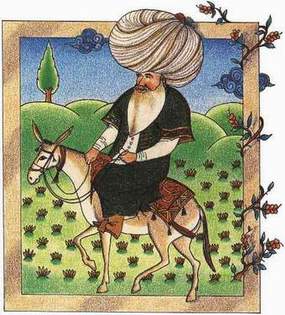
While thinking about cookies and the various religious traditions, why not also include the “wise fool” character loved throughout Islamic countries?  While he's spelled many different ways and also goes by many names, I especially enjoy the Turkish versions about the Hodja as they often include a bit of historical background.  Timur (sometimes called Tamerlaine) makes the Hodja his new tax collector.  The previous collector had to eat his receipts since they were unsatisfactory to Timur.  The Hodja has his wife make thin cookie dough and writes his records on them, making it better later than eating paper.  There are many anthologies and online stories about the Hodja.  (Don't stop with just the one online source linked here as he has many fans and his stories appear in many places.)   As for books, my first exposure came from the works of Alice Geer Kelsey and Barbara Walker, but, like cookies, I didn't stop there and I hope you don't either.

Taxes may not be tasty, but here's a library value calculator, showing libraries are a bargain, so pass the cookies and enjoy these sweet cookie stories by borrowing them from your local library.