Tell me if you have a topic you'd like to see. (Contact: LoiS-sez@LoiS-sez.com .)
Please also let others know about this site.

Saturday, August 8, 2015

Dog Days of Summer + Pratt - Orion - Keeping the Public in Public Domain

Michigan arguably has had some of the best summer weather in the U.S. this year.  The last week of July was the closest we came to hot weather.  It reminded me of the so-called "Dog Days of Summer."
Vita Bone summer contest
from Steve Dale's Pet World "Summer dog photo contest"
The name Sirius is more than just a radio service as the Dog Days are tied to Sirius, once thought to be the brightest star in the sky.  We now know it's a star system of two or even a hidden third star within the constellation of Orion.  (Here in metro Detroit the accent falls on the initial "O" for the town of Lake Orion, unlike the mythical figure with the accent on the "ri", which seems a bit wry in a punny way.)

That mention of Sirius, the Dog Star, brings us to the story of Orion, his master.  The basics of that story are nicely told by Mara L. Pratt in her 1892 book The Storyland of Stars.  If you have an interest in stories related to the constellations or about such astronomical topics as shooting stars or comets, don't let the 1892 copyright scare you off some delightful material.
I really wanted you to see Pratt's story first, but as Pratt herself says, "There are so many stories told about Orion."  However I'd add that she does the most interesting job of telling about him.  She also avoids the Greek names and even uses the Roman Jupiter instead of Greek Zeus.  A modern publisher called Sirius Publications gives the name of that moon goddess and a bit of earlier story about Orion that reveals his character in ways Pratt's children's book audience wasn't ready to hear.  (If you're reading the story to your children, stop here unless they're about middle school age.)
Their Prequel tells us:
Orion was madly in love with the daughter of King Oenopion of Chios, Metrope, but was never allowed to marry her. One day, while drunk, he did something horrible to Metrope, and her father asked Dionysis to curse him. Dionysis put him into a coma and then blinded him. When he awoke, he went to an Oracle, who told him he would get his sight back if he traveled east and let the rays of the sun strike his eyes. Orion did so, and after regaining his sight he moved to Crete. In Crete, the goddess of the moon, Artemis, fell in love with him, and was too distracted to remember to light up the sky with moonlight.

That boy was made for the modern day media, wasn't he?

I greatly enjoy the storytelling of Barbara McBride-Smith and one of her specialties is bringing Greek myths alive as if they were a bunch of Good Ol' Boys in Texas.  It reminds me of when I still worked at Mount Clemens Public Library.  Annually the middle schoolers would come in talking about mythology as if it was the latest soap opera.  Jean Fargo, I never sat in your classroom,  but it must have approached the level of Barbara McBride-Smith, who combines her professional storytelling with her "day job" as a school librarian.  If you can't enroll in Mrs. Fargo's class, I recommend two of McBride-Smith's award winning CDs, It's Not Easy Being a Goddess and Good Old Boys And The Women Who Love Them.  The latter includes Eve and Mrs. Noah as well as Greek myths.

Wikipedia's article on Sirius can tell you way more than you probably want to know about the brightest star in the sky which is actually a binary star system and has been influential with those Dog Days internationally throughout history.  I find a company called Sirius, a group of technological freelancers, covers the scientific basics and history of Sirius in a more interesting way.  (Just wish they hadn't treated us all as if we were viewing the page on a mobile phone when formatting it.)

Here's the 2015 astronomical look at Orion the Hunter and Sirius the Dog Star from EarthSky, the daily astronomical newsletter.  As they point out, "Every year in late August, look for Orion the Hunter and Sirius the Dog in the early morning sky! Orion’s three prominent Belt stars always point to Sirius."  Here's also a short video of Weather Wisdom: The Dog Days of Summer from The Old Farmer's Almanac which mentions on their current homepage that this month will have the best meteors in years, so maybe I'll next bring Pratt's commentary on Shooting Stars.

I have many nature programs including one on astronomy, but Orion and faithful Sirius is a story suited to an older audience than the general family setting for most nature programs.  It is, however, a story worth Keeping the Public in Public Domain.
**********************
This is part of a series of postings of stories under the category, "Keeping the Public in Public Domain."  The idea behind Public Domain was to preserve our cultural heritage after the authors and their immediate heirs were compensated.  I feel strongly current copyright law delays this intent on works of the 20th century.  My own library of folklore includes so many books within the Public Domain I decided to share stories from them.  I hope you enjoy discovering new stories.  


At the same time, my own involvement in storytelling regularly creates projects requiring research as part of my sharing stories with an audience.  Whenever that research needs to be shown here, the publishing of Public Domain stories will not occur that week.  This is a return to my regular posting of a research project here.  (Don't worry, this isn't dry research, my research is always geared towards future storytelling to an audience.)  Response has convinced me that "Keeping the Public in Public Domain" should continue along with my other postings as often as I can manage it.  


There are many online resources for Public Domain stories, none for folklore is as ambitious as fellow storyteller, Yoel Perez's database, Yashpeh, the International Folktales Collection.  I recommended it earlier and want to continue to do so.  Have fun discovering even more stories!

Thursday, July 30, 2015

The International Folktales Collection


Just learned from a reader that the link to Yashpeh, the International Folktales Collection of Public Domain stories from Yoel Perez has changed its email address without having a forwarding service.  The link, starting with this week's story about "The Seal-Catcher's Adventure", has been changed.  My apologies for any inconvenience.  It's a great site jam-packed with Public Domain stories.  Our approaches to what we post may differ, but supplement each other as I try to give background information whenever I can find it.

Tuesday, July 28, 2015

Highland Games + Douglas - Seal-catcher's Adventure - Keeping the Public in Public Domain

Last year I gave a favorite story from Sir George Douglas about an enormous Sea Serpent defeated by a lad named Assipattle.  (Unfortunately the use of Baronet Douglas's title put him alphabetically in the Labels section under "S.")  This was in preparation for the 165th Highland Games of the St. Andrews Society of Detroit.  This Saturday I hope you catch the 166th Highland Games including storytelling in the Wee Bairns area.   Selkie (or Silkie, or Selchie) are the Scottish "Mer people."  There are many stories about them in Douglas's Scottish Fairy and Folk Tales, including the ever-popular tale of the woman trapped in human form until she can find her seal skin, leaving her human husband to return to her Selkie people.  That story has been made into many picture books, including this irresistable Arthur Rackham illustration inspired by a related non-Scottish legend.
Undine (1909) by Friedrich de la Motte Fouqué

That illustration can also be found with a brief re-telling of the Seal Wife story at Bo's Little Black Book of Fae Lore which also mentions a similar Australian creature, the Bunyip.  (There are some great stories the Aussies tell about Bunyips, too!)  
With so much attention on female Selchie, today's story gives an interesting male view.  The Orkney Isles are especially associated with Selkie tales and Orkneyjar gives a concise, but livelier overview than the earlier hotlinked Wikipedia Selkie customarily thorough article
So let's dive right in to the story!


Re-telling this story I'd clarify that "present" mentioned at the end.  It sounds as if the grateful Selkie may have given him a treasure to replace the seal-catcher's former work.  Then again perhaps his life and the adventure were enough? . . . NAH!  The fae folk have treasure and are likely generous in such circumstances.  By the way, re-telling the story I'm sure we all would revise some of the 19th century language, but the tale is surely a keeper to balance all those Mermaids and Selkie wives.  (Douglas precedes this story with "The Mermaid Wife" from Folk Lore and Legends, Scotland published by W.Gibbings -- which is that oh so familiar tale.)

You also probably noticed Douglas, who lists himself as having "Selected and edited" the book's contents, gives his source for this story as W.Grant Stewart's book, Highland Superstitions and Amusements.  Hathitrust has two copies of that book but it's titled The Popular Superstitions and Festive Amusements of the Highlanders, with this story starting on page 65, if you are interested.  Since Douglas is considered the more easily obtained and generally recognized collector, I'm still crediting him, but want to note his source.  

If you really want to get into the spirit of Scottish folklore, Professor D.L. Ashliman, before retiring from University of Pittsburgh, did a digital library page taking you to 79 Scottish folklore books including Douglas and the Gibbings anonymous book, but omits W.Grant Stewart.  There's always more to discover as folklore is a bottomless reservoir that never stops and so we want to Keep the Public in Public Domain.
****************
This is part of a series of postings of stories under the category, "Keeping the Public in Public Domain."  The idea behind Public Domain was to preserve our cultural heritage after the authors and their immediate heirs were compensated.  I feel strongly current copyright law delays this intent on works of the 20th century.  My own library of folklore includes so many books within the Public Domain I decided to share stories from them.  I hope you enjoy discovering new stories.  

At the same time, my own involvement in storytelling regularly creates projects requiring research as part of my sharing stories with an audience.  Whenever that research needs to be shown here, the publishing of Public Domain stories will not occur that week.  This is a return to my regular posting of a research project here.  (Don't worry, this isn't dry research, my research is always geared towards future storytelling to an audience.)  Response has convinced me that "Keeping the Public in Public Domain" should continue along with my other postings as often as I can manage it.  


There are many online resources for Public Domain stories, none for folklore is as ambitious as fellow storyteller, Yoel Perez's database, Yashpeh, the International Folktales Collection.  I recommended it earlier and want to continue to do so.  Have fun discovering even more stories!

Saturday, July 25, 2015

End of Sesquicentennial + Alexander - Double Jeopardy of Wilmer McLean - Keeping the Public in Public Domain


As the Civil War sesquicentennial ends, local events remember it including at the Oakland County Pioneer and Historical Society's
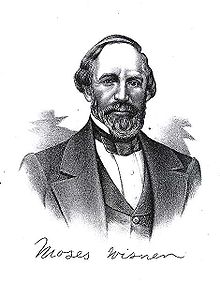
Annual Summer Ice Cream Social ~ Sat, July 25, 2015 on the grounds of the Moses Wisner house.

Michigan's 12th Governor, Moses Wisner, like the Lerich family, was an abolitionist.  His barn was burned to protest his activity in the anti-slavery movement even though he was elected by a large majority.  Rather than seek a second term, he turned his attention to organizing the 22nd Michigan Infantry, which trained at the Pontiac Fairgrounds. On August 25, 1862, the 22nd Michigan Infantry left Pontiac for Kentucky with Colonel Moses Wisner in command. Before leaving, Wisner conveyed the property on which Pine Grove is located to his wife, Angeolina. Colonel Wisner died of typhoid fever, January 5, 1863, in Kentucky while en route to the regiment's deployment.


Why not plan on attending the event?:SummerSocialFlyer.jpg
Yes, there will be much more than their card shows: Also included are Opening Ceremonies, local dignitaries, free Cake and Ice Cream, Veterans Mobile Service Center, Junior ROTC, a Curiosity Sale, Kid's crafts, Storytellers, and many other attractions.
Free secure parking on site at 405 Cesar Chavez Ave., Pontiac, MI 48342
For more details, please contact OCPHS: office@ocphs.org Phone: 248-338-6732 (office is normally open Tues/Wed/Thurs from 11:00 AM to 4:00 PM).

Of course the end of the sesquicentennial remembrance deserves at least a brief Public Domain story showing a more personal side of the war.

That was part of an article in The Century Magazine, volume LXIII (April 1902) p. 931, by Brigadier General E.P.Alexander, C.S.A. entitled "Lee at Appomattox: Personal Recollection of the Break-up of the Confederacy."  It was included in A Civil War Treasury of Tales, Legends and Folklore edited and introduced by the folklorist B.A. Botkin.  That book isn't Public Domain, but Botkin used Public Domain sources in his many thick volumes of folklore and in his work for the Federal Writers' Project, the Joint Committee on Folk Arts of the Works Progress Administration, and the Writers' Unit of the Library of Congress Project. That first link was Wikipedia, but another view of him is at New York Folklore Society's Journal, Voices.  His work was analyzed in America's Folklorist: B.A. Botkin and American Culture edited by Lawrence Rodgers and Jerrold Hirsch.  (That last link just gives you the book's Table of Contents in case you wish to read even more.)  Benjamin Albert Botkin's anthologies are a great resource of Public Domain material even if their published format is under copyright for the total book.  I was going to include his portrait photo and "About the Author" for his own view of himself, but instead recommend obtaining as many of his books as you can manage.  There are PLENTY!
**********
This is part of a series of postings of stories under the category, "Keeping the Public in Public Domain."  The idea behind Public Domain was to preserve our cultural heritage after the authors and their immediate heirs were compensated.  I feel strongly current copyright law delays this intent on works of the 20th century.  My own library of folklore includes so many books within the Public Domain I decided to share stories from them.  I hope you enjoy discovering new stories.  


At the same time, my own involvement in storytelling regularly creates projects requiring research as part of my sharing stories with an audience.  Whenever that research needs to be shown here, the publishing of Public Domain stories will not occur that week.  This is a return to my regular posting of a research project here.  (Don't worry, this isn't dry research, my research is always geared towards future storytelling to an audience.)  Response has convinced me that "Keeping the Public in Public Domain" should continue along with my other postings as often as I can manage it.  


There are many online resources for Public Domain stories, none for folklore is as ambitious as fellow storyteller, Yoel Perez's database, Yashpeh, the International Folktales Collection.  I recommended it earlier and want to continue to do so.  Have fun discovering even more stories!


Thursday, July 16, 2015

Not just Fillmore - Story That Never Ends - Keeping the Public in Public Domain

This is being posted before the usual time so you can enjoy a very special storytelling festival if you are within driving distance of Flint, Michigan. 

Go to Michigan Storytellers Festival for the latest information.  This is a special anniversary for the festival and so it is 100% Michigan tellers this year!

While we're thinking of storytelling, earlier here I gave the wonderful story, "The Twelve Months", and a bit of background about Parker Fillmore and another book, The Shoemaker's Apron; Czechoslovak Folk and Fairy Tales, he published.  Today's story comes from back in 1919 in his Czechoslovak Fairy Tales.  While his preface mentions a variety of important native writers, he didn't bother to say which tales were Czech, Moravian, or Slovakian tales and only explained the writers for two stories.  The entire volume is online to enjoy at the delightful World of Tales site, which is keeping so many of these beautiful old folktale anthologies available and so it, too, is Keeping the Public in Public Domain.

Project Gutenberg also has the book if you prefer to download the entire book from there.  (World of Tales would be good for online reading, but each tale would need a download if you wanted to save it.) The Shoemaker's Apron; Czechoslovak Folk and Fairy Tales can also be found at Project Gutenberg.  One year after Czechoslovak Fairy Tales Fillmore published Shoemaker's Apron.  Fillmore's one of those authors with a great sense of storytelling and almost 100 years later his versions are still perfect for telling.  On today's story, he even gives great storytelling directions on this very short story.  It's introduced by a drawing from the book by Czech artist, Jan Matulka.

There's another type of story that never ends.  For some unknown reason I've heard the type called "French Irritating Tales."  They are the kind of story where it returns to the beginning lines of the story and starts all over again in an endless loop.  May your storytelling be endless and Keep the Public in Public Domain!
*********************
This is part of a series of postings of stories under the category, "Keeping the Public in Public Domain."  The idea behind Public Domain was to preserve our cultural heritage after the authors and their immediate heirs were compensated.  I feel strongly current copyright law delays this intent on works of the 20th century.  My own library of folklore includes so many books within the Public Domain I decided to share stories from them.  I hope you enjoy discovering new stories.  


At the same time, my own involvement in storytelling regularly creates projects requiring research as part of my sharing stories with an audience.  Whenever that research needs to be shown here, the publishing of Public Domain stories will not occur that week.  This is a return to my regular posting of a research project here.  (Don't worry, this isn't dry research, my research is always geared towards future storytelling to an audience.)  Response has convinced me that "Keeping the Public in Public Domain" should continue along with my other postings as often as I can manage it.  


There are many online resources for Public Domain stories, none for folklore is as ambitious as fellow storyteller, Yoel Perez's database, Yashpeh, the International Folktales Collection.  I recommended it earlier and want to continue to do so.  Have fun discovering even more stories!

Saturday, July 11, 2015

The "Hello Girl" Who Died "Over There" (and Another Who Survived)


Back in April I began posting about the "Hello Girls", the bi-lingual phone operators who worked in France during World War I with the U.S.Army Signal Corps.  While they did get shelled and experience some of the other wartime experiences "Over There", only one died and she was from Hillsdale, Michigan.  Cora H. Bartlett wasn't killed by shells or gas, but the world-wide pandemic of the Spanish Influenza, which has been the deadliest in modern history.  The international death toll has been estimated at 20 to 50 million, with 675,000 American victims.  Like Bartlett, it killed mainly healthy young adults, with more U.S. service members killed during the war than from battle.  She died in the spring of 1919 after the Armistice was signed November 11, 1918.
Update: The Hillsdale Historical Society has confirmed the cause of death was Typhoid.  While Spanish Influenza killed many in the war, Typhoid continues to kill and is nowadays something travelers can vaccinate themselves to prevent.  By 1911 the U.S. Army vaccinated its soldiers.  This is yet another example of their not taking the women seriously as soldiers.  Typhoid is a bacterial infection controlled also by better sanitation such as clean drinking water and hand washing.  Those precautions weren't always possible in wartime.

UPDATE: In checking back here I see that the photos have been taken down.  I strongly recommend going to the Hillsdale Historical Society webpage about Cora Bartlett

cora's funeral cortage in france
Burial cortege in France for Cora Bartlett


She was buried in France with full honors.  A memorial tombstone to her was also added at the King Lake Cemetery in Hillsdale County.


Bartlett wasn't the only Hello Girl to suffer from the Spanish Influenza.  Mabel Lapp, of Evanston, Illinois, left the Chicago Telephone Company and became ill while on ship bound for France.  Lapp recovered and went on to serve as she initially planned. 
Norma Finch Carman
I shared my research about the Hello Girls with the Hillsdale Historical Society so they could add Ms. Bartlett  and fellow Hillsdale Hello Girl, Norma Finch Carman.  Miss Finch returned to Hillsdale after the war and married her wartime sweetheart, Captain Ellis Joel Carman.  She later moved to his home in Denellen, New Jersey for the remaining 42 years of her life.  By dying in 1962 she was with the majority missing Congress finally giving Veteran Status/Honorable Discharge in 1978 on the 60th anniversary of the war's end.

Update: Norma Finch Carman's information including photo is now at the Hillsdale Historical Society site.

Much of what I was able to learn about each of them came from old issues of Bell Telephone News, in volumes 7, 8, and 9.  It's somewhat amusing that an article on the need for new women employees follows the article on the Finch/Carman marriage, noting the large number of post-war weddings.

The Hillsdale Historical Society was gracious enough to add an article about the Hello Girls and post information about the two women on their People pages crediting me with passing the information along to them.  I also mentioned another Hillsdale County woman, Louise Gordon, who is usually listed as Detroit because she worked for Michigan State Telephone Company there, but her home was actually the Hillsdale town of Litchfield.

Research is continuing as I prepare to bring stories and songs of these brave women.  Along the way I found this wonderfully appropriate quote from Samuel Johnson in his Works, Lives of the Poets, talking about Joseph Addison, Johnson said "History may be formed from permanent monuments and records; but Lives can only be written from personal knowledge, which is growing every day less, and in a short time is lost for ever. What is known can seldom be immediately told; and when it might be told, it is no longer known."

There's so much more to be found and told!

Saturday, July 4, 2015

100th Post of Keeping the Public in Public Domain

 100-fireworks
The fireworks here is not just for the 4th of July.

It's hard to believe, but there have been 100 stories in this series of Public Domain stories.  To celebrate I looked for a story with 100 in it and found a goodie.  Because it comes from another language, not every version of the title is translated  the same.  This comes from Frederic Taber Cooper's An Argosy of Fables which had 5 posts in September of 2013.  That book is huge and it was hard to limit myself to a representative of the main categories.  Today's story comes from the segment Cooper called "Hindoo Fables".  When that was mentioned earlier, I explained that was his early 20th century oversimplification of Indian culture since their majority religion is Hinduism.  This comes from the ancient Panchatantra tales.  Noted Sanskrit scholar, Arthur Ryder, has another version of the story he titles "Hundred-Wit, Thousand-Wit, and Single-Wit (pp 444-446)."  I prefer his title, but possibly Ryder's translation was too academic.  Cooper's version tells in more accessible style. 

While your at it, the first two weeks in June's discussion on fables used two Jataka tales for a discussion of whether to tell the moral or not.

A great way to spark a story is to take a proverb and create a story to illustrate it.  Fables do just that, but it's up to the teller to decide if telling the moral helps or hurts the story.

Either way, may our next 100 public domain stories help Keep the Public in Public Domain.
************************
This is part of a series of postings of stories under the category, "Keeping the Public in Public Domain."  The idea behind Public Domain was to preserve our cultural heritage after the authors and their immediate heirs were compensated.  I feel strongly current copyright law delays this intent on works of the 20th century.  My own library of folklore includes so many books within the Public Domain I decided to share stories from them.  I hope you enjoy discovering new stories.  


At the same time, my own involvement in storytelling regularly creates projects requiring research as part of my sharing stories with an audience.  Whenever that research needs to be shown here, the publishing of Public Domain stories will not occur that week.  This is a return to my regular posting of a research project here.  (Don't worry, this isn't dry research, my research is always geared towards future storytelling to an audience.)  Response has convinced me that "Keeping the Public in Public Domain" should continue along with my other postings as often as I can manage it.  


There are many online resources for Public Domain stories, none for folklore is as ambitious as fellow storyteller, Yoel Perez's database, Yashpeh, the International Folktales Collection.  I recommended it earlier and want to continue to do so.  Have fun discovering even more stories!