Tell me if you have a topic you'd like to see. (Contact: LoiS-sez@LoiS-sez.com .)
Please also let others know about this site.

Thursday, May 24, 2012

15 Five Star Fairy Tale Activity Sources


At one time fairy tales were the deadest section in children's libraries, but I found activities in 15 sites and books proving it no longer needs to be true.
  • Storytelling friend, Mary Grace Ketner, of the Fairy Tale Lobby in "Are fairy tales still worth telling?" talked about the importance of fairy tales in her work with middle schoolers and beyond.  Recently she passed along a great idea for a fairy tale activity to the email list, Storytell.  It's sure to lobby young readers to try fairy tales.  She reported:
Some of y'all may have met my friend Sue Kuentz, a librarian who facilitates our local Texas Storytelling Youth Challenge.  In an email a day or two ago, she mentioned that her kids held a "Fairy Tale Bowl." What's that? I asked.  Her answer:
The Fairy Tale Bowl was brought into our district about 3 years ago. Our 2nd graders' TEKS involve fairy tales and folk tales, characters, setting, problem, solution, compare and contrast, and elements of these two genres.

So, as a celebration, the librarians put together this bowl in which the students are asked to read anywhere from 10 - 15 fairy tales/folk tales either in the class or at home (each school varies their titles). On a particular date, we hold the bowl in which all of 2nd grade dresses as a character in one of the tales. 4 representatives from each class participate in the bowl with our quizco buzzer system. There's 4 rounds of questions and 2 Lightning Rounds of questions. The winning team collects the most points and wins a class trophy, medals. All the kids who participated receive ribbons and certificates. Just a fun way to wind up the TEKS studied.  This was my first year to do it. Seemed too easy for the kids so I think I'll include some fractured tales next year.

This bowl is similar to our Battle of the Books for 3rd and 4th grade except we don't take points away for wrong answers in the Fairytale Bowl.

That's it in a nutshell.

Sue Kuentz, Librarian
Tuscany Heights Elementary  

Here are 14 other books and websites with great activities the Fairytale Bowl idea challenged me to find.
  • This is the first of Kathy Ross's excellent books.
  • Fairy Tale Land has activities for: Ugly Duckling; Little Red Riding Hood; Jack and the Bean Stalk; Gingerbread Man; Goldilock and the Three Bears; Cinderella; Sleeping Beauty.  Crossword puzzles must be done in Internet Explorer 5 or higher.  Some of this British site is clearly only for schools, but I especially liked the Fairytale Frames for use whether in a library, school, and beyond.  
 
  • by Avery Hart, Paul Mantell and Michael Kline

  • Fairy Ideas  This page has “Fairy Tale Head Bands” at its start, but it’s way more than that, including a large medieval section, dramatic play ideas, and ideas related to these tales: 3 Little Pigs; Cinderella; Peter Pan/Pirates; Alice in Wonderland; Little Red Riding Hood; Jack in the Beanstalk; Gingerbread Man/Boy.
  • by Kathy Ross

  • Changing Roles  Don’t let the lesson plan format stop you if you’re not a teacher as this works with a variety of ages, tales, and beyond the classroom.
  • Kathy Ross on fairies as opposed to specific tales
  • Fairy Tale Quiz  There are some real toughies in these 24 questions even for fairy tale fans, but you might know a few already...the rest should challenge you to dig up the answer.
  • Anna Llimos also created Medieval Castle Adventure Crafts
  •  Fairy Tales Theme  This says Preschool Activities and Crafts, but primary and elementary grades would be able to use many, too. Covers 17 Fairy Tales, Folk Tales, Tall Tales, and Legends, plus the site has other sections on the site about Fables,  Nursery Rhymes, and Legendary Animals.  This site has several alphabet lesson plans, crafts, and printable activities, including coloring sheets, so it’s a good place to check for handouts.  There even are a few science, social science, and safety ideas.
  •   ABC Teach - Fairy Tales Theme  ABC Teach offers a lot more to its paid members, but still there are available free items of slightly less than 1/3 of nearly 100 handouts and printables ranging from preschool through 8th grade as this site is aimed at teachers, parents, and homeschoolers.  

  • Not strictly fairy tales, but Kathy Ross's Crafts from Your Favorite Nursery Rhymes is planned for the preschool set and many activities also fit fairy tales for the youngest.
  • Perpetual Preschool Fairy Tales   If you work with young children and don’t yet have the entire Perpetual Preschool site bookmarked, why are you waiting?!?  Readers suggest Songs, Snacks, Art, Science, Games, and more.  It even gives the email address of the person suggesting so you may contact them for further information.  An outstanding resource for early childhood work/play!
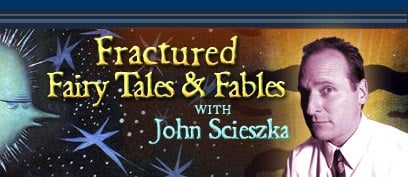
King of the fractured tales at Scholastic's site
  • Scholastic's Myths, Folktales, and Fairy Tales  These are writing activities – noticing among other storytellers and authors the ever popular, John Sciezka, I admit to enjoying fractured folktales, but they always should only follow after the original is known.


While researching this I repeatedly found broken links on various sites.  Perhaps the education field is an area that changes frequently. If you discover any broken links, please let me know and I will update this article.  

LoiS(peaking of updating, fellow storytelling friend and blogger, Karen Chace, has been mentioned here before, but she just published some great Fairy Tale lesson plans at Catch the Story Bug! "Fun in the Classroom with Folktales & Fairytales" )


Wednesday, April 25, 2012

13 Resources to Remember the War of 1812


In my previous article, "12 Reasons to Remember the War of 1812" I discovered those points worth remembering it.  Now to find resources to help you find that information easily and a few unusual ones.  Some will be general resources and some are specific to one of those reasons. 

  1. Donald R. Hickey wrote 2 books giving a brief option, The War of 1812; A Short History and he also wrote the award winning War of 1812: A Forgotten Conflict for deeper coverage
  2. Never overlook the value of children's books for a quicker introduction and Don Nardo's The War of 1812 offers both basic coverage and knows how to capture the curiosity of young readers.  Try it!
  3. Wikipedia has become a more reliable source than in its early days.  Be sure always to check also the "Talk" tab to see further discussion.  Find it at English language Wikipedia.org and put in your topic in the search box
  4. Amy Elliott Bragg's book, Hidden History of Detroit, and her blog, The Night Train provide unusual information worth knowing
  5. Visit Fort Malden in Amherstburg, Ontario just across the river from Detroit.  Hear about life there watching for the Yankee "insurgents"
  6. Nardo's book gives a great view of Old Ironsides in battle, but David L.  Weitzman's book is an outstanding printed look at the entire ship
  7. The River Raisin Battlefield in Monroe, MI has something at all times to help you understand the importance of the rallying cry "Remember the River Raisin!" plus a January reenactment and quarterly discussions
  8. Commodore Perry has 3 attractions in Put in Bay, OH to look at the Battle of Lake Erie along with plenty of recreation. ("We have met the enemy" and forgive Ohio for the nearby later Toledo War of 1835-36)
  9. Tecumseh was unsuccessful in halting American expansion by siding with the British, but his bravery and qualities were honored by William Henry Harrison, who fought him at the Battle of Tippecanoe and the Battle of the Thames.  The best information I've found on the internet is this thorough article available through The "Wayback Machine" internet archive
  10. Dolley Madison's story is exciting enough, but the full information on The Burning of Washington is by Anthony S. Pitch and climaxes on p.14 to the end on p.17 -- she was personally in danger, threatened by the British
  11. Controversy about Alexander Macomb, "the Hero of Plattsburgh" and namesake of a local county and township, is included with facts about his Detroit statue at Detroit: The History and Future of the Motor City
  12. The Smithsonian's look at Francis Scott Key's writing "The Star-Spangled Banner" is interactive and offers many ways of understanding it and its role in the war and beyond
  13. While researching #10 I developed a love of Eyewitness to History.com for its "History through the eyes of those who lived it."  Looking for historical stories to bring an event to life? Start there. The Battle of New Orleans facts are as lively as Johnny Horton's tall tale song. (The lyrics have a few minor typos, but you can also hear it.)

Tuesday, April 24, 2012

12 Reasons to Remember the War of 1812

It's the Bicentennial of the War of 1812 and even the award winning book about it is titled, "War of 1812: A Forgotten Conflict."  Teachers must cover the Revolutionary War and the Civil War. At a recent history conference it was admitted this war is easily overlooked and too often indeed "Forgotten."

First a disclaimer since this will focus mainly on the Great Lakes region. I grew up in Missouri and didn't hear about this while in school. My daughters did grow up here and never had any assignments about the War of 1812.

I've discovered a dozen things crucial to this area:
  1. What started this war?
  2. This was the Northwest Territory, the frontier for the still quite young and barely United States
  3. I'd heard the phrase "Tippecanoe and Tyler, too!", knew it was a political slogan, but not the role of the Battle of Tippecanoe with William Henry Harrison (Nov. 7, 1811)
  4. The surrender of Detroit by General William Hull put the whole outcome of the war in doubt immediately (Aug. 16, 1812)
  5. General Hull's nephew, Isaac Hull, on the east coast proved the fledgling Yankee fleet could defeat the British Navy with his USS Constitution, now known as Old Ironsides (Aug. 19, 1812)
  6. The massacre of wounded and surrendered soldiers at Frenchtown, now Monroe, created the rallying cry "Remember the River Raisin!" (Jan. 23, 1813) and the soldiers came mainly from Kentucky
  7. Commodore Perry took a newly built fleet and won the Battle of Lake Erie. He wrote on the back of a letter to William Henry Harrison: We have met the enemy and they are ours (Sept. 10, 1813)
  8. Tecumseh unsuccessfully tried to halt American expansion by siding with the British. When Americans retook Detroit after the Battle of Lake Erie, they crossed into Canada, found Fort Malden burned, then charged into the Battle of the Thames shouting "Remember the Raisin!", killing Tecumseh and winning the battle (Oct. 5, 1813)
  9. Dolley Madison saved White House treasures when the British burned it, but that was only part of the story (Aug. 24-25, 1814)
  10. Alexander Macomb, namesake of a local county and township, was the Hero of Plattsburgh. He stated "Fortune always favors the brave", refusing to retreat although greatly outnumbered.  He succeeded (Sept. 11, 1814)
  11. Francis Scott Key's writing "The Star-Spangled Banner" matched Yankee resistance (Sept. 14, 1814)
  12. Andrew Jackson won the Battle of New Orleans even as the final treaty was being completed. (Jan. 8, 1815) 
Next 12 Resources to Remember the War of 1812 will form the second half of this look at 12 Reasons to Remember the War of 1812.  (Some are unusual!)

Thursday, March 22, 2012

Project Grimm @ the Grimm Brothers Bicentennial

Federation for European Storytelling (FEST), which represents many European countries and many storytelling traditions, consider the Grimm fairy tales a part of our common cultural heritage.  FEST specifically calls for their celebration, especially since Kinder und Hausmärchen (KHM) was first published two hundred years ago.
December 20, 1812

To celebrate both the well-known and less well-known Grimm tales and all their distant cousins in other European storytelling traditions, participants of Project Grimm created a game producing online video using the KHM numbering of their 211 tales collected. 

The videos are gradually being put online. Already you may browse the videos by language, name and country of the teller, KHM number, and tale title.  Some give the entire tale while others are only a performance excerpt.  Sixty-five participated from these countries:
  • Austria
  • England
  • Germany
  • Hungary
  • Ireland
  • Italy
  • Netherlands
  • Norway
  • Scotland
  • Spain with storytelling in both Catalan and Basque
  • Switzerland
  • Wales
  • There's even a video with an interpreter for Austrian Sign Language...see how many "natural" signs you understand! Our family uses American Sign Language and enjoys learning the sign differences for other countries.
In mentioning Austrian Sign Language, I imagine the fun coming from the many languages used to tell these tales.  Watch Rapunzel in a language you don't know and see if the teller still helps you follow it.  Catch a story in a European language you are studying.  The Project is international entertainment.

So far, the most popular stories are: Rapunzel, The Three Spinners, Mother Hulda, Rumpelstiltskin, and Cinderella but that may change in the course of the project.  Also each participant is assigned two tales beyond the two chosen by the storyteller.

There now is also an official Facebook page at http://www.facebook.com/projectgrimm with more videos uploaded all the time.

Wikipedia on the Grimms' Fairy Tales puts some of this in perspective as it notes:
The first volumes were much criticized because, although they were called "Children's Tales", they were not regarded as suitable for children, both for the scholarly information included and the subject matter. Many changes through the editions – such as turning the wicked mother of the first edition in Snow White and Hansel and Gretel to a stepmother, were probably made with an eye to such suitability. They removed sexual references—such as Rapunzel's innocently asking why her dress was getting tight around her belly, and thus naïvely revealing her pregnancy and the prince's visits to her stepmother—but, in many respects, violence, particularly when punishing villains, was increased.

In 1825 the Brothers published their Kleine Ausgabe or "small edition," a selection of 50 tales designed for child readers. This children's version went through ten editions between 1825 and 1858.   

The Wikipedia article lists the KHM number and title of all tales, plus listing those omitted from the final edition. Titles may differ from what you recognize as translations vary.  British storyteller in Germany, Richard Martin, helped me learn what 50 tales were considered appropriate for 19th century children.  Here are the KHM numbers and you can check them with Wikipedia: KHM 1, 3, 4, 5, 6, 7, 9, 10, 11, 13, 14, 15, 19, 21, 24, 25, 26, 27, 34, 37,  45, 46, 47, 50, 51, 52, 53, 55, 58, 59,  65, 69, 80, 83, 87, 89, 94, 98, 102, 104a, 105,106, 110, 114, 124, 129, 130, 135, 151, 153.  It's interesting to see what famous stories are included and what are omitted.  For example, Hansel and Gretel are in, also Rumpelstiltskin.  Rapunzel is out, but also The Elves and the Shoemaker are missing.  It includes many unfamiliar tales, which is exactly why the Project Grimm exists.

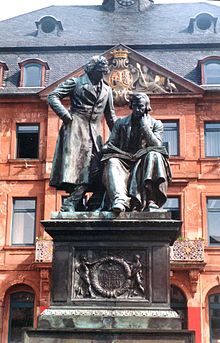
Statue of Jakob and Wilhelm Grimm in the Hanau marketplace (Hessen, Germany)

The Wikipedia article's added features include a tab labelled Talk for added views of the topic. To research folklore use an external link to Aarne-Thompson Tale Types on D.L. Ashliman's excellent website, matching Grimm stories to familiar themes. Another Wikipedia article is also referenced about the German Fairy Tale Route -- a German tourism project of various locations important to their work, established in 1975, in case you visit Germany.

With all the current attention on fairy tales in movies and television, I side with both the Fairy Tale Lobby and FEST in seeking to promote fairy tales for all ages, yes, including adults since these tales were never solely intended for children.  Jakob and Wilhelm knew this and so do you.


Saturday, March 10, 2012

Are Fairy Tales Still Worth Telling?


Painting - by Edward Robert Hughes
You can buy this at Allposters.com
On February 26 I did an extra post for Tell a Fairy Tale Day.  That day interested many people.  There were the "usual suspects", storytellers, parents, and teachers, but it also included the blog, Imagination Soup, who wrote "8 Reasons Why Fairy Tales Are Essential to Childhood."  That article further mentioned an article by the British newspaper, The Telegraph, which warned Parents who shun fairytales miss chance to teach children morality.

In all fairness, shortly afterwards yet another article, Are Fairy Tales Out of Fashion? , in the online magazine, Slate, took a view opposing fairy tales.  The opponent of fairy tales, Libby Copeland, criticized their violence and "bad values."

Have such stories outlived their audience?  How ironic, since this year is the bicentennial of the collection of tales by the Brothers Grimm.  More about that will be mentioned soon in an extra follow-up post.

I mentioned the first two articles to my colleagues on the email list, Storytell.  The National Storytelling Network hosts those discussions.  List discussion is only open to list members, so, if you are interested, learn more and sign up here.


In my February 26th article I also mentioned the Fairy Tale Lobby, saying: 
Just as pop culture, like the Harry Potter saga, has started to accept fairy tales, some storytellers have started to stand up for the fairy tale.  Not all storytellers approve of the rejection of fairy tales.  A great place to catch storytellers at play with the concept is The Fairy Tale Lobby. Questions and characters there might even get you thinking about how fairy tales still belong in publications, conferences, festivals and the repertoire of storytellers, whether professional or amateur.  After all, the root of the word "amateur" is "love." 


Mary Grace Ketner and Megan Hicks host the Lobby.  M.G. graciously consented to let me share her reactions originally made on Storytell to those three articles, (on Imagination Soup, The Telegraph, and Slate).  She offers very practical explanations for a topic which might seem anything but practical.

She starts by discussing the Imagination Soup and Telegraph articles:
I love lists, and this is a good one!  One item I'd like to see stated a little differently is "Fairy Tales teach Lessons."  They mean "moral lessons," they explain, but it's academic-sounding.  I might say instead, "Fairy Tales impart values." 

Yesterday I was telling at a middle school.  I asked the librarian if her school had any issues with parents about ghost stories.  I said I knew sixth graders loved ghost stories and I planned to tell some, but could change if doing so would put her on a bad position.  (Of course, my ghost stories are mostly fairy tales, including Tam Lin, Mr. Fox, Pretty Maid Ibronka, and Godmother Death--a Mexican variant of Godfather Death, along with some local legends, including La Llorona, which I think of as a local ghost legend with fairy tale qualities, too!)

She said, "Oh, not at all!  Tell them!  Well, we have one parent who doesn't like witches, but..."  and kind of sloughed it off as a problem, which, if it arose, she'd be glad to take on.  Just dare her!  The stories I'd listed don't have any witches, and I didn't mention that they have a faery queen, samhain, sexual violence, the devil and probably "unacceptable" views of the nature of life and death, not to mention enchantment.

Well, it turned into a great day with satisfied kids and teachers, and both the librarian and one of the teachers asked, independently, if I would tell Mr. Fox, the goriest story of all which I'd told early in the day, to a particular class.  One described the class as "pretty tough," and the other said they "needed" that story.  Whee!  Such imaginative stories open kids up to thinking about consequences and courage, and in middle school, when they are beginning to test their family values against the values of others they see around them in the broadening world, those kinds of cautionary tales are exquisite!  Let them do some of their rebelling in their minds!

One of the greatest pleasures for me in my storytelling life is to work with adults who "get it" about fairy tales, imagination and values.  Of course, it's "Teaching Lessons!"  No question about that, just not in the pedantic, pounding sense of "teaching" and "lessons."  (Now THAT's scary!)--Mary Grace
Mary Grace later said:
I had some other thoughts on the blog post Lois sent and the Telegraph article it directed us to, but my previous post was going long and changing the subject, so I'm starting over.

My state, Texas, has one of the highest rates of teen pregnancy, which is usually unwanted pregnancy, so I try to do my part to prevent it by telling fairy tales.  YES!  I'm not overstating the case!  I think that is a moral issue about which fairy tales have much enlightenment to offer.  Girl listeners are, in their minds, the heroine of the story, and, as such, they experience vicariously the consequences of the heroine's behavior.  Boy listeners who may care about attracting girl listeners take the precaution as well.
  • Mr. Fox cautions young women to follow up on doubts about the unknown aspects of their potential partner's life.  They caution young men that unsavory behavior is not tolerated by society.
  • La Llorona cautions young women not to seek a partner out of a desire to escape the home/town/life in which you presently find yourself.  (Many variants, of course, and some don't particularly do this, but I don't "believe" those variants! ;-)  My version, the one I'm talking about, is at http://www.talesandlegends.net/storied-women/index.html) At the end of the tale, the man is disdained by the listener, which is all I can do without making up something that is not part of the legend, but perhaps that is enough for a boy listener to at least consider the consequences of making promises you don't intend to keep.  Or, at least, that taking any kind of responsibility for children that can't be at the core of one's life and marriage might be a hassle one doesn't have to deal with if one would just be more careful!
  • Janet (in Tam Lin) and Rapunzel have sex based on lust probably, at least without love being mentioned, but love grows from it, and they do amazing and courageous things to save the man whom they have found to be well worth sharing a life with.  (I remember my mother saying long years ago that shot-gun marriages could work out just fine if other people would just let them!)
  • Rapunzel also says, in an oblique way, that the partner you have chosen for yourself without your (surrogate) parents' consent may be the right one for you, after all!  Consider what your parents say, but push it a bit.  Find out!  Some of the most enviable marriages I know of were at first disparaged by parents.
  • Cinderella discovers that true love will seek out the one who has no pretensions; that is, you don't really have to do anything artificial, unnatural to yourself, to attract the partner who is the right one for you. (Unless being artificial is a life you think you'd like!)
  • Red Riding Hood, of course, cautions young women to beware of predators.
  • Pretty Maid Ibronka advocates facing the truth about oneself and one's mistakes of the past.
There are other good examples, I know.  Maybe one or two have popped into your mind?  Please share!--Mary Grace

She only briefly reacts to Libby Copeland's comments in Slate, but it completes this look at using fairy tales in the 21st century.

2 1/2???  The mother is reading Cinderella, Red Riding Hood, Snow White, Hansel and Gretel.... to her toddler???  Of course, they are too violent!  What was she thinking!!?

She might try Three Little Pigs, Billy Goats Gruff, the Three Bears, and Gingerbread Man.  Use the age of the character in the story as a cue to what age of child/adult the story is really for.   Red Riding Hood and Hansel and Gretel, the youngest she mentioned, have little to offer kids who are not old enough to wander around in the woods (or neighborhood) by themselves.  
Mary Grace  
Well, M.G., I thoroughly agree.  Where preschoolers are involved, I always recommend telling stories fitting the old-fashioned term of "nursery tales."  

If you haven't a list handy, you could easily start with these classic anthologies: The Golden Goose Book, illustrated by L.Leslie Brooke; Great Children's Stories (called the Classic Volland Edition); F. Rojankovsky's Tall Book of Nursery Tales; and Veronica Hutchinson's easiest anthology, Chimney Corner Stories, which she subtitled Tales for Little Children. For more recently published collections, you should also go to your local library's online catalog and search using together the keywords, "nursery" and "tales."

In answer to the title of this post, "Are Fairy Tales Still Worth Telling?", of course they are, BUT it does require careful selection based on the age of the audience.  So many of the stories were originally for adults. . . something too many adults either don't know or don't believe. The title of the Grimm Brothers anthology is Kinder und Hausmärchen.  That translates as Children's and Household Tales and will lead to a promised follow-up to this post on the celebration of the bicentennial of its publishing.
 

Wednesday, February 22, 2012

February 26 is “Tell a Fairy Tale Day" or Do You Tell Fairy Tales?

Painting - by Edward Robert Hughes
You can buy this at Allposters.com
I was asked, "Do you tell Fairy Tales?"  
My answer: Definitely.

I tell "stories from around the world and back through time."  The second part of that includes my various historical reenactment programs.  This question fits into much of the first part of my storytelling mission.

At the risk of becoming a "blahblah" blog of opinions, I want to consider the role of fairy tales and folktales in storytelling.

One of the Tuatha De Danann from http://al-tirnanog.blogspot.com/
When I talk about "stories from around the world" it does not mean all those are exclusively fairy tales. Technically fairy tales are wonder tales: stories of magic, of happenings and creatures beyond the ordinary.  I prefer to call books in the Dewey Decimal Classification of "398s" "folk tales" even though Harry Potter made magical elements more popular. The "wonder" tale with its magical elements doesn't suit some listeners, but need not eliminate all folktales. Using the term "fairy tale", too often listeners pictured and rejected tiny girls with wings and a magic wand.  (How different from the powerful denizens of Tir Na nOg!) It also conjured up stories where all "lived happily ever after", unlike reality.  Yet that very ending may explain our need for fairy tales!  Some listeners rejecting fairy tales often accept American tall tales and spooky stories from anywhere. Tir Na nOg points to the fun of exposing groups to Celtic tales where fairies are anything but tiny. Tolkien's elves and dwarves were nourished in such ancient traditions and many modern fantasy writers clearly drank from the same fountains.  If Tolkien sources interest you, go to Sources of Lord of the Rings which is part of the huge Internet Sacred Text Archive.  Despite using exclusively female illustrations, the Wikipedia article, "Fairy" gives a good introduction to the wealth of fairy lore and variety of personalities. The Discussion tab broadens the topic, showing it's international aspects. 

Folklore is an important aspect of our own culture and of other lands.  Nations and ethnic groups have a folklore that can help us understand each other better.  It needs to be brought to as many people as possible.  If ever I doubted how little folklore is known, I just recall when a local television station had a reading program where kids were supposed to read in various categories, including Fairy Tales.  That's when I realized even the parents didn't know what a Fairy Tale was.  One mother asked if Beatrix Potter's Peter Rabbit was a fairy tale!


Probably the most accurate and broadest name would be Traditional Tale, which certainly includes material told by adults, but eliminates literary tales like either Potter, Beatrix or Harry.  If I want to tell a story with a Disney version or even some other version fairly well known, but I'm telling a variant, I let my listeners know this will sound a bit familiar, but to listen for the parts that are different. Fractured tales are popular now, but it pays to be sure the group knows the original or they won't appreciate it and catch the changes.

I like the comparison of a folktale to a stone smoothed by many people handling it over the years. Folktales have been polished to their essentials by years of telling.  This is why, when teaching storytelling, I suggest people start out with short folktales. 

If that's the case, why are personal tales so popular in festivals and story slams?  Are they better suited to adult audiences?

To understand, look at how U.S. storytelling festivals changed over the years.  At the beginning of storytelling festivals you could tape the stories since all were traditional tales.  Gradually performers personalized stories with music and other ways of making a story "their own", then began selling their tapes, so we were told not to record performances. Next came tellers of personal stories.  You might refer to something happening to a particular storyteller, BUT it was untrue, as well as unethical, to retell the story and claim such things happened to yourself and not the original storyteller.

The relatively short time permitted in story slam performance is also better suited to anecdotes.

A storytelling friend in Bristol, Tim Sheppard, talks about how in the U.K. storytellers tend to carry on the oral tradition by repeating the old tales.  He also says those carrying on the oral tradition are appalled or amazed at the way in the U.S. we tell people they have to take a tale, change it to make it your own, or to take several versions of it and craft a new version.  He has two sections about traditional stories: Traditional Storytelling and then The Cultural Traditions of Storytelling in his huge website of Storytelling Resources for Storytellers.

In my own view, our litigious society here in the U.S. has led to fear retelling the very folk literature able to help us understand other cultures.  Is it any wonder many cultures don't want their tales told except by storytellers steeped in the culture they are representing, if a teller is going to change it that much?

Perhaps Tim also mentioned a better way when he said: that doesn't tend to mean actually changing the tale. It means bringing the tale to life and inhabiting it, so that it's an authentic expression from the heart. It's just that all that can be done without interfering with the tale.

In my own consideration of all this, I believe copyright limitations and a desire to stand out from other tellers led to so many personal stories.  Some storytellers question if it might also have something to do with the American psyche? Perhaps, but major tellers who give personal tales usually weave humor into their stories if they want to keep me listening for very many stories.  I question the durability of most of these stories lasting long enough for anyone to remember them when they finally become old enough to reach Public Domain.

Just as pop culture, like the Harry Potter saga, has started to accept fairy tales, some storytellers have started to stand up for the fairy tale.  Not all storytellers approve of the rejection of fairy tales.  A great place to catch storytellers at play with the concept is The Fairy Tale Lobby. Questions and characters there might even get you thinking about how fairy tales still belong in publications, conferences, festivals and the repertoire of storytellers, whether professional or amateur.  After all, the root of the word "amateur" is "love." 


I believe there's still a need for folk literature, including the fairy tale.  If people don't know their own culture with its folktales and don't learn the folklore of other cultures, we will degenerate into a land of the mass media and misunderstand anyone who isn't the same.

Thank you for considering all of this.  I hope you, too, will Tell A Fairy Tale, and not just on February 26.  I also warn you to read this discussion only once or twice.  Feel free to tell others, but be careful as John D. Batten warned on August 29, 1891:

Hmmmm.  There are many Battens, including ancestors of mine, but it's a story that might put you to sleep like that warning.
LoiS(tepping down from my soapbox, but not from telling traditional tales)

P.S. Looks like there may be other ideas to add as we near the 26th.  Just saw this and think it deserves adding, 8 Reasons Why Fairy Tales Are Essential to Childhood .  Additionally fellow storyteller and friend, Karen Chace's blog, "Celebrate with tell a fairy tale day!", gives a wonderful assortment of links to tales, curriculum ideas, and crafts.  She kindly just linked to this blog, but her "heads up" back on January 31 gave me a nudge to add this extra blog article since I usually stick to publishing just once a month. 

I've long loved the Einstein quote mentioned in the "8 Reasons" . . .
“If you want your children to be intelligent, read them fairy tales. If you want them to be more intelligent, read them more fairy tales.” 
― Albert Einstein
Because I think this is truly important, other articles on this important topic coming my way may also be added.  Then again, it may need an additional article here.  Just can't get enough of these.


Tuesday, January 31, 2012

Another look at "The Underground Railroad Didn't Run on Tracks (UGRR)"

That was about a post from last year, on the Underground Railroad.  Click on that hotlink to see that earlier post.  (Did you also notice the site's address now is http://www.StorytellingResearchLois.com -- but the old address also works.)

This topic is large and definitely worth reviewing further, this time with a focus on Michigan's role in the Underground Railroad -- often abbreviated UGRR.  Michigan split up the former Department of History, Arts and Libraries, with the historical work moved to the Department of Natural Resources.  The Historical Center archives the historical materials moved from the former department.  Find online from 2000 to 2004 a newspaper, "Michigan Time Traveler", for children with accompanying teacher guides.  There are two issues specifically about the UGRR.
Adam Crosswhite
  • The Underground Railroad and Teacher's Guide. - This highlights Cass County's Ramptown and the Crosswhite Family rescue by the citizens of Marshall, MI.  Here is more about the "Crosswhite Affair" including a lesson plan on it.  Similarly both the UGRR and the Crosswhites are covered in this issue for children of "The Mitten", published by "Michigan History" magazine.
  • The Blackburns Escape and Teacher's Guide - Thorton (not Thornton) and Lucie Blackburn escaped slavery to settle in Detroit, but when they were spotted here in Michigan they were captured, tried, and scheduled to return to Kentucky.  African Americans helped them escape to Windsor where Canada rejected demands for their return. 
There's also a section called Freedom Trail Lessons  and just as with the two previous Teacher's Guides, there are uses beyond the classroom.

In Vandalia, MI they're uncovering proof of Young's Prairie, an early to mid-1800s Quaker offer of farmland and safety to runaways.


To learn of the very real incidents of free African Americans being sold into slavery, go to either the 1893, volume 22, of the Michigan Pioneer and Historical Collections or to the online text and search using your own computer's search feature (not the one offered on the site) for Malinda Paris.  The memorial of her by the people of St. Clair tells of a family repeatedly sold into slavery even though they were legally free.
Laura Smith Haviland
Elizabeth Margaret Chandler
Early leaders of the Abolition movement here in Michigan were Quakers Laura Smith Haviland, along with friend and neighbor, Elizabeth Margaret Chandler.  They were seen as "radical abolitionists" by the majority of Quakers in the late 1830s, so they joined with the northern Methodists who were also devoted to anti-slavery efforts. 


(Liberetta Lerich Green, whom I portray, grew up in such a Methodist family.)

**** UPDATE
I've just discovered, after "finishing" this post a wonderful C-Span video of Kimberley Davis-Tranumn talking about "Aunt Laura" and the active role Lenawee County played in the UGRR.  Go to  C-Span Video Library for her well-researched and inspirational video.

Friend to the Havilands and the Lerichs was well-known UGRR conductor and speaker,
Sojourner Truth, who settled in Battle Creek, MI.  As noted in my earlier post, that is also the home of the Sojourner Truth Institute as well as this statue honoring her.  Much has been written about her including this issue for children of "The Mitten", published by "Michigan History" magazine.  Battle Creek was a good spot for her as it was another Michigan location prominent in abolition and the UGRR thanks to Erastus Hussey's political efforts and publishing the abolitionist "Michigan Liberty Press."

Tour online a site in Schoolcraft, MI estimated to have sheltered 1,000 to 1,500 by yet more Quakers, Dr. Nathan Thomas and his wife Pamela Brown Thomas
Detroit Historical Museum's "Doorway to Freedom" current exhibit shows sites associated with the UGRR in Detroit including the Finney House barn (in use from 1833) where Liberetta overheard her father and Reverend Charles C. Foote discussing runaways there in danger of discovery.  Peter Lerich promptly told his wife he was leaving for a "load of plaster" in Detroit after he found Liberetta listening.

In Detroit George DeBaptiste and the Second Baptist Church of Detroit provided sanctuary and transportation to Canada.  DeBaptiste also helped organize the 1st Michigan Colored Volunteer Infantry Regiment, later known officially as the 102nd Regiment United States Colored Troops.  It's interesting to show the role of disease in the civil war, with 6 killed in action, 5 more of wounds, but 129 died of disease. After the war he returned to successful business life and continued advocacy for black rights including the 15th amendment which gave African Americans the right to vote.

It's always hard to bring such a large topic to a close.  A fellow librarian once said about me, "You can take the librarian out of the library, but you can't take the library out of the librarian."  As a result I want to recommend a book to help you find much more than I have space to mention here.  Carol E. Mull's The Underground Railroad in Michigan has been described as "the first comprehensive exploration of abolitionism and the network of escape from slavery in the state."  Ms. Mull is a founding member and current chair of the Michigan Freedom Trail Commission.


****UPDATE

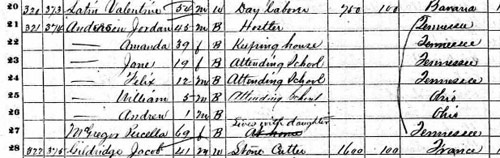
I can't resist this interesting UPDATE.  I just read "To my old master" , a fascinating and, yes, funny letter by Jordan Anderson.  It responds to a letter by Colonel P.H. Anderson of Big Spring, Tennessee, to his former slave, requesting he come back to work on the colonel's farm.  While Jordan Anderson took his family to Dayton, Ohio, and this month's post looks specifically at the Underground Railroad in Michigan, it is a delightful way to look at the later life of many who came from similar backgrounds to benefit from the Underground Railroad and emancipation.