Tell me if you have a topic you'd like to see. (Contact: LoiS-sez@LoiS-sez.com .)
Please also let others know about this site.

Saturday, April 23, 2011

Good Ol' Rural School Days - Curriculum Requirements

The 1907 song's chorus starts out with "School days, school days, dear old Golden Rule days; Reading and 'riting and 'rithmetic, taught to the tune of the hickory stick."
Curricula throughout history are always changing, but the Three Rs remain basic.  How they are taught, however, also may change.
Hornbooks and embroidered samplers introduced ABCs and 123s. Personal slates and a blackboard followed. Younger students did lessons with a slate and slate pencil. Older students still might use a slate for practice work, but they also learned to use steel nibbed pens, an ink sponge, and practice paper.  Yes, that means inkwells for dipping a girl's hair and also learning to minimize ink splotches.

The progression of the Three Rs in the 1800s into the 1900s and beyond still seems very familiar, especially mathematically.  Arithmetic traditionally progresses from knowing numbers, to addition, subtraction, multiplication, division, then on to the more advanced fractions, decimals, and percentages, ending with the mysteries of word problems.  Reading, writing, and grammar progressed beyond the alphabet with word families, and on into readers.  Just as students by the seventh grade in a rural school in 1890 did not use the same supplies as today's students, they didn't necessarily study the same subjects. Courses in 1890 included reading, spelling, penmanship (remember this was what we would call a Middle Grades student), grammar, physiology and hygiene, arithmetic (mostly with an emphasis on practical math used in business and on the farm), and geography. 
 
Students used textbooks, often sharing their books. Free textbooks statewide were approved by law in 1889, and 520 school districts implemented it in the first year. The McGuffey school textbook series is the best known. It was created by William Holmes McGuffey, a Pennsylvania teacher, preacher, philosopher, and university professor. It was the standard textbook series for schoolchildren from 1836 through the 1920s. The books -- a primer and 6 “eclectic readers” – emphasized the fundamental skills of reading, writing, and arithmetic, with lessons stressing the importance of honesty, thrift, and hard work. Next to the Bible, these books were the most important force in shaping the minds and morals of their young readers. Learning methods included repetition and memorization of verses such as the popular “Mary’s Lamb” found in the First Reader. They were not the only readers used as others were chosen, too, especially beyond the first three by McGuffey, but they certainly were a staple for a long time. Nationwide, it is estimated at least 120 million copies of McGuffey's Readers were sold between 1836 and 1960, placing its sales in a category with the Bible and Webster's Dictionary. The Wikipedia article on McGuffey Readers is fascinating and I heartily recommend reading it for even more information than this blog has room to mention.

By the 1900s the curriculum expanded greatly with civics, history, drawing, literature, language and grammar, including orthography, which is the diagramming of sentences, nature study, sewing, and agriculture.  By this time, penmanship generally was the Palmer method with endless circular spirals and straight line groupings of even height and space.  Penmanship put those inkwells, steel nibbed pens, and ink blotters or sponges to use.  The world of ballpoint pens must have seemed like science fiction!  There also may have been singing and Bible teaching every so often as enrichment. 
By the late 1870s, the State Teachers Association and State Superintendents for Public Instruction began to make recommendations outlining a uniform course of study specifying the subjects to be taught each year. The first version of this outline was presented in 1881 and defined a daily program for the schools, listed textbooks required and accessories needed by the student, teacher, and schools. The outline was modified in 1883 and a new course of study was adopted in 1890. About the only major change to the course of study for rural students between 1881 and 1890 were the additions of hygiene and physiology as mandated by law. The late 1880s also saw more civil government emphasis as part of the U. S. History courses.

Irregular attendance made it difficult, it not impossible, to follow a rigid plan of studies. Despite a state law passed in 1871 mandating compulsory attendance, enforcement was minimal at best.  The average length of the school year was 7.6 months, but this figure varied widely, especially in rural districts. Country schools often had two terms during the year. Winter term had to be at least three months for the school district to receive a share in the distribution of interest from the primary school fund. In 1883 the Michigan legislature firmly decreed that all children between eight and fourteen must attend school at least four months a year.  (The Truant Officer is mentioned later in this series.)

While the school year varied over the years and by a school's location, the school day's length seems fairly consistent.  School might start at 8:30 or 9, have a 15 minute morning and afternoon recess, an hour lunch break, and end at either 4 or 4:30.  Some schools had large bells for the teacher to ring, otherwise a handbell called the students back to class.

It's time for a "recess" now on the topic of Curriculum.  Whether in Michigan Month or not, I enjoy reenacting the old-time School Teacher. There's always something new to discover. It's truly an education!

For more on schools of the past, "recess" ends with  the next post here.   It's on A Typical Day. The previous two posts were on the various Resources about the schools of the past and the Buildings.


.

Friday, April 22, 2011

Good Ol' Rural School Days - The Buildings

Many rural one-room school buildings are easily viewed through the Resources section of this series.

Even in territorial days, Michigan in 1809 provided for school districts in its settled section.   By 1819 each township board was required to divide the township into school districts.  In the pioneer 1830s, schoolhouses commonly had dirt floors and only a few small windows with waxed paper to permit light while keeping out the weather of a spring or fall day.  Michigan's first constitution in 1835 decreed "The legislature shall provide for a system of common schools by which a school shall be kept up and supported in every school district at least three months in every year."  This was Michigan's first "unfunded mandate for education" as taxes were not levied to support those schools, leaving that to the local communities.


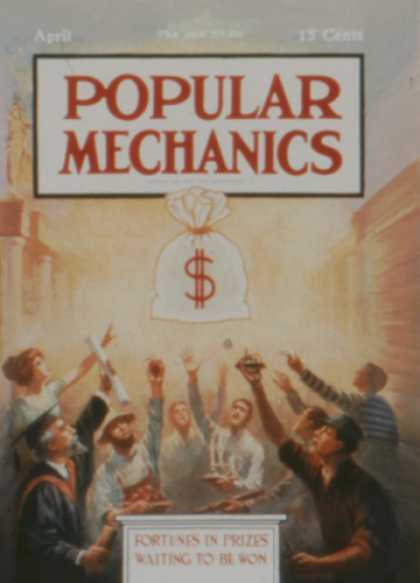
By 1913 the School Standard program spread from Illinois to at least five other Midwestern states, including Michigan.  Even "Popular Mechanics" of April 1913 on page 554 mentions that in Illinois inspections take place for: grounds, building, furnishings, heating, ventilation, library, water supply, and sanitation, as well as to the qualifications of the teachers.  The Illinois program looked for:
  • an ample playground
  • good approaches
  • convenient fuel houses
  • a sound, well-painted building in good repair
  • a jacketed stove in the corner of the room instead of an unprotected stove in the center
  • the floor and interior clean and tidy
  • suitable desks for children of all ages, properly placed
  • a good collection of maps, dictionaries, and juvenile books
  • and a sanitary water supply.
Volume 76 of the "Journal of Education" explains in more detail Illinois recognized the one-room school would remain a necessity for a long time to come, but the School Standard program was created to encourage the best possible schools.  On page 515 the Journal states
  • "two outhouses should be as far apart as the grounds will permit.  Each should be screened and vines planted to over-run the screen.
  • A library room in every rural school is another improvement considered practical and really needed.  All the plans and specifications in the circular mentioned in the footnote contain space for such a library room, where children will find interesting and wholesome stories which they can and will read, as well as books which reinforce the regular studies of the schools.  
  • The water supply presents another problem.  Since the common drinking cup has been abolished we find all sorts of curious circumventions, few of which are very sanitary.  Experience shows that individual drinking cups in the care of the students is little improvement.  A bubbling fountain seems the easiest way out.  But the salient point is of course the source of the water supply.


Because of the School Standard program, plans for one-room schoolhouses were made available from the Michigan Department of Public Instruction with windows, especially on the north side supplementing the kerosene wall lanterns.  Ceilings were 11 or 12 feet high and the size of the room was 32 feet by 24 feet.


By 1930 electricity, indoor plumbing, and furnaces had been factored into the Michigan Department Public Instruction's school standards. Work Projects Administration (WPA) funds in the 30s helped upgrade the one-room schools, adding furnaces, indoor toilets, and improved natural lighting.

Michigan's Department of History, Arts and Libraries in 2003 produced An Honor and an Ornament; Public School Buildings in Michigan, a history of school architecture.  There is brief mention there of how schools evolved from one-room schools.  The one-room school was officially known as the Primary District School, not because it taught only the primary grades -- it was ungraded --, but because it was the primary school of an area, usually rural and was "usually located on a crossroads near the center of a district."  That "usually" allows for the fact that the land was donated, often by a farmer wishing to have his own children educated close to home so they could quickly return to helping out on the farm.  I learned two-room schools were sometimes called a Ward School, but they evolved into the Union Schools of the towns.

Miscellaneous things I discovered:
  • While many schools had a cupola or bell tower, if there wasn't one, the teacher had to stand in the doorway and ring a handbell.
  • The teacher's desk might be slightly raised on a platform.  This gave both a better view of the entire class and raised the teacher above some drafts
  • Typically the boys' desks were on one side and the girls on the other, with the oldest students in the back and the youngest in the front.  Even the entrances and cloakrooms might be separate if there was enough room.

Whether in Michigan Month or not, I enjoy reenacting the old-time School Teacher. There's always something new to discover. It's truly an education! 


For more on schools of the past, the next post here is on The Curriculum.  The previous post was on the various Resources about the schools of the past.

Thursday, April 21, 2011

Good Ol' Rural School Days - Resources

May is Michigan Month, so many classes go on field trips to old-time 1 and 2 room schools.  One of my historical reenactments is a school teacher from that era.  I want to share some of the interesting resources and things I've learned about these rural schools.  I've so much information that this will be a multi-part series.

This post lists a variety of resources letting me show how Michigan schools developed from pioneer days into the early 20th century.

  • Mary Keithan's book, Michigan One-Room Schoolhouses provides an assortment of pictures showing the variety of architecture in nearly 100 schools still in Michigan.  Interviews also add some history, but the book's strong point is its photography.  My only regret is she didn't include two room schools as they were quite common, too.  As schools grew it provided an easy way to divide the students.
  • School Days is an excellent overview from the Michigan Historical Museum combining quotes with facts to show the transitions and variety that formed rural schools.
  • One-Room School Lessons is a lesson plan showing those transitions from pioneer schools to the schools of the late 19th and early 20th century.  Since my own rural teacher comes from approximately 100 years ago, I'm delighted to have this site.  Another bit of "our tax dollars at work" we are fortunate to find still available on the internet even after the Michigan Department of History, Arts, and Libraries was juggled about in governmental restructuring. 
Whether in Michigan Month or not, I enjoy reenacting the old-time School Teacher.  There's always something new to discover.  It's truly an education!
For more on schools of the past, the next post here is on The Buildings.

Friday, March 18, 2011

Let Puppets Tell Your Story

O.k., knowing how puppet personalities can take over, let's change this post title to:
Let Puppets HELP Tell Your Story.

er, PUPPET-INSISTED UPDATE:  
Puppets Are People, Too!

LoiS here and trying to return a bit of order: 
Puppets can be so lively and crazier than we might otherwise let ourselves be.  If you want to grab attention, let a puppet carry your story or message.  Just expect, as in the battle of titles above, they will try to take over.

There are so many ways puppets can be used beyond a puppet stage and puppet plays.  Find my earlier article on this, "An Alphabet of Puppets and Storytelling", at my website, http://LoiS-sez.com/Puppets.  The ideas there are arranged alphabetically for easy browsing.  It also forms part of a puppetry workshop I offer.  While at my website, go to the Specialized Resources page for a few internet puppetry sites I recommend.  Now it’s time to look at specific methods in more depth. 
LoiS with Sheerluck

  • Puppets can become characters in a story.  Examples of this are tales of Anansi, Br’er Rabbit, or Coyote.  The character may be used for a single story or over several stories.  If you repeatedly tell over a period of time different stories using a specific character, it is easy to build up enough stories to create eventually an entire program with that character.


  • Puppets can be the funny character, letting you be the "straight man" often found in comedy acts.  Humor always helps.  If you want learning, research shows humor actually helps people remember more.  There's even a great word for it, Edutainment!  An easy way to do this is by using your puppet for a running gag taking place 3 or more times.  Exaggeration is another comedy method.  Your puppet can be the exaggeration personified or may express the exaggeration physically or verbally for humor.  Another way for your puppet to be funny is let it get things wrong.  An example of this is a puppet incorrectly tells a well-known fairy tale, but you let the audience correct the mistakes.  You may have to ask at first "Is that right?", but they'll soon be calling out the right answers.  Just be sure it all stays friendly and positive.  Even puppets should be treated with respect -- model good treatment of others.  Don't be afraid, when playing to children, to include material more likely to make adults laugh.  Dr. Seuss's work was an example of this kind of writing.  It keeps the adults involved from a grown-up perspective at the same the children enjoy its zany nature.  Physical humor may make the children laugh while adults stay alert for the verbal humor.

  • Get over the idea that you must become a ventriloquist.  If you focus upon your puppet as if it was a real person, your audience will, too.  Your puppet’s movement and voice create its character.  Sometimes a puppet mimes a story while you tell it.  You may also let it “whisper information” for you to relay.  Props can add to the fun of a puppet, too.

LoiS and Buzz about Bees
  • Another option is just using a character for a single special segment.  The Shel Silverstein poem “I’m Being Eaten by a Boa Constrictor” is an example of a single segment worth using as a filler in a program.  An additional hint on that specific poem: wear slacks and not a skirt, unless you want the segment “R” rated!


What word did each of those ideas above include?
Answer: Character.
LoiS and Nina
  • The more you develop the character of your puppet, the stronger it will be a part of what you present.  This can take time to develop.  It's also easiest to test on individual children of the same age as your intended audience.  Possibly when testing, even before you try specific voice and movements, you could ask what the child thinks the puppet's character will be.  Then it's up to you to decide if you will develop that appearance of personality even further.  Possibly you will go with the opposite for humor so a big tough looking puppet acts shy and delicate or the petite young thing sounds like a lumberjack.  Is the baby dragon fierce or does it flop at fire-breathing?  I don't have a photo of my Biblioteca Dragon, but will never forget when he tried to turn Santa into Krisp Kringle!

LoiS with her puppy puppet, Buzz, as a lifeguard.  He provides riddles for her Storytelling Cruise Around the World if the audience is smaller than a gym filled with students.
  • Puppets are great for Fillers, those small transitional parts of a program which bring variety to a program.  A puppet can create audience involvement by selecting children for jokes and riddles.  Puppets can also sing, yes, even if you aren’t a great singer.  Just remember what Kermit sang: It's not easy being green.  Kermit's voice wasn't that of a great singer, but he had . . . CHARACTER!

I also have a puppet that lets me use my own hands for signing.  Here Ivan the Siberian Tiger signs "Friend."

  • When your puppet isn’t part of what you are telling, it can be placed in a position where it sits and listens to you, serving as a role model for your audience.  You could also let it “go to sleep.”  If you don’t want the puppet visible at all times, plan for its entrance and exit.  A large bag can be a perfect spot to let the puppet hide or possibly put it behind a stack of books.  Just be sure the puppet enters and exits as itself.  Don’t destroy its reality.

  • After your program is over, the children may want to meet and touch the puppet.  Timid children should be able to pass, if they don’t want contact. Villains may be hit, so those puppets should be kept away from young listeners or your puppet may become damaged.  The fact that children react emotionally to a puppet just shows how real they can be in conveying your story.

Monday, February 21, 2011

Skipping Through the Halls of Memories

In addition to my storytelling and historical reenactment, I provide various oral history or memoir writing workshops, but this is a first for me. . . I was asked if I could do a program on the 1950s.  
True to my theatre training I said "Of course."  Ever since, I've been busily working on my own oral history of growing up in that era. 

Friday, January 21, 2011

The Underground Railroad Didn't Run On Tracks (UGRR)


The Underground Railroad is abbreviated UGRR and the letters at the right are from The Anti-slavery Alphabet written for children and printed in 1847 for the Anti-Slavery Fair.  It is free for copying at Project Gutenberg with texts like:

A is an Abolitionist

A  man who wants to free

The wretched slave--and give to all

An equal liberty.

It also opens with a message "To Our Little Readers":

Listen, little children, all,
Listen to our earnest call:
You are very young, 'tis true,
But there's much that you can do. 

That same message ends with:
Thus each one may help to free
This fair land from slavery.

To quote Fergus M. Bordewich, the author of Bound for Canaan: The Underground Railroad and the War for the Soul of America, "In an age when self-interest has been elevated in our culture to a public and political virtue, the Underground Railroad still has something to teach: that every individual, no matter how humble, can make a difference in the world, and that the importance of one's life lies not in money or celebrity, but in doing the right thing, even in silence or secrecy, and without reward.  This truth doesn't need to be encoded in fiction in order to be heard."


I definitely agree.  This attracted me to the woman I often portray, Liberetta Lerich Green.  She grew up on an UGRR station, was involved, along with her parents, in abolition and Civil War homefront efforts while her brothers fought in Michigan's "Fighting Fifth" Infantry.  Even in her later years as mother, farmer's wife, and later widow, this seemingly ordinary woman's life has much to teach us.  My website page, LoiS-sez.com - Historical Programs tells more about my work. 
  • You may read Liberetta's own oral history to see a bit of what I'm talking about at Shelby Township Historical Committee's "The Beacon Tree. It was my starting point for research and manages to be entertaining and a window into the second half of the 19th century and early 20th century.
  •  For the mathematically or economically inclined, Liberetta mentions her parents as stationmasters equally shared with others running the UGRR, so their share of a fine of $100,000 against Warden Gilbert in Connecticut was $200 for feeding 2 runaways, a woman and a boy.  Similarly leading abolitionist, Thomas Garrett's fine in 1848 of $4500 was as if today he were fined $126,000.  He was able to reach a compromise settlement and a lien was put on his house until the fine was paid.  Friends helped him pay it and continue his iron and hardware business -- and helping runaway slaves to freedom.

  • At UGRR interactive maps see what southern states had runaways coming to MI, travelling to Canada.  (UGRR maps are almost all the same, but this site is a bit more interactive or you can click each level of routes to print -- HINT: print just page 1) 

  • For national views of the UGRR and a variety of resources, go to the National Freedom Center and also click on Slavery Today as there still is a worldwide problem unlike that faced by the UGRR of the 1800s.

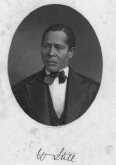
  • The National Geographic site has an interactive UGRR section.  While there click on UGRR Lesson Plans for activity ideas even if you're a library or museum.  The interactive adventure mentions William Still.  

  • It doesn't mention that Still kept secret records of about 650 slaves he helped to freedom.  Project Gutenberg has a copy of that book.

  • There is so much musical material in the history of the UGRR, that you just need to Google "underground railroad songs" and take your pick!
  • More controversial is the idea of how quilts may have been used in the UGRR's work.  A very good history overview of the UGRR and look at the controversy may be found at Quilt History.
  • The Promised Land for anyone travelling the UGRR was Canada because Queen Victoria refused to enforce U.S. slavery laws.  I hope you get a chance to visit Dresden, Ontario in person, or at least online, to see the work of Josiah Henson, who did much more than be the inspiration for Uncle Tom's Cabin.
Anyone "riding" the UGRR rarely had the opportunity to ride, but the Lerich family hiding place actually was underground.  It reminds me of the woman visiting the library where I used to work in Mount Clemens.  She said she rode the Paris Metro and the New York subways and insisted she wanted to see and ride the Underground Railroad!

You know better, the Underground Railroad didn't ride on tracks, but it certainly was an important part of our history.


P.S. Scholastic Publishing just put up a variety of materials on the UGRR & I strongly recommend Myths of The Underground Railroad.  I too often tend to take for granted that people will know that these are not true.  A perfect example Liberetta makes is about how their nearest neighbors were both close friends and yet hoped to catch the Lerichs sheltering slaves so they could use the bounty to pay off their own farm's mortgage.

Tuesday, December 21, 2010

Puzzled by the New Year Possibilities?


Putting the World Together Is a Puzzle
By: Author Unknown

A mother had a lot of work and her little boy wanted a lot of attention.  To keep him busy she took a magazine with a large map of the world on the cover and tore it up into small pieces.She told her little boy it was a map of the world, and that by the time he could put it back together, she would play with him. She was sure this would keep the child busy a long time.
Not much time later the boy came to his mother and said, "I put it together. Can we play now?"
She was surprised and said, "That's impossible. Show me." It was true, the picture of the world was all put together perfectly.
The mother figured her son was a genius and asked, "How did you do it so quickly?" The boy answered, "It was simple. On the back of the page was a picture of a man. When I put the man together the whole world fell into place."

******

Starting a new year or a new project is always puzzling.  Why not offer puzzles to people coming to your programs or your students?  Many can be made to match your theme.
    TANGRAMS
  • Puzzlemaker  is a puzzle generation tool for teachers, students and parents. Create and print customized word search, criss-cross, math puzzles, and more—using your own word lists. Discovery Education also sells a CD-ROM with extra features and clip art.
  • Want a high quality crossword puzzle?  Cnet's Download.com, the biggest download site on the internet named  EclipseCrossword  one of "The best free software products" in the games category.  (Requires download, but is free.)
  • For other crossword puzzlemaking reviews to decide which crossword puzzle creator best suits your needs, try Puzzle Software Review.
  • Make Your Own Jigsaw Puzzle
  •  Tangrams are an old seven piece puzzle that can create many pictures. Click on the pink triangle for a Tangram story; on the blue triangle for your pattern. 
  • Looking for an online way to put a jigsaw puzzle together?  At Jigsaw Planet use existing pictures or one from your own files.  You control difficulty and shapes.
  • Unlike the sites for making puzzles, if you're hooked on playing word games, Word Buff  is for you with strategies for people who play word games to win.
  • For games,  Family Crafts - Homemade Games gives holiday and assorted other ideas for children and families.
  • One very simple idea, useful even with young children, never was found in my search.  Take several large tongue depressers and glue them to the back of a picture, cut the picture apart.  (Children unable to cut this apart with scissors will do the activity up to this point, letting an adult or older child cut, then they can mix the pieces, and put it back together.)  
There now is an update with additional puzzle ideas in my May 2011 post.  ENJOY!
 ******

Copy of LoisBest.j Jigsaw PuzzleDon't be puzzled.  
Storytelling is adaptable to almost any theme and talks directly to your audience.  LoiS has a wide variety of existing programs or can create one just for you.  A sampling can be found at Programs A to Z
Call 248-625-5848 or email LoiS-sez@LoiS-sez for more information.
p-art images.