Tell me if you have a topic you'd like to see. (Contact: LoiS-sez@LoiS-sez.com .)
Please also let others know about this site.

Friday, February 24, 2023

Love, the "War to End All Wars", and a century later

Painting of Oleda in Chaumont by her daughter, Michelle Christides

A week from today I will once again present the story of Oleda Joure Christides, a World War I "Hello Girl."  It will be at 11 a.m. at the Carnegie Branch of the Jackson District Library.  The last time I was able to do this program was in November of 2019 before the pandemic.  In preparing, I was feeling far removed from the story of this woman, a story developed from various sources including her two daughters.  One of the daughters, Helen, has since died and I miss her so much.  I had hoped to contact some of the family last November when Oleda was inducted into the Michigan Military and Veterans Hall of Honor.  Unfortunately I was too sick that week to attend.  Oleda's other daughter, Michelle, was also unable to attend, but sent a prerecorded video.  Michelle has done much to share the story of her mother and these brave women who went "Over There" and then spent 60 years fighting for their promised veteran's status.  The Doughboy Foundation long ago published her article, "The History of a Hello Girl."

That same Doughboy Foundation publishes a newsletter, which this month includes a Valentine's Day story about another aspect of the experience of these Signal Corps bilingual telephone operators. . . finding love.  It's a reprint of the California American Legion's story, "A Love. A War. A Citizen" and that, too, was something Oleda observed among many of her fellow Hello Girls.  I recommend  "A Love. A War. A Citizen" highly and found it helpful in getting me back into the world of Oleda and her colleagues.  There were 6 Hello Girls from Michigan, including Norma Finch Carman, who was from Hillsdale County, but worked in Detroit for the Michigan State Telephone Company.  She returned to her job, but in less than a year married Ellis Joel Carman at the Episcopal rectory in Hillsdale.  Joel had been a captain in the American Expeditionary Force in France.  In my program I mention another, Melina Adam, who was repeatedly reassigned because she fell in love with Signal Corps soldier, Jack Converse.  They didn't wait to come home and were married in Paris shortly after the Armistice.  The California American Legion story does an excellent job of showing the world of the AEF and these brave women.

I don't portray famous people of the past, preferring to present "History as seen by the 'average' person."  As the Michigan Military and Veterans Hall of Honor shows, that can include important history too easily overlooked.  (The history of the Hello Girls was pushed aside for 60 years, but I'm pleased to play my part in keeping it alive.)

Friday, February 17, 2023

"Lost his certificate of character" - Lincoln (and McClure) - Keeping the Public in Public Domain

Abraham Lincoln's actual birthday on February 12 is about to be celebrated on President's Day, this year on February 20, to give a three-day federal holiday.  I bet he would find the whole process of moving it around to give extra time off amusing  

As a storyteller I find his ready supply of stories to fit whatever happened one of the most endearing aspects of the man.  Colonel Alexander McClure must have thought so, too.  He was a major supporter of Lincoln and, besides being "an American politician, newspaper editor, and writer" was a major supporter of Lincoln.  Among his books he wrote one serious work about Lincoln, but his Lincoln's Yarns and Stories is a look at Lincoln in his storyteller role throughout his life.  The subtitle says it best: A Complete Collection of the Funny and Witty Anecdotes That Made Lincoln Famous as America's Greatest Story Teller.  I don't know if it's truly complete, I doubt it, but it's packed with incidents showing Lincoln, the storyteller.  Many of them are quite brief.  I wanted something with a bit more to it and the following story of what happened to his first inaugural address shows Lincoln telling not one but two stories.  (I'm not quite sure why Lincoln called it his "certificate of moral character", but it's quite the story behind the speech.)  The cartoons throughout the book are given anonymously.

LOST HIS CERTIFICATE OF CHARACTER.


Mr. Lincoln prepared his first inaugural address in a room over a store in Springfield. His only reference works were Henry Clay’s great compromise speech of 1850, Andrew Jackson’s Proclamation against Nullification, Webster’s great reply to Hayne, and a copy of the Constitution.

When Mr. Lincoln started for Washington, to be inaugurated, the inaugural address was placed in a special satchel and guarded with special care. At Harrisburg the satchel was given in charge of Robert T. Lincoln, who accompanied his father. Before the train started from Harrisburg the precious satchel was missing. Robert thought he had given it to a waiter at the hotel, but a long search failed to reveal the missing satchel with its precious document. Lincoln was annoyed, angry, and finally in despair. He felt certain that the address was lost beyond recovery, and, as it only lacked ten days until the inauguration, he had no time to prepare another. He had not even preserved the notes from which the original copy had been written.

Mr. Lincoln went to Ward Lamon, his former law partner, then one of his bodyguards, and informed him of the loss in the following words:

“Lamon, I guess I have lost my certificate of moral character, written by myself. Bob has lost my gripsack containing my inaugural address.” Of course, the misfortune reminded him of a story.

“I feel,” said Mr. Lincoln, “a good deal as the old member of the Methodist Church did when he lost his wife at the camp meeting, and went up to an old elder of the church and asked him if he could tell him whereabouts in h—l his wife was. In fact, I am in a worse fix than my Methodist friend, for if it were only a wife that were missing, mine would be sure to bob up somewhere.”

The clerk at the hotel told Mr. Lincoln that he would probably find his missing satchel in the baggage-room. Arriving there, Mr. Lincoln saw a satchel which he thought was his, and it was passed out to him. His key fitted the lock, but alas! when it was opened the satchel contained only a soiled shirt, some paper collars, a pack of cards and a bottle of whisky. A few minutes later the satchel containing the inaugural address was found among the pile of baggage.

The recovery of the address also reminded Mr. Lincoln of a story, which is thus narrated by Ward Lamon in his “Recollections of Abraham Lincoln”:

The loss of the address and the search for it was the subject of a great deal of amusement. Mr. Lincoln said many funny things in connection with the incident. One of them was that he knew a fellow once who had saved up fifteen hundred dollars, and had placed it in a private banking establishment. The bank soon failed, and he afterward received ten per cent of his investment. He then took his one hundred and fifty dollars and deposited it in a savings bank, where he was sure it would be safe. In a short time this bank also failed, and he received at the final settlement ten per cent on the amount deposited. When the fifteen dollars was paid over to him, he held it in his hand and looked at it thoughtfully; then he said, “Now, darn you, I have got you reduced to a portable shape, so I’ll put you in my pocket.” Suiting the action to the word, Mr. Lincoln took his address from the bag and carefully placed it in the inside pocket of his vest, but held on to the satchel with as much interest as if it still contained his “certificate of moral character.”

*****************

This is part of a series of postings of stories under the category, "Keeping the Public in Public Domain."  The idea behind Public Domain was to preserve our cultural heritage after the authors and their immediate heirs were compensated.  I feel strongly current copyright law delays this intent on works of the 20th century.  My own library of folklore includes so many books within the Public Domain I decided to share stories from them.  I hope you enjoy discovering new stories.  


At the same time, my own involvement in storytelling regularly creates projects requiring research as part of my sharing stories with an audience.  Whenever that research needs to be shown here, the publishing of Public Domain stories will not occur that week.  This is a return to my regular posting of a research project here.  (Don't worry, this isn't dry research, my research is always geared towards future storytelling to an audience.)  Response has convinced me that "Keeping the Public in Public Domain" should continue along with my other postings as often as I can manage it.

Other Public Domain story resources I recommend-

  • There are many online resources for Public Domain stories, maybe none for folklore is as ambitious as fellow storyteller, Yoel Perez's database, Yashpeh, the International Folktales Collection.  I have long recommended it and continue to do so.  He has loaded Stith Thompson's Motif Index into his server as a database so you can search the whole 6 volumes for whatever word or expression you like by pressing one key. http://folkmasa.org/motiv/motif.htm

  • You may have noticed I'm no longer certain Dr. Perez has the largest database, although his offering the Motif Index certainly qualifies for those of us seeking specific types of stories.  There's another site, FairyTalez claiming to be the largest, with "over 2000 fairy tales, folktales, and fables" and they are "fully optimized for phones, tablets, and PCs", free and presented without ads.
    Between those two sites, there is much for story-lovers, but as they say in infomercials, "Wait, there's more!"

The email list for storytellers, Storytell, discussed Online Story Sources and came up with these additional suggestions:        

         - David K. Brown - http://people.ucalgary.ca/~dkbrown/stories.html

         - Richard Martin - http://www.tellatale.eu/tales_page.html

         - Spirit of Trees - http://spiritoftrees.org/featured-folktales

         - Story-Lovers - http://www.story-lovers.com/ is now only accessible through the Wayback Machine, described below, but the late Jackie Baldwin's wonderful site lives on there, fully searchable manually (the Google search doesn't work), at https://archive.org/ .  It's not easy, but go to Story-lovers.com snapshot for October 22 2016  and you can click on SOS: Searching Out Stories to scroll down through the many story topics and click on the story topic that interests you.

       - World of Tales - http://www.worldoftales.com/ 

 
           - Zalka Csenge Virag - http://multicoloreddiary.blogspot.com doesn't give the actual stories, but her recommendations, working her way through each country on a continent, give excellent ideas for finding new books and stories to love and tell.

     
You're going to find many of the links on these sites have gone down, BUT go to the Internet Archive Wayback Machine to find some of these old links.  Tim's site, for example, is so huge probably updating it would be a full-time job.  In the case of Story-Lovers, it's great that Jackie Baldwin set it up to stay online as long as it did after she could no longer maintain it.  Possibly searches maintained it.  Unfortunately Storytell list member, Papa Joe is on both Tim Sheppard's site and Story-Lovers, but he no longer maintains his old Papa Joe's Traveling Storytelling Show website and his Library (something you want to see!) is now only on the Wayback Machine.  It took some patience working back through claims of snapshots but finally in December of 2006 it appears!

    Somebody as of this writing whose stories can still be found by his website is the late Chuck Larkin - http://chucklarkin.com/stories.html.  I prefer to list these sites by their complete address so they can be found by the Wayback Machine, a.k.a. Archive.org, when that becomes the only way to find them.

You can see why I recommend these to you. 

Have fun discovering even more stories

Friday, February 10, 2023

"The Beacon Tree" and the Underground Railroad

Ages ago I began reenacting the story of an Underground Railroad station near Utica, Michigan.  Telling as Liberetta Lerich Green, I used her story recorded in a pamphlet called "The Beacon Tree" produced by the Shelby Township Historical Committee.  That information was rounded out by what I found at the Bentley Historical Library at the University of Michigan, in local newspapers on microfilm, and, of course, members from both the Lerich and Green family.  Among the historical society members I was also helped by Jo Burgess.  She was both a member of their group and a naturalist on staff and founder of what is now called the Burgess-Shadbush Nature Center, which includes the site of the Lerich farm.

I was recently approached by a Utica Community Schools student to participate in a class project about the Beacon Tree.  This is his video, running just under 5 minutes, including brief interviews with Hilary Davis from the Historical Committee and Janice Dobis, a teacher at Beacon Tree Elementary School.  I'm in the center of the interviews appearing first as Liberetta singing the song sung at the planting of the tree and then appearing as myself telling a bit more.  (Personal thoughts to self: I'm beginning to transition to telling more often as the older Liberetta and must get that white wig built up so my own darker hair doesn't show!)

This is a card about the program I do.

Aside from the project done by the student who wishes to remain anonymous, I know this is a bit of history that still needs to be told.  The family were pioneers even before statehood for Michigan and the Lerich boys each were in Michigan Infantry units in the Civil War (although there was nothing Civil about that War!)  This is why the sidebar on this blog has pages about the "Fighting Fifth" Infantry.

Michigan is nearing its bicentennial in 2037.  I like to say my historical storytelling is "as seen by the average person."  I hope the Lerichs and the Greens will continue to have their stories heard.


Friday, February 3, 2023

 Ashley Bryan and Two Public Domain Sources

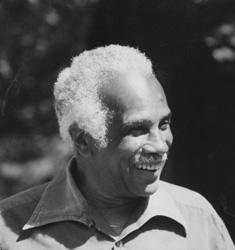
This will appear on the anniversary of the death of Ashley Bryan on February 4, 2022 at slightly over 98 1/2.  In his life he received many awards and even created this autobiography

Book photographs by Bill McGuinness with  Author Photo (jpg): Ashley Bryan

published by Simon and Schuster.  That link not only describes the book, but includes pages from it and links to YouTube videos of him showing his wonderful spirit.

His official Simon and Schuster author's page shows all 28 of his books they published, including the book where I first discovered him...The Dancing Granny.  I love Anansi stories and dancing and this book combined both elements in a storytelling style that made me want to dance while watching the trickster get what he deserved.  Each listing of Bryan's books also include another link to a curriculum guide.  Among those 28 books is his book, Ashley Bryan's Puppets showing his two-foot tall African-style hand puppets made with "beach junk" (a.k.a. found objects) plus "glue and thread and paint and a sprinkling of African folklore."

When specific stories were used, he gave their sources.  Today I'm going to post the original source of the title story from his The Ox of the Wonderful Horns and Other African Folktales.  I strongly recommend you compare this original from Kaffir Folk Tales with the way Ashley Bryan fleshes it out to make it even better.


An excellent anthology by Bryan is Ashley Bryan's African Tales, Uh-Huh which includes 14 tales from his Ox..., Lion and the Ostrich Chicks, and this story from In the Shadow of the Bush by Percy Amaury Talbot and retold in Bryan's Beat the Story Drum, Pum-Pum.

This summer I plan to tell stories of Friendship and that story will be one of many included in "Friendship Stew."  Next week I plan to say more about my Summer Reading Program on the Collaborative Summer Library Program theme of "All Together Now."
 
In the meantime I hope you read the many books by Ashley Bryan and also go to the Ashley Bryan Center website for even further information.  There were many tributes upon his death.  School Library Journal used this quote from NPR by Jason Reynolds, “But we throw ‘National Treasure’ around so cavalierly that when you get to know one, you realize how rare they are, and you want the world to dance jubilee in their honor. He deserved it. My god, Ashley, have you earned your rest.”

I believe Ashley Bryan's advice, "Wake up every morning and find the child in you" deserves to be his own parting words.

**************

This is part of a series of postings of stories under the category, "Keeping the Public in Public Domain."  The idea behind Public Domain was to preserve our cultural heritage after the authors and their immediate heirs were compensated.  I feel strongly current copyright law delays this intent on works of the 20th century.  My own library of folklore includes so many books within the Public Domain I decided to share stories from them.  I hope you enjoy discovering new stories.  


At the same time, my own involvement in storytelling regularly creates projects requiring research as part of my sharing stories with an audience.  Whenever that research needs to be shown here, the publishing of Public Domain stories will not occur that week.  This is a return to my regular posting of a research project here.  (Don't worry, this isn't dry research, my research is always geared towards future storytelling to an audience.)  Response has convinced me that "Keeping the Public in Public Domain" should continue along with my other postings as often as I can manage it.

Other Public Domain story resources I recommend-

  • There are many online resources for Public Domain stories, maybe none for folklore is as ambitious as fellow storyteller, Yoel Perez's database, Yashpeh, the International Folktales Collection.  I have long recommended it and continue to do so.  He has loaded Stith Thompson's Motif Index into his server as a database so you can search the whole 6 volumes for whatever word or expression you like by pressing one key. http://folkmasa.org/motiv/motif.htm

  • You may have noticed I'm no longer certain Dr. Perez has the largest database, although his offering the Motif Index certainly qualifies for those of us seeking specific types of stories.  There's another site, FairyTalez claiming to be the largest, with "over 2000 fairy tales, folktales, and fables" and they are "fully optimized for phones, tablets, and PCs", free and presented without ads.
    Between those two sites, there is much for story-lovers, but as they say in infomercials, "Wait, there's more!"

The email list for storytellers, Storytell, discussed Online Story Sources and came up with these additional suggestions:        

         - David K. Brown - http://people.ucalgary.ca/~dkbrown/stories.html

         - Richard Martin - http://www.tellatale.eu/tales_page.html

         - Spirit of Trees - http://spiritoftrees.org/featured-folktales

         - Story-Lovers - http://www.story-lovers.com/ is now only accessible through the Wayback Machine, described below, but the late Jackie Baldwin's wonderful site lives on there, fully searchable manually (the Google search doesn't work), at https://archive.org/ .  It's not easy, but go to Story-lovers.com snapshot for October 22 2016  and you can click on SOS: Searching Out Stories to scroll down through the many story topics and click on the story topic that interests you.

       - World of Tales - http://www.worldoftales.com/ 

 
           - Zalka Csenge Virag - http://multicoloreddiary.blogspot.com doesn't give the actual stories, but her recommendations, working her way through each country on a continent, give excellent ideas for finding new books and stories to love and tell.

     
You're going to find many of the links on these sites have gone down, BUT go to the Internet Archive Wayback Machine to find some of these old links.  Tim's site, for example, is so huge probably updating it would be a full-time job.  In the case of Story-Lovers, it's great that Jackie Baldwin set it up to stay online as long as it did after she could no longer maintain it.  Possibly searches maintained it.  Unfortunately Storytell list member, Papa Joe is on both Tim Sheppard's site and Story-Lovers, but he no longer maintains his old Papa Joe's Traveling Storytelling Show website and his Library (something you want to see!) is now only on the Wayback Machine.  It took some patience working back through claims of snapshots but finally in December of 2006 it appears!

    Somebody as of this writing whose stories can still be found by his website is the late Chuck Larkin - http://chucklarkin.com/stories.html.  I prefer to list these sites by their complete address so they can be found by the Wayback Machine, a.k.a. Archive.org, when that becomes the only way to find them.

You can see why I recommend these to you. 

Have fun discovering even more stories

Friday, January 27, 2023

The First Winter - Ada and Eleanor Skinner/ William Walker Canfield - Keeping the Public in Public Domain

Personal update upfront: Those experimental Covid pills worked!  I'm testing negative and will N95mask for 5 days just in case.  The "mild cold" disappeared with the pills although there's a trace of dizziness lurking in my inner ears.  

Here in metro Detroit we finally got our first real snowstorm and this Iroquois legend has much to teach us.  I went first to the wonderful seasonal books by the Skinner sisters, each labeled for a gem and they truly are gems!  Their story comes from The Pearl Story Book: Stories and Legends of Winter, Christmas & New Year's DayBut my search went further using their acknowledgements to find W.W. Canfield's The Legends of the Iroquois; Told by "The Cornplanter".  Because there are differences I'm giving both to show how the story changed.  I will start with the Skinner adapted version.  

THE FIRST WINTER

(Iroquois Legend)

There was a time when the days were always of the same length, and it was always summer. The red men lived continually in the smile of the Great Spirit and were happy. But there arose a chief who was so powerful that he at last declared himself mightier than the Great Spirit, and taught his brothers to go forth to the plain and mock him. They would call upon the Great Spirit to come and fight with them or would challenge him to take away the crop of growing corn or drive the game from the woods. They would say he was an unkind father to keep himself and their dead brothers in the Happy Hunting Grounds, where the red men could hunt forever without weariness.

They laughed at their old men who had feared for so many moons to reproach the Great Spirit for his unfair treatment of the Indians who were compelled to hunt and fish for game for their wives and children, while their own women had to plant the corn and harvest it.

“In the Happy Hunting Grounds,” they said, “the Great Spirit feeds our brothers and their wives and does not let any foes or dangers come upon them, but here he lets us go hungry many times. If he is as great as you have said, why does he not take care of his children here?”

Then the Great Spirit told them he would turn his smiling face away from them, so that they should have no more light and warmth and they must build fires in the forest if they would see.

But the red men laughed and taunted him, telling him that he had followed one trail so long that he could not get out of it, but would have to come every day and give them light and heat as usual. Then they would dance and make faces at him and taunt him with his helplessness.

In a few days the quick eyes of some of the red men saw in the morning the face of the Great Spirit appear where it was not wont to appear, but they were silent, fearing the jibes of their brothers. Finally, duller eyes noticed the change, and alarm and consternation spread among the people. Each day brought less and less of the Great Spirit’s smile and his countenance was often hidden by dark clouds, while terrible storms beat upon the frightened faces turned in appeal toward the heavens. The strong braves and warriors became as women; the old men covered their heads with skins and starved in the forests; while the women in their lodges crooned the low, mournful wail of the death song. Frosts and snows came upon an unsheltered and stricken race, and many of them perished.

Then the Great Spirit, who had almost removed his face from the sight of men, had pity and told them he would come back. Day after day the few that remained alive watched with joy the return of the sun. They sang in praise of the approaching summer and once more hailed with thankfulness the first blades of growing corn as it burst from the ground. The Great Spirit told his children that every year, as a punishment for the insults they had given their Father, they should feel for a season the might of the power they had mocked; and they murmured not, but bowed their heads in meekness.

***

The Skinner sisters, Ada Maria and Eleanor Louise in their acknowledgements section of The Pearl Story Book: Stories & Legends of Winter, Christmas & New Year's Day credit W.W. Canfield and I was able to track down his The Legends of the Iroquois; Told by "The Cornplanter".  I want to show this version told by the Seneca chief known as The Cornplanter.  It is slightly different, but worth looking at the original traditional version.

THE FIRST WINTER

T

HERE was a time when the days were always of the same length, and it was always summer. The red men lived continually in the smile of the Great Spirit, and they were happy. But there arose a chief who was so powerful that he at last declared himself mightier than the Great Spirit, and taught his brothers to go forth to the plains and mock the Great Spirit. They would call upon the Great Spirit to come and fight with them, or would challenge him to take away the crop of growing corn, or drive the game from the woods; they would say he was an unkind father to keep to himself and their dead brothers the Happy Hunting-Grounds, where the red men could hunt forever without weariness. They laughed at their old men, who had feared for so many moons to reproach the Great Spirit for his unfair treatment of the Indians, who were compelled to hunt and fish for game for their wives and children, while their women had to plant the corn and harvest it. "In the Happy Hunting-Grounds," they said, "the Great Spirit feeds our brothers and their wives and does not let any foes or dangers come upon them, but here he lets us go hungry many times. If he is as great as you have said, why does he not take care of his children here?"

Then the Great Spirit told them he would turn his smiling face away from them, so that they should have no more light and warmth, and must build fires in the forests if they would see.

But the red men laughed and taunted him, telling him that he had followed one trail so long that he could not get out of it, but would have to come every day and give them light and heat. Then they would dance and make faces at him and taunt him with his helplessness.

In a few days the quick eyes of some of the red men saw in the morning the face of the Great Spirit appear where it was not wont to appear, but they were silent, fearing the jibes of their brothers. Finally duller eyes noticed the change, and alarm and consternation spread among the people. Each day brought less and less of the Great Spirit's smile and his countenance was often hidden by dark clouds, while terrible storms beat upon the frightened faces turned in appeal toward the heavens. The strong braves and warriors became as women; the old men covered their heads with skins and starved in the forests; while the women in their lodges crooned the low, mournful wail of the death-song, and the papooses crawled among the caves in the rocks and mountains and died unheeded. Frosts and snows came upon an unsheltered and stricken race, and many of them perished.

Then the Great Spirit, who had almost removed his face from the sight of the red men, had pity, and told them he would come back. Day after day the few that remained alive watched with joy the return of the sun. They sang in praise of the approaching summer, and once more hailed with thankfulness the first blades of growing corn as it burst from the ground. The Great Spirit told his children that every year, as a punishment for the insults they had given their Father, they should feel for a season the might of the power they had mocked; and they murmured not, but bowed their heads in meekness.

From the bodies of those who had perished of cold and hunger sprang all manner of poisonous plants, which spread themselves over the earth to vex and endanger the lives of the Indians of all generations; and in after years when any of the Indians from any reason "ate of the fatal root," it was said of them that they had "eaten of the bodies of their brothers who had defied the Great Spirit."

***

Be careful of how you interpret the weather.  If there's one thing it's guaranteed to do . . . it's change!  Until our days get much longer, let's remember this wisdom of when that respect was missing.

****************

This is part of a series of postings of stories under the category, "Keeping the Public in Public Domain."  The idea behind Public Domain was to preserve our cultural heritage after the authors and their immediate heirs were compensated.  I feel strongly current copyright law delays this intent on works of the 20th century.  My own library of folklore includes so many books within the Public Domain I decided to share stories from them.  I hope you enjoy discovering new stories.  


At the same time, my own involvement in storytelling regularly creates projects requiring research as part of my sharing stories with an audience.  Whenever that research needs to be shown here, the publishing of Public Domain stories will not occur that week.  This is a return to my regular posting of a research project here.  (Don't worry, this isn't dry research, my research is always geared towards future storytelling to an audience.)  Response has convinced me that "Keeping the Public in Public Domain" should continue along with my other postings as often as I can manage it.

Other Public Domain story resources I recommend-

  • There are many online resources for Public Domain stories, maybe none for folklore is as ambitious as fellow storyteller, Yoel Perez's database, Yashpeh, the International Folktales Collection.  I have long recommended it and continue to do so.  He has loaded Stith Thompson's Motif Index into his server as a database so you can search the whole 6 volumes for whatever word or expression you like by pressing one key. http://folkmasa.org/motiv/motif.htm

  • You may have noticed I'm no longer certain Dr. Perez has the largest database, although his offering the Motif Index certainly qualifies for those of us seeking specific types of stories.  There's another site, FairyTalez claiming to be the largest, with "over 2000 fairy tales, folktales, and fables" and they are "fully optimized for phones, tablets, and PCs", free and presented without ads.
    Between those two sites, there is much for story-lovers, but as they say in infomercials, "Wait, there's more!"

The email list for storytellers, Storytell, discussed Online Story Sources and came up with these additional suggestions:        

         - David K. Brown - http://people.ucalgary.ca/~dkbrown/stories.html

         - Richard Martin - http://www.tellatale.eu/tales_page.html

         - Spirit of Trees - http://spiritoftrees.org/featured-folktales

         - Story-Lovers - http://www.story-lovers.com/ is now only accessible through the Wayback Machine, described below, but the late Jackie Baldwin's wonderful site lives on there, fully searchable manually (the Google search doesn't work), at https://archive.org/ .  It's not easy, but go to Story-lovers.com snapshot for October 22 2016  and you can click on SOS: Searching Out Stories to scroll down through the many story topics and click on the story topic that interests you.

       - World of Tales - http://www.worldoftales.com/ 

 
           - Zalka Csenge Virag - http://multicoloreddiary.blogspot.com doesn't give the actual stories, but her recommendations, working her way through each country on a continent, give excellent ideas for finding new books and stories to love and tell.

     
You're going to find many of the links on these sites have gone down, BUT go to the Internet Archive Wayback Machine to find some of these old links.  Tim's site, for example, is so huge probably updating it would be a full-time job.  In the case of Story-Lovers, it's great that Jackie Baldwin set it up to stay online as long as it did after she could no longer maintain it.  Possibly searches maintained it.  Unfortunately Storytell list member, Papa Joe is on both Tim Sheppard's site and Story-Lovers, but he no longer maintains his old Papa Joe's Traveling Storytelling Show website and his Library (something you want to see!) is now only on the Wayback Machine.  It took some patience working back through claims of snapshots but finally in December of 2006 it appears!

    Somebody as of this writing whose stories can still be found by his website is the late Chuck Larkin - http://chucklarkin.com/stories.html.  I prefer to list these sites by their complete address so they can be found by the Wayback Machine, a.k.a. Archive.org, when that becomes the only way to find them.

You can see why I recommend these to you. 

Have fun discovering even more stories

Friday, January 20, 2023

"All Together Now" Summer Reading Theme

Getting sick has a benefit of time to think.  Covid hit this week.

I was in a rehearsal and lay down until I was due onstage.  When I got up I was so dizzy I looked drunk!  Actually up until the dizziness, I thought I just had a mild cold.  The dizziness was almost dismissed as a middle ear infection & I nearly didn't decide to go to the doctor.  (Guess I flunked my own medical certification.)  It was the last day I could be prescribed an experimental drug.  (My husband was told his beast of a cold started earlier & so he can't get medication for it, just treat the symptoms.)

Started taking it the night of the 18th & should finish the morning of the 25th.  At that point it is expected I can stop quarantining & wear a mask for the next 5 days as I may yet have some Covid germs I might spread. I'm told that with this latest highly contagious variant, the shots can't stop it, but can at least make it mild.  At the theatre at least 2 other people have gotten what appeared to be a mild cold, but turned out to be Covid.

This is the result of my Covid-affected thoughts.  I'd appreciate a reaction to it!

I've been mulling over the current multi-state collaborative Children's Summer Reading theme of "All Together Now" with it's inclusive message.  As one librarian I know said, when pondering program planning, "There's Friendship Bracelets, but we've already done that!"  Another saw a focus on Kindness.  

As I said, I've been mulling over it and realized if you offer folk tales from all over the world, the message comes through in a variety of ways.  This was the visual I put together for a postcard, with my contact information on the back.

Front

Now the further mulling. . .  Does it say enough?  I plan a big stew pot with strips of paper for each of the many stories I might tell on the theme.  The child drawing from the stew pot the next story has the option of reading the title and the place where it originated or giving it to me to announce.  The stories often include participation for the entire group, several of my songs let a child choose a way for the audience to participate in an action of the child's choice, and, of course, I'll have a separate sauce pot to choose the next child helping me.  Depending on the audience size, that might let everyone have a turn since those song actions increase the number involved.

Of course some of the stories are Public Domain and might be posted here in my frequent Keeping the Public in Public Domain offerings

I'm curious to get reactions, both to my postcard and program plans before I commit to it.  Suggestions?  Reactions?

Right now I'm still in a MULLigan Stew.


Friday, January 13, 2023

Curtin - The Thirteenth Son of the King of Erin - Keeping the Public in Public Domain

Found on https://www.lovethispic.com/

I'm trying to get my computer to react properly.  It refuses!  Today as I write this it is Friday the 13th and I'm not normally a Triskaidekaphobe, but my computer is crashing the browser repeatedly and my Open Office isn't responding either!  As for Blogger, it, too, is acting weirdly.

Grrrrrrrr! 

Decided it is time to find a story where the number 13 is important.   The folktales collected by Jeremiah Curtin show it can indeed be lucky, depending on who you are. 

There are several folk elements in the story, even a bit of Cinderella, and it reminds me of a favorite Scottish tale I tell called "Assipattle and the Mester Stoorworm."  Two Irish words appear in the story: Diachbha means "divinity" or "fate." and Urfeist, "great serpent."  Don't ask me how to pronounce them.  I always need research on Celtic pronunciation.  There also are two things in the original that will seem strange: our hero, Sean Ruad, tends the king's cows and is called a "cowboy", but I suggest calling him a "cowherd",  also they talk about him wearing a "blue dress", but I'd suggest another word like "outfit" for he clearly isn't cross-dressing!

THE THIRTEENTH SON OF THE KING OF ERIN.

THERE was a king in Erin long ago who had thirteen sons, and as they grew up he taught them good learning and every exercise and art befitting their rank.

One day the king went hunting, and saw a swan swimming in a lake with thirteen little ones. She kept driving away the thirteenth, and would not let it come near the others.

The king wondered greatly at this, and when he came home he summoned his Sean dall Glic (old blind sage), and said: "I saw a great wonder to-day while out hunting,—a swan with thirteen cygnets, and she driving away the thirteenth continually, and keeping the twelve with her. Tell me the cause and reason of this. Why should a mother hate her thirteenth little one, and guard the other twelve?"

"I will tell you," said the old blind sage: "all creatures on earth, whether beast or human, which have thirteen young, should put the thirteenth away, and let it wander for itself through the world and find its fate, so that the will of Heaven may work upon it, and not come down on the others. Now you have thirteen sons, and you must give the thirteenth to the Diachbha." 

"Then that is the meaning of the swan on the lake,—I must give up my thirteenth son to the Diachbha?"

"It is," said the old blind sage; "you must give up one of your thirteen sons."

"But how can I give one of them away when I am so fond of all; and which one shall it be?"

"I'll tell you what to do. When the thirteen come home to-night, shut the door against the last that comes."

Now one of the sons was slow, not so keen nor so sharp as another; but the eldest, who was called Sean Ruadh, was the best, the hero of them all. And it happened that night that he came home last, and when he came his father shut the door against him. The boy raised his hands and said: "Father, what are you going to do with me; what do you wish?"

"It is my duty," said the father, "to give one of my sons to the Diachbha; and as you are the thirteenth, you must go."

"Well, give me my outfit for the road."

The outfit was brought, Sean Ruadh put it on; then the father gave him a black-haired steed that could overtake the wind before him, and outstrip the wind behind.

Sean Ruadh mounted the steed and hurried away. He went on each day without rest, and slept in the woods at night.

One morning he put on some old clothes which he had in a pack on the saddle, and leaving his horse in the woods, went aside to an opening. He was not long there when a king rode up and stopped before him.

"Who are you, and where are you going?" asked the king. "Oh!" said Sean Ruadh, "I am astray. I do not know where to go, nor what I am to do."

"If that is how you are, I'll tell you what to do,—come with me."

"Why should I go with you?" asked Sean Ruadh.

"Well, I have a great many cows, and I have no one to go with them, no one to mind them. I am in great trouble also. My daughter will die a terrible death very soon."

"How will she die?" asked Sean Ruadh.

"A great serpent of the sea, a monster which must get a king's daughter to devour every seven years. Once in seven years this thing comes up out of the sea for its meat. The turn has now come to my daughter, and we don't know what day will the urfeist appear. The whole castle and all of us are in mourning for my wretched child."

"Perhaps some one will come to save her," said Sean Ruadh.

"Oh! there is a whole army of kings' sons who have come, and they all promise to save her; but I'm in dread none of them will meet the urfeist."

Sean Ruadh agreed with the king to serve for seven years, and went home with him.

Next morning Sean Ruadh drove out the king's cows to pasture.

Now there were three giants not far from the king's place. They lived in three castles in sight of each other, and every night each of these giants shouted just before going to bed. So loud was the shout that each let out of himself that the people heard it in all the country around.

Sean Ruadh drove the cattle up to the giant's land, pushed down the wall, and let them in. The grass was very high,—three times better than any on the king's pastures.

As Sean Ruadh sat watching the cattle, a giant came running towards him and called out: "I don't know whether to put a pinch of you in my nose, or a bite of you in my mouth!"

"Bad luck to me," said Sean Ruadh, "if I came here but to take the life out of you!"

"How would you like to fight,—on the gray stones, or with sharp swords?" asked the giant.

"I'll fight you," said Sean Ruadh, "on the gray stones, where your great legs will be going down, and mine standing high."

They faced one another then, and began to fight. At the first encounter Sean Ruadh put the giant down to his knees among the hard gray stones, at the second he put him to his waist, and at the third to his shoulders.

"Come, take me out of this," cried the giant, "and I'll give you my castle and all I've got. I'll give you my sword of light that never fails to kill at a blow. I'll give you my black horse that can overtake the wind before, and outstrip the wind behind. These are all up there in my castle."

Sean Ruadh killed the giant and went up to the castle, where the housekeeper said to him: "Oh! it is you that are welcome. You have killed the dirty giant that was here. Come with me now till I show you all the riches and treasures."

She opened the door of the giant's store-room and said: "All these are yours. Here are the keys of the castle."

"Keep them till I come again, and wake me in the evening," said Sean Ruadh, lying down on the giant's bed.

He slept till evening; then the housekeeper roused him, and he drove the king's cattle home. The cows never gave so much milk as that night. They gave as much as in a whole week before.

Sean Ruadh met the king, and asked: "What news from your daughter?"

"The great serpent did not come to-day," said the king; "but he may come to-morrow."

"Well, to-morrow he may not come till another day," said Sean Ruadh.

Now the king knew nothing of the strength of Sean Ruadh, who was bare-footed, ragged, and shabby.

The second morning Sean Ruadh put the king's cows in the second giant's land. Out came the second giant with the same questions and threats as the first, and the cowboy spoke as on the day before.

They fell to fighting; and when the giant was to his shoulders in the hard gray rocks, he said: "I'll give you my sword of light and my brown-haired horse if you'll spare my life."

"Where is your sword of light?" asked Sean Ruadh.

"It is hung up over my bed."

Sean Ruadh ran to the giant's castle, and took the sword, which screamed out when he seized it; but he held it fast, hurried back to the giant, and asked, "How shall I try the edge of this sword?"

"Against a stick," was the reply.

"I see no stick better than your own head," said Sean Ruadh; and with that he swept the head off the giant.

The cowboy now went back to the castle and hung up the sword. "Blessing to you," said the housekeeper; "you have killed the giant! Come, now, and I'll show you his riches and treasures, which are yours forever."

Sean Ruadh found more treasure in this castle than in the first one. When he had seen all, he gave the keys to the housekeeper till he should need them. He slept as on the day before, then drove the cows home in the evening.

The king said: "I have the luck since you came to me. My cows give three times as much milk to-day as they did yesterday."

"Well," said Sean Ruadh, "have you any account of the urfeist?"

"He didn't come to-day," said the king; "but he may come to-morrow."

Sean Ruadh went out with the king's cows on the third day, and drove them to the third giant's land, who came out and fought a more desperate battle than either of the other two; but the cowboy pushed him down among the gray rocks to his shoulders and killed him.

At the castle of the third giant he was received with gladness by the housekeeper, who showed him the treasures and gave him the keys; but he left the keys with her till he should need them. That evening the king's cows had more milk than ever before.

On the fourth day Sean Ruadh went out with the cows, but stopped at the first giant's castle. The housekeeper at his command brought out the dress of the giant, which was all black. He put on the giant's apparel, black as night, and girded on his sword of light. Then he mounted the black-haired steed, which overtook the wind before, and outstripped the wind behind; and rushing on between earth and sky, he never stopped till he came to the beach, where he saw hundreds upon hundreds of kings' sons, and champions, who were anxious to save the king's daughter, but were so frightened at the terrible urfeist that they would not go near her.

When he had seen the princess and the trembling champions, Sean Ruadh turned his black steed to the castle. Presently the king saw, riding between earth and sky, a splendid stranger, who stopped before him.

"What is that I see on the shore?" asked the stranger. "Is it a fair, or some great meeting?"

"Haven't you heard," asked the king, "that a monster is coming to destroy my daughter to-day?"

"No, I haven't heard anything," answered the stranger, who turned away and disappeared.

Soon the black horseman was before the princess, who was sitting alone on a rock near the sea. As she looked at the stranger, she thought he was the finest man on earth, and her heart was cheered.

"Have you no one to save you?" he asked.

"No one."

"Will you let me lay my head on your lap till the urfeist comes? Then rouse me."

He put his head on her lap and fell asleep. While he slept, the princess took three hairs from his head and hid them in her bosom. As soon as she had hidden the hairs, she saw the urfeist coming on the sea, great as an island, and throwing up water to the sky as he moved. She roused the stranger, who sprang up to defend her.

The urfeist came upon shore, and was advancing on the princess with mouth open and wide as a bridge, when the stranger stood before him and said: "This woman is mine, not yours!"

Then drawing his sword of light, he swept off the monster's head with a blow; but the head rushed back to its place, and grew on again.

In a twinkle the urfeist turned and went back to the sea; but as he went, he said: "I'll be here again to-morrow, and swallow the whole world before me as I come."

"Well," answered the stranger, "maybe another will come to meet you."

Sean Ruadh mounted his black steed, and was gone before the princess could stop him. Sad was her heart when she saw him rush off between the earth and sky more swiftly than any wind.

Sean Ruadh went to the first giant's castle and put away his horse, clothes, and sword. Then he slept on the giant's bed till evening, when the housekeeper woke him, and he drove home the cows. Meeting the king, he asked: "Well, how has your daughter fared to-day?"

"Oh! the urfeist came out of the sea to carry her away; but a wonderful black champion came riding between earth and sky and saved her."

"Who was he?"

"Oh! there is many a man who says he did it. But my daughter isn't saved yet, for the urfeist said he'd come to-morrow."

"Well, never fear; perhaps another champion will come to-morrow."

Next morning Sean Ruadh drove the king's cows to the land of the second giant, where he left them feeding, and then went to the castle, where the housekeeper met him and said: "You are welcome. I'm here before you, and all is well." "Let the brown horse be brought; let the giant's apparel and sword be ready for me," said Sean Ruadh.

The apparel was brought, the beautiful blue dress of the second giant, and his sword of light. Sean Ruadh put on the apparel, took the sword, mounted the brown steed, and sped away between earth and air three times more swiftly than the day before.

He rode first to the seashore, saw the king's daughter sitting on the rock alone, and the princes and champions far away, trembling in dread of the urfeist. Then he rode to the king, enquired about the crowd on the seashore, and received the same answer as before. "But is there no man to save her?" asked Sean Ruadh.

"Oh! there are men enough," said the king, "who promise to save her, and say they are brave; but there is no man of them who will stand to his word and face the urfeist when he rises from the sea."

Sean Ruadh was away before the king knew it, and rode to the princess in his suit of blue, bearing his sword of light. "Is there no one to save you?" asked he.

"No one."

"Let me lay my head on your lap, and when the urfeist comes, rouse me."

He put his head on her lap, and while he slept she took out the three hairs, compared them with his hair, and said to herself: "You are the man who was here yesterday."

When the urfeist appeared, coming over the sea, the princess roused the stranger, who sprang up and hurried to the beach.

The monster, moving at a greater speed, and raising more water than on the day before, came with open mouth to land. Again Sean Ruadh stood in his way, and with one blow of the giant's sword made two halves of the urfeist. But the two halves rushed together, and were one as before.

Then the urfeist turned to the sea again, and said as he went: "All the champions on earth won't save her from me to-morrow!"

Sean Ruadh sprang to his steed and back to the castle. He went, leaving the princess in despair at his going. She tore her hair and wept for the loss of the blue champion,—the one man who had dared to save her.

Sean Ruadh put on his old clothes, and drove home the cows as usual. The king said: "A strange champion, all dressed in blue, saved my daughter to-day; but she is grieving her life away because he is gone."

"Well, that is a small matter, since her life is safe," said Sean Ruadh.

There was a feast for the whole world that night at the king's castle, and gladness was on every face that the king's daughter was safe again.

Next day Sean Ruadh drove the cows to the third giant's pasture, went to the castle, and told the housekeeper to bring the giant's sword and apparel, and have the red steed led to the door. The third giant's dress had as many colors as there are in the sky, and his boots were of blue glass.

Sean Ruadh, dressed and mounted on his red steed, was the most beautiful man in the world. When ready to start, the housekeeper said to him: "The beast will be so enraged this time that no arms can stop him; he will rise from the sea with three great swords coming out of his mouth, and he could cut to pieces and swallow the whole world if it stood before him in battle. There is only one way to conquer the urfeist, and I will show it to you. Take this brown apple, put it in your bosom, and when he comes rushing from the sea with open mouth, do you throw the apple down his throat, and the great urfeist will melt away and die on the strand."

Sean Ruadh went on the red steed between earth and sky, with thrice the speed of the day before. He saw the maiden sitting on the rock alone, saw the trembling kings' sons in the distance watching to know what would happen, and saw the king hoping for some one to save his daughter; then he went to the princess, and put his head on her lap; when he had fallen asleep, she took the three hairs from her bosom, and looking at them, said: "You are the man who saved me yesterday."

The urfeist was not long in coming. The princess roused Sean Ruadh, who sprang to his feet and went to the sea. The urfeist came up enormous, terrible to look at, with a mouth big enough to swallow the world, and three sharp swords coming out of it. When he saw Sean Ruadh, he sprang at him with a roar; but Sean Ruadh threw the apple into his mouth, and the beast fell helpless on the strand, flattened out and melted away to a dirty jelly on the shore.

Then Sean Ruadh went towards the princess and said: "That urfeist will never trouble man or woman again."

The princess ran and tried to cling to him; but he was on the red steed, rushing away between earth and sky, before she could stop him. She held, however, so firmly to one of the blue glass boots that Sean Ruadh had to leave it in her hands.

When he drove home the cows that night, the king came out, and Sean Ruadh asked: "What news from the urfeist?"

"Oh!" said the king, "I've had the luck since you came to me. A champion wearing all the colors of the sky, and riding a red steed between earth and air, destroyed the urfeist to-day. My daughter is safe forever; but she is ready to kill herself because she hasn't the man that saved her."

That night there was a feast in the king's castle such as no one had ever seen before. The halls were filled with princes and champions, and each one said: "I am the man that saved the princess!"

The king sent for the old blind sage, and asked, what should he do to find the man who saved his daughter. The old blind sage said,—

"Send out word to all the world that the man whose foot the blue glass boot will fit is the champion who killed the urfeist, and you'll give him your daughter in marriage."

The king sent out word to the world to come to try on the boot. It was too large for some, too small for others. When all had failed, the old sage said,—

"All have tried the boot but the cowboy."

"Oh! he is always out with the cows; what use in his trying," said the king.

"No matter," answered the old blind sage; "let twenty men go and bring down the cowboy."

The king sent up twenty men, who found the cowboy sleeping in the shadow of a stone wall. They began to make a hay rope to bind him; but he woke up, and had twenty ropes ready before they had one. Then he jumped at them, tied the twenty in a bundle, and fastened the bundle to the wall. They waited and waited at the castle for the twenty men and the cowboy, till at last the king sent twenty men more, with swords, to know what was the delay.

When they came, this twenty began to make a hay rope to tie the cowboy; but he had twenty ropes made before their one, and no matter how they fought, the cowboy tied the twenty in a bundle, and the bundle to the other twenty men.

When neither party came back, the old blind sage said to the king: "Go up now, and throw yourself down before the cowboy, for he has tied the forty men in two bundles, and the bundles to each other."

The king went and threw himself down before the cowboy, who raised him up and said: "What is this for?"

"Come down now and try on the glass boot," said the king.

"How can I go, when I have work to do here?"

"Oh! never mind; you'll come back soon enough to do the work."

The cowboy untied the forty men and went down with the king. When he stood in front of the castle, he saw the princess sitting in her upper chamber, and the glass boot on the window-sill before her.

That moment the boot sprang from the window through the air to him, and went on his foot of itself. The princess was downstairs in a twinkle, and in the arms of Sean Ruadh.

The whole place was crowded with kings' sons and champions, who claimed that they had saved the princess.

"What are these men here for?" asked Sean Ruadh. "Oh! they have been trying to put on the boot," said the king.

With that Sean Ruadh drew his sword of light, swept the heads off every man of them, and threw heads and bodies on the dirt-heap behind the castle.

Then the king sent ships with messengers to all the kings and queens of the world,—to the kings of Spain, France, Greece, and Lochlin, and to Diarmuid, son of the monarch of light,—to come to the wedding of his daughter and Sean Ruadh.

Sean Ruadh, after the wedding, went with his wife to live in the kingdom of the giants, and left his father-in-law on his own land.


May the 13th be lucky for you.  After all, it moved me to pass along this story.

*****************

This is part of a series of postings of stories under the category, "Keeping the Public in Public Domain."  The idea behind Public Domain was to preserve our cultural heritage after the authors and their immediate heirs were compensated.  I feel strongly current copyright law delays this intent on works of the 20th century.  My own library of folklore includes so many books within the Public Domain I decided to share stories from them.  I hope you enjoy discovering new stories.  


At the same time, my own involvement in storytelling regularly creates projects requiring research as part of my sharing stories with an audience.  Whenever that research needs to be shown here, the publishing of Public Domain stories will not occur that week.  This is a return to my regular posting of a research project here.  (Don't worry, this isn't dry research, my research is always geared towards future storytelling to an audience.)  Response has convinced me that "Keeping the Public in Public Domain" should continue along with my other postings as often as I can manage it.

Other Public Domain story resources I recommend-

  • There are many online resources for Public Domain stories, maybe none for folklore is as ambitious as fellow storyteller, Yoel Perez's database, Yashpeh, the International Folktales Collection.  I have long recommended it and continue to do so.  He has loaded Stith Thompson's Motif Index into his server as a database so you can search the whole 6 volumes for whatever word or expression you like by pressing one key. http://folkmasa.org/motiv/motif.htm

  • You may have noticed I'm no longer certain Dr. Perez has the largest database, although his offering the Motif Index certainly qualifies for those of us seeking specific types of stories.  There's another site, FairyTalez claiming to be the largest, with "over 2000 fairy tales, folktales, and fables" and they are "fully optimized for phones, tablets, and PCs", free and presented without ads.
    Between those two sites, there is much for story-lovers, but as they say in infomercials, "Wait, there's more!"

The email list for storytellers, Storytell, discussed Online Story Sources and came up with these additional suggestions:        

         - David K. Brown - http://people.ucalgary.ca/~dkbrown/stories.html

         - Richard Martin - http://www.tellatale.eu/tales_page.html

         - Spirit of Trees - http://spiritoftrees.org/featured-folktales

         - Story-Lovers - http://www.story-lovers.com/ is now only accessible through the Wayback Machine, described below, but the late Jackie Baldwin's wonderful site lives on there, fully searchable manually (the Google search doesn't work), at https://archive.org/ .  It's not easy, but go to Story-lovers.com snapshot for October 22 2016  and you can click on SOS: Searching Out Stories to scroll down through the many story topics and click on the story topic that interests you.

       - World of Tales - http://www.worldoftales.com/ 

 
           - Zalka Csenge Virag - http://multicoloreddiary.blogspot.com doesn't give the actual stories, but her recommendations, working her way through each country on a continent, give excellent ideas for finding new books and stories to love and tell.

     
You're going to find many of the links on these sites have gone down, BUT go to the Internet Archive Wayback Machine to find some of these old links.  Tim's site, for example, is so huge probably updating it would be a full-time job.  In the case of Story-Lovers, it's great that Jackie Baldwin set it up to stay online as long as it did after she could no longer maintain it.  Possibly searches maintained it.  Unfortunately Storytell list member, Papa Joe is on both Tim Sheppard's site and Story-Lovers, but he no longer maintains his old Papa Joe's Traveling Storytelling Show website and his Library (something you want to see!) is now only on the Wayback Machine.  It took some patience working back through claims of snapshots but finally in December of 2006 it appears!

    Somebody as of this writing whose stories can still be found by his website is the late Chuck Larkin - http://chucklarkin.com/stories.html.  I prefer to list these sites by their complete address so they can be found by the Wayback Machine, a.k.a. Archive.org, when that becomes the only way to find them.

You can see why I recommend these to you. 

Have fun discovering even more stories